
💉 Key Factors Affecting Insulin Secretion
Insulin is a vital hormone produced by the beta cells of the pancreatic islets. It plays a central role in maintaining blood glucose levels by promoting glucose uptake, storage, and utilization. The secretion of insulin is carefully regulated by numerous metabolic, hormonal, neural, and pharmacological factors.
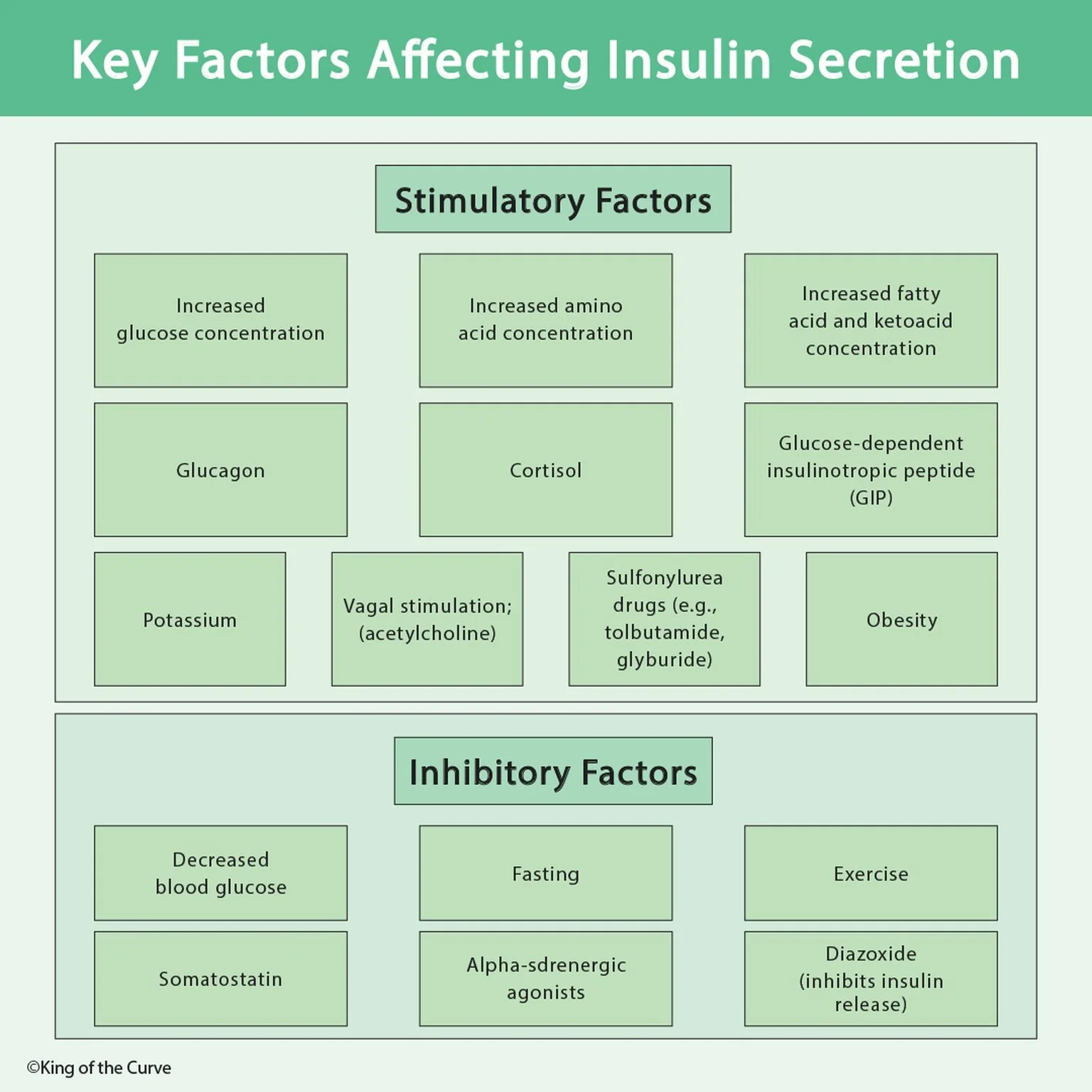
🧬 What Is Insulin Secretion?
Insulin secretion is the process by which pancreatic beta cells release insulin into the bloodstream in response to changes in nutrient availability and hormonal signals.
The primary function of insulin is to:
Lower blood glucose levels
Promote glycogen synthesis
Increase fat storage
Enhance protein synthesis
Inhibit glucose production by the liver
Because insulin is essential for energy regulation, its release is tightly controlled by multiple factors.
✅ Stimulatory Factors
Several substances and physiological signals increase insulin secretion.
🍬 Increased Blood Glucose Concentration
The most important stimulus for insulin release is an increase in blood glucose levels.
When glucose enters beta cells:
ATP production increases.
ATP-sensitive potassium channels close.
Cell depolarization occurs.
Calcium channels open.
Insulin-containing vesicles are released.
This mechanism ensures insulin secretion rises after meals.
🥩 Increased Amino Acid Concentration
Certain amino acids stimulate insulin release, particularly:
Arginine
Leucine
Lysine
This response helps facilitate the utilization and storage of nutrients following protein-rich meals.
🧈 Increased Fatty Acid and Ketoacid Concentration
Elevated circulating fatty acids and ketoacids can enhance insulin secretion.
These nutrients:
Provide energy to beta cells
Increase ATP production
Amplify glucose-stimulated insulin release
🔄 Glucagon
Although glucagon generally opposes insulin's effects, it can directly stimulate beta cells.
Glucagon increases intracellular cyclic AMP (cAMP), which enhances insulin secretion when glucose levels are elevated.
🌡️ Cortisol
Cortisol increases blood glucose levels through gluconeogenesis and reduced peripheral glucose uptake.
As blood glucose rises, insulin secretion is secondarily stimulated to counterbalance cortisol's metabolic effects.
🍽️ Glucose-Dependent Insulinotropic Peptide (GIP)
GIP is an incretin hormone released from the small intestine after food intake.
Its functions include:
Enhancing glucose-stimulated insulin secretion
Preparing the body for nutrient absorption
Contributing to the incretin effect
This explains why oral glucose stimulates more insulin release than intravenous glucose.
⚡ Vagal Stimulation (Acetylcholine)
Parasympathetic activation during eating stimulates insulin release.
Acetylcholine released from vagal nerve endings:
Activates muscarinic receptors
Increases intracellular calcium
Promotes insulin secretion
This response is part of the cephalic phase of digestion.
🧂 Potassium
Elevated extracellular potassium can depolarize beta cells and facilitate insulin release.
Although less significant than glucose, potassium contributes to beta-cell excitability.
💊 Sulfonylurea Drugs
Sulfonylureas are oral medications used to treat type 2 diabetes.
Examples include:
Tolbutamide
Glyburide
Glipizide
Glimepiride
These drugs:
Close ATP-sensitive potassium channels
Depolarize beta cells
Trigger insulin secretion
⚖️ Obesity
Obesity is commonly associated with insulin resistance.
To compensate, pancreatic beta cells increase insulin production, often resulting in hyperinsulinemia during the early stages of insulin resistance.
❌ Inhibitory Factors
Certain conditions and substances reduce insulin secretion.
📉 Decreased Blood Glucose Concentration
Low blood glucose is the strongest physiological inhibitor of insulin release.
When glucose levels fall:
ATP production decreases
Beta-cell activity declines
Insulin secretion diminishes
This prevents excessive lowering of blood glucose.
⏳ Fasting
During fasting:
Glucose availability decreases
Energy conservation becomes necessary
Insulin secretion falls
Reduced insulin allows the body to mobilize stored energy reserves.
🏃 Exercise
Exercise increases glucose utilization by skeletal muscle.
During prolonged activity:
Sympathetic activity increases
Insulin secretion decreases
Muscle glucose uptake remains elevated through insulin-independent pathways
This helps preserve blood glucose levels.
🧠 Alpha-Adrenergic Agonists
Activation of alpha-2 adrenergic receptors inhibits insulin secretion.
Examples include:
Norepinephrine
Epinephrine
This mechanism becomes particularly important during stress and exercise.
🛑 Somatostatin
Somatostatin is produced by pancreatic delta cells.
It suppresses:
Insulin secretion
Glucagon secretion
Gastrointestinal hormone release
Somatostatin acts as an important local regulator of pancreatic hormone balance.
💊 Diazoxide
Diazoxide inhibits insulin release by keeping ATP-sensitive potassium channels open.
This prevents:
Beta-cell depolarization
Calcium influx
Insulin secretion
Clinically, diazoxide is sometimes used to treat excessive insulin production.
🩺 Clinical Importance
Understanding factors that regulate insulin secretion is essential in several medical conditions:
Type 1 Diabetes
Insulin production is absent due to beta-cell destruction.
Type 2 Diabetes
Insulin resistance develops.
Early disease often features increased insulin secretion.
Hypoglycemia
Excess insulin secretion can cause dangerously low blood glucose levels.
Hyperinsulinemia
Often associated with obesity and insulin resistance.
🔑 Takeaway
Insulin secretion is influenced by a wide range of metabolic, hormonal, neural, and pharmacological factors. While increased glucose remains the dominant stimulus, amino acids, incretin hormones, vagal activity, and certain medications can enhance insulin release. Conversely, fasting, exercise, somatostatin, and alpha-adrenergic stimulation suppress insulin secretion. Understanding these regulatory mechanisms is essential for mastering endocrine physiology and the pathophysiology of diabetes mellitus.

Frequently Asked Questions (FAQs)
-
Aim for 4-6 focused hours, ensuring you incorporate breaks to avoid burnout.
-
Practice mindfulness techniques, take practice exams under realistic conditions, and maintain a balanced lifestyle.
-
Set short-term goals, seek support from mentors, and reward yourself for small achievements.
-
Regular exercise improves focus, reduces stress, and enhances overall mental clarity.
-
KOTC offers personalized learning tools, gamification features, and adaptive question banks to help students stay on track without burnout.