
🧪 K⁺ Secretion in the Principal Cell
Potassium (K⁺) is one of the most important electrolytes in the body, playing a critical role in nerve conduction, muscle contraction, and cardiac function. Because even small changes in plasma potassium levels can have serious consequences, the kidneys tightly regulate potassium excretion.
🩺 What Is Potassium Secretion?
Potassium secretion is the process by which potassium moves from the blood into the tubular fluid of the nephron, eventually leaving the body in urine.
This process occurs primarily in principal cells located in the:
Late distal convoluted tubule
Cortical collecting duct
Collecting tubules
The amount of potassium secreted can be adjusted according to the body's needs, making this segment the major regulator of potassium balance.
🏗️ Components Shown in the Diagram
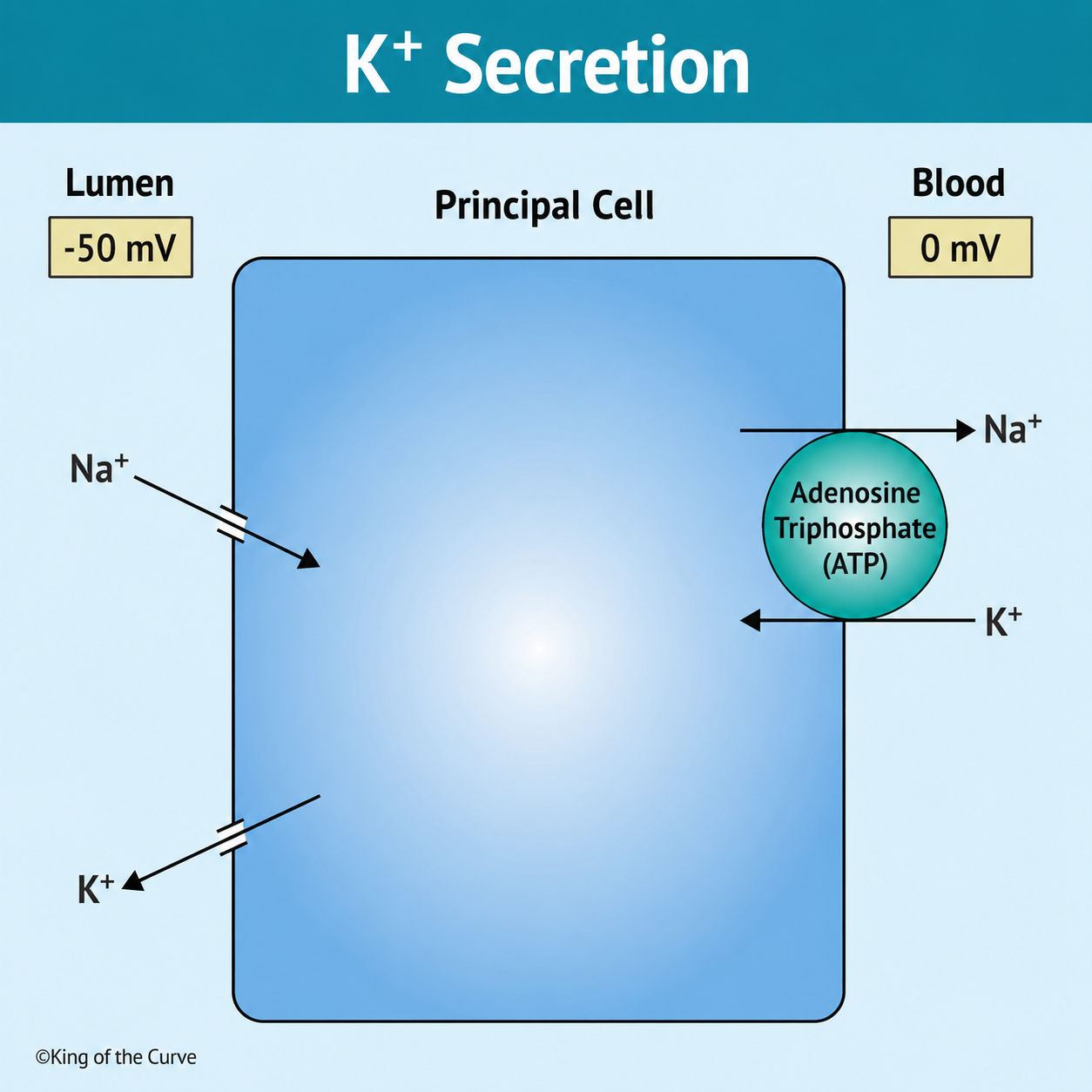
The infographic depicts a principal cell positioned between:
🧫 Tubular Lumen
The lumen contains forming urine and has a relatively negative electrical potential (-50 mV).
🩸 Blood (Interstitial Fluid)
The blood side is represented as approximately 0 mV and serves as the source of potassium that will eventually be secreted.
🔋 Na⁺/K⁺-ATPase Pump
Located on the basolateral membrane, this ATP-driven transporter is responsible for establishing the gradients necessary for potassium secretion.
⚡ Step 1: Na⁺/K⁺-ATPase Creates the Potassium Gradient
The most important transporter involved is the Na⁺/K⁺-ATPase pump.
For each ATP molecule consumed:
3 Na⁺ ions are pumped out of the cell into the blood
2 K⁺ ions are pumped into the cell
As a result:
✅ Intracellular potassium concentration rises
✅ Intracellular sodium concentration falls
This creates the driving force needed for potassium secretion into the tubular lumen.
🚪 Step 2: Sodium Enters from the Lumen
Sodium enters the principal cell through apical sodium channels (ENaC).
As positively charged sodium moves into the cell:
The tubular lumen becomes relatively more negative
The electrical gradient favors potassium movement out of the cell
This negative luminal voltage is one of the major forces promoting potassium secretion.
🔄 Step 3: Potassium Diffuses into the Lumen
Because intracellular potassium concentration is high, potassium exits the principal cell through potassium channels on the apical membrane.
Potassium movement is driven by:
📈 Concentration Gradient
High intracellular K⁺ concentration promotes diffusion outward.
⚡ Electrical Gradient
The negative lumen attracts positively charged potassium ions.
Together, these forces allow potassium to move efficiently into the tubular fluid.
🧠 Why Is the Lumen Negative?
The diagram highlights a lumen potential of approximately −50 mV.
This negative charge develops because:
Sodium is reabsorbed into principal cells
Negative ions remain in the lumen
The lumen becomes electrically negative relative to the cell
The negative lumen strongly favors secretion of positively charged potassium ions.
🎯 Factors That Increase Potassium Secretion
Several physiological conditions enhance potassium secretion:
🥗 High Potassium Intake
Increased dietary potassium stimulates renal potassium excretion.
🧬 Aldosterone
Aldosterone:
Increases Na⁺/K⁺-ATPase activity
Increases sodium channel expression
Increases potassium channel activity
The overall effect is enhanced potassium secretion.
💧 Increased Tubular Flow
Higher flow rates wash away secreted potassium, maintaining a concentration gradient that favors continued secretion.
⚖️ Increased Sodium Delivery
More sodium reaching principal cells results in greater sodium reabsorption and a more negative luminal potential.
🚨 Factors That Decrease Potassium Secretion
Potassium secretion falls when:
🧂 Low Potassium Intake
The kidneys conserve potassium to prevent deficiency.
📉 Low Aldosterone Levels
Reduced aldosterone decreases potassium secretion.
💧 Low Tubular Flow
Potassium accumulates in the lumen, reducing the diffusion gradient.
🩺 Potassium-Sparing Diuretics
Drugs such as:
Spironolactone
Eplerenone
Amiloride
Triamterene
reduce potassium secretion and may cause hyperkalemia.
⚕️ Clinical Significance
Abnormal potassium regulation can lead to dangerous electrolyte disturbances.
📈 Hyperkalemia
Excess plasma potassium can cause:
Muscle weakness
Cardiac arrhythmias
Potential cardiac arrest
📉 Hypokalemia
Excessive potassium loss may result in:
Muscle cramps
Weakness
Paralysis
Abnormal ECG findings
Understanding potassium secretion is therefore essential for interpreting renal physiology and managing electrolyte disorders.
📚 Key Exam Points
✅ Principal cells are the primary site of regulated potassium secretion.
✅ The Na⁺/K⁺-ATPase pump creates the intracellular potassium gradient.
✅ Sodium reabsorption generates a negative luminal potential.
✅ Potassium secretion increases with aldosterone, high potassium intake, and increased tubular flow.
✅ Potassium-sparing diuretics reduce potassium secretion and may cause hyperkalemia.
🔑 Takeaway
Potassium secretion by principal cells is a finely regulated process that protects the body from dangerous changes in plasma potassium concentration. The Na⁺/K⁺-ATPase pump establishes a high intracellular potassium concentration, while sodium reabsorption creates a negative luminal environment that drives potassium into the urine. Together, these mechanisms allow the kidneys to maintain potassium balance and support normal neuromuscular and cardiac function.

Frequently Asked Questions (FAQs)
-
Aim for 4-6 focused hours, ensuring you incorporate breaks to avoid burnout.
-
Practice mindfulness techniques, take practice exams under realistic conditions, and maintain a balanced lifestyle.
-
Set short-term goals, seek support from mentors, and reward yourself for small achievements.
-
Regular exercise improves focus, reduces stress, and enhances overall mental clarity.
-
KOTC offers personalized learning tools, gamification features, and adaptive question banks to help students stay on track without burnout.