
🧠 The Information Processing Model: How the Brain Stores and Retrieves Memory
The Information Processing Model is a key concept in cognitive psychology and MCAT psychology/sociology preparation because it explains how the brain receives, processes, stores, and retrieves information. This model compares human memory to a computer system where information flows through multiple stages before being permanently stored. Understanding this process helps students grasp how attention, rehearsal, and encoding affect memory formation concepts that frequently appear in MCAT passages involving cognition, memory, and learning behavior.
🧩 What Is the Information Processing Model?
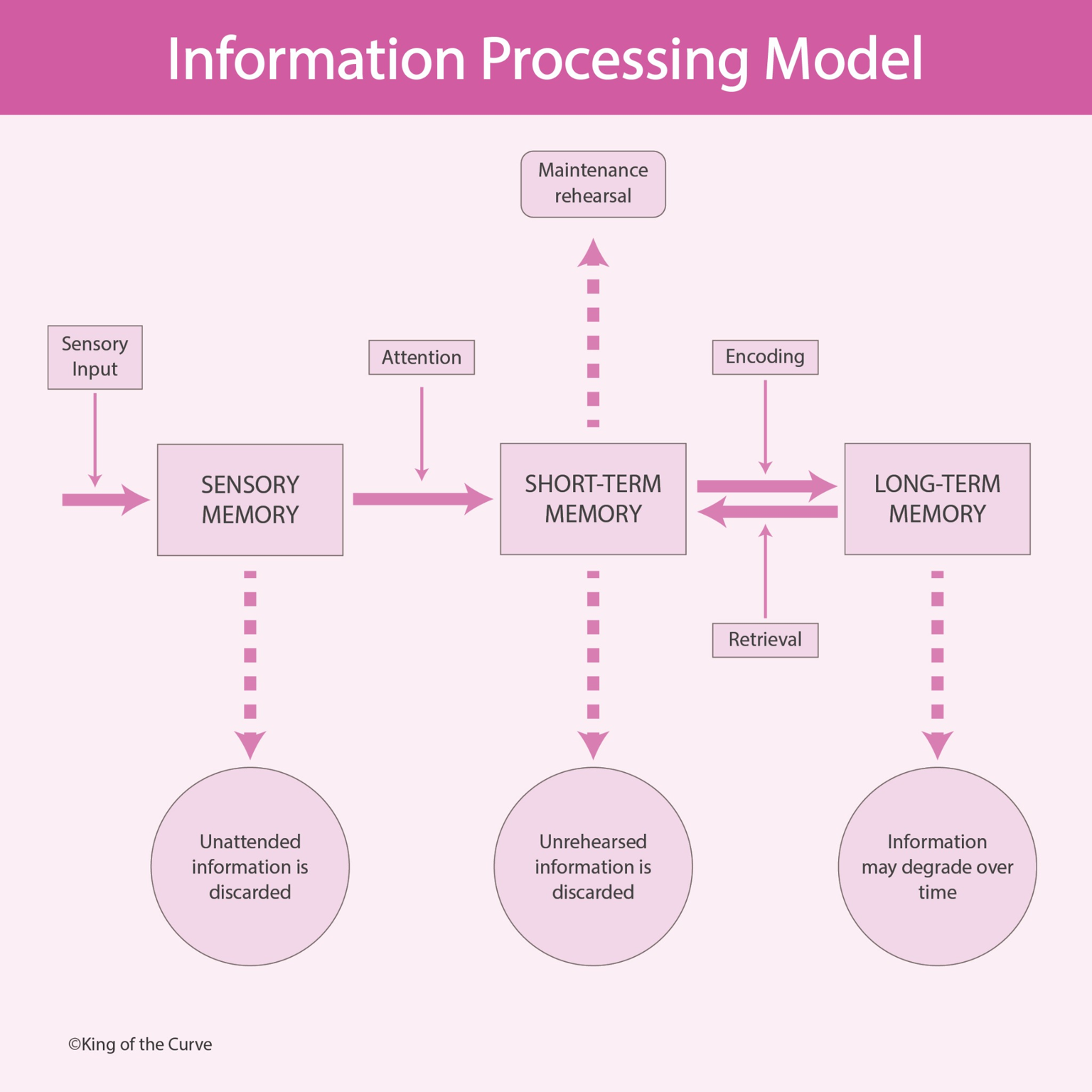
The Information Processing Model describes how information moves through different stages of memory as it is processed by the brain. According to this model, information first enters through sensory input, then moves into short-term memory if attention is applied, and finally becomes part of long-term memory through encoding and rehearsal. Each stage acts as a filter that determines whether information is stored or discarded.
👁️ Sensory Memory: The First Stage
Sensory memory is the initial stage of memory processing, where information from the environment is briefly held after it is detected by our senses. This stage lasts only a few seconds and contains raw sensory data such as sights, sounds, and smells. If attention is not directed toward the sensory input, the information quickly disappears and never moves into deeper memory processing stages.
🎯 The Role of Attention
Attention is the mechanism that determines which sensory information moves forward into short-term memory. Because humans encounter enormous amounts of sensory information every moment, the brain must selectively focus on specific stimuli. When attention is applied, the selected information is transferred from sensory memory into short-term memory where it can be actively processed.
🧠 Short-Term Memory and Maintenance Rehearsal
Short-term memory temporarily holds information for active use, usually lasting about 20–30 seconds. At this stage, individuals often use maintenance rehearsal, which involves repeating information to keep it active in memory. Without rehearsal, the information fades quickly and is discarded before reaching long-term memory.
📦 Encoding and Long-Term Memory
Encoding is the process that transforms information from short-term memory into a format suitable for long-term storage. Once encoded, information enters long-term memory, where it can remain stored for extended periods—sometimes for an entire lifetime. Long-term memory contains knowledge, experiences, skills, and learned information that individuals can access when needed.
🔄 Retrieval and Memory Use
Retrieval is the process of accessing stored information from long-term memory and bringing it back into short-term memory for active use. This process allows individuals to recall facts, solve problems, and apply previously learned information in new situations. Retrieval is essential for learning because it enables stored knowledge to influence behavior and decision-making.
📚 MCAT Strategy: Recognizing Memory Models
On the MCAT, questions related to the Information Processing Model often appear in passages discussing learning, cognition, attention, or memory retention. Students may be asked to identify which stage of memory is being described or determine why certain information was forgotten. Understanding how sensory memory, attention, rehearsal, encoding, and retrieval interact can make these questions much easier to answer.
📈 Learning Psychology Concepts with Visual Tools
Complex psychological models become easier to understand when presented visually. King of the Curve provides hundreds of illustrated science and psychology concepts designed specifically for MCAT preparation, helping students retain key information through diagrams and structured summaries. Explore more visual explanations at mcat.kingofthecurve.org, a leading resource for MCAT concept visuals and effective study tools.

Frequently Asked Questions (FAQs)
-
Aim for 4-6 focused hours, ensuring you incorporate breaks to avoid burnout.
-
Practice mindfulness techniques, take practice exams under realistic conditions, and maintain a balanced lifestyle.
-
Set short-term goals, seek support from mentors, and reward yourself for small achievements.
-
Regular exercise improves focus, reduces stress, and enhances overall mental clarity.
-
KOTC offers personalized learning tools, gamification features, and adaptive question banks to help students stay on track without burnout.