
🩸 Indirect Coombs Test: Understanding the Antibody Screening Process
The Indirect Coombs Test, also called the Indirect Antiglobulin Test (IAT), is an important laboratory procedure used to detect free antibodies in a patient’s serum that may react against red blood cells (RBCs). This test plays a major role in transfusion medicine, pregnancy screening, and diagnosing immune-related blood disorders.
🔬 What Is the Indirect Coombs Test?
The Indirect Coombs Test is designed to determine whether a person has antibodies that could attack donor red blood cells. These antibodies are often formed after exposure to foreign blood antigens through:
Blood transfusions
Pregnancy (maternal–fetal blood mixing)
Immune sensitization
The test helps prevent dangerous transfusion reactions and hemolytic disease of the newborn.
🧪 Step-by-Step Process of the Indirect Coombs Test
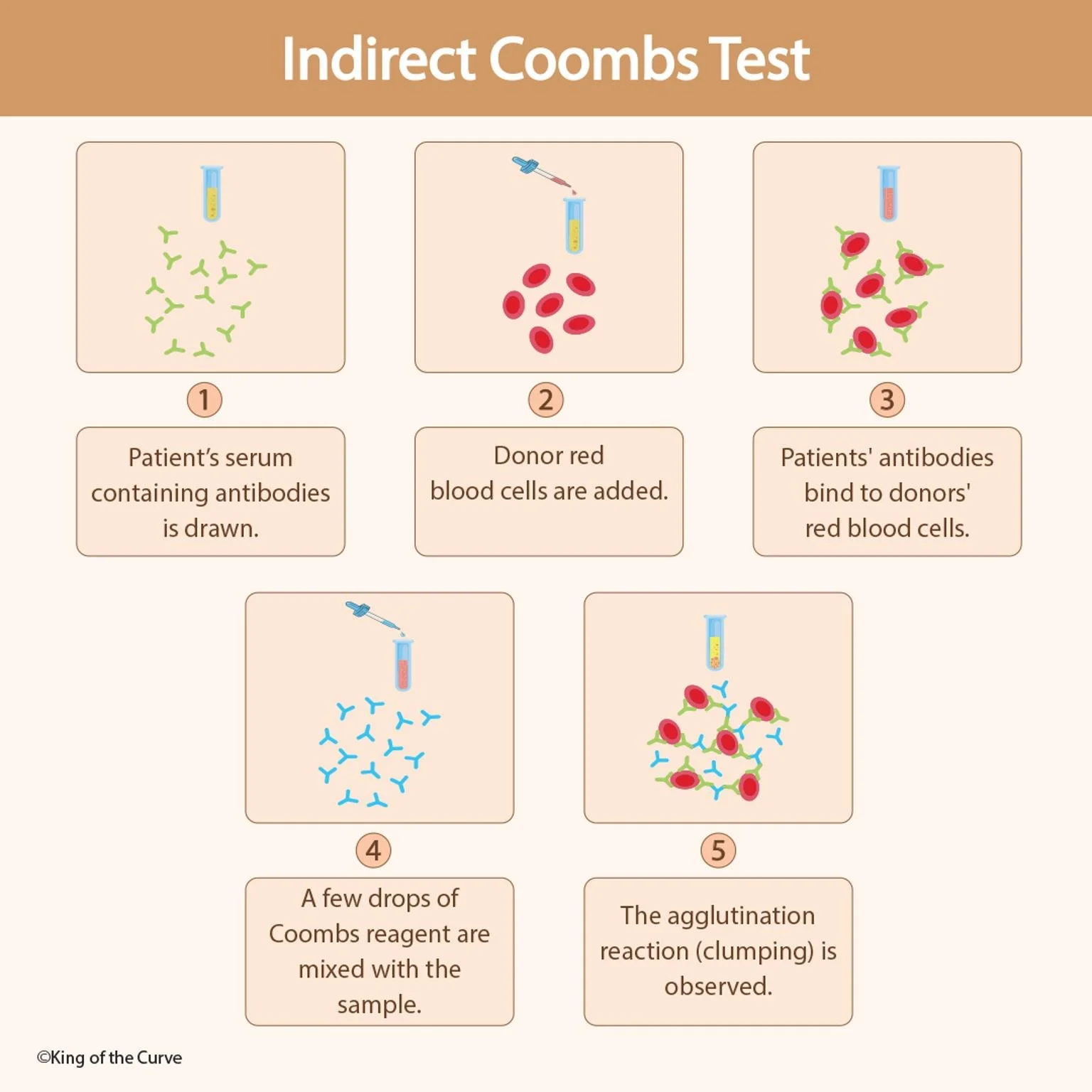
The diagram illustrates the procedure clearly through five main stages:
Step 1: Patient Serum Is Collected
A blood sample is taken, and the serum is separated. This serum may contain antibodies against RBC antigens.
Step 2: Donor Red Blood Cells Are Added
Red blood cells with known antigens are mixed into the patient’s serum.
Step 3: Antibodies Bind to RBCs
If antibodies are present, they attach to the donor RBC surface.
Step 4: Coombs Reagent Is Introduced
The Coombs reagent (anti-human globulin) is added. This reagent binds to any antibodies attached to RBCs.
Step 5: Agglutination Is Observed
If clumping occurs, the test is positive, meaning antibodies are present.
✅ Why Is the Indirect Coombs Test Important?
This test is essential for ensuring blood safety and detecting immune incompatibilities. It is commonly used for:
Pre-transfusion testing (crossmatching)
Prenatal antibody screening
Detection of alloantibodies
Preventing hemolytic transfusion reactions
👶 Role in Pregnancy and Rh Incompatibility
One of the most important clinical uses is during pregnancy. Mothers may develop antibodies against fetal RBC antigens, especially in Rh-negative mothers carrying an Rh-positive fetus.
A positive indirect Coombs test may indicate risk for:
Hemolytic Disease of the Newborn (HDN)
Fetal anemia
Neonatal jaundice
🩺 Clinical Conditions Linked to Positive Results
A positive indirect Coombs test may occur in conditions such as:
Rh sensitization
Prior transfusion exposure
Autoimmune hemolytic anemia (in some cases)
Drug-induced antibody formation
It signals the need for further evaluation before transfusion or delivery.
📊 Summary Table: Indirect Coombs Test Overview
| Feature | Indirect Coombs Test (IAT) |
|---|---|
| Detects | Free antibodies in serum |
| Sample Used | Patient serum |
| Main Purpose | Antibody screening |
| Common Use | Blood transfusion compatibility, pregnancy testing |
| Positive Result | Agglutination (clumping) |
| Key Reagent | Anti-human globulin (Coombs reagent) |
🧾 Key Takeaway
The Indirect Coombs Test is a critical screening tool used to detect antibodies that could destroy red blood cells. By identifying these antibodies early, clinicians can prevent serious transfusion complications and protect newborns from immune-mediated hemolysis.

Frequently Asked Questions (FAQs)
-
Aim for 4-6 focused hours, ensuring you incorporate breaks to avoid burnout.
-
Practice mindfulness techniques, take practice exams under realistic conditions, and maintain a balanced lifestyle.
-
Set short-term goals, seek support from mentors, and reward yourself for small achievements.
-
Regular exercise improves focus, reduces stress, and enhances overall mental clarity.
-
KOTC offers personalized learning tools, gamification features, and adaptive question banks to help students stay on track without burnout.