
🧬 Inclusive Fitness Explained: A Key Concept in Evolutionary Biology
Inclusive fitness is a foundational concept in evolutionary biology that helps explain how natural selection can favor behaviors that appear altruistic. Instead of focusing only on an individual's own reproductive success, inclusive fitness considers the total genetic contribution an organism makes to future generations through both direct reproduction and the reproduction of genetically related individuals. This idea is especially important for MCAT biology passages involving evolutionary theory, kin selection, and social behavior, making it a high-yield concept for premed students.
🧠 What Is Inclusive Fitness?
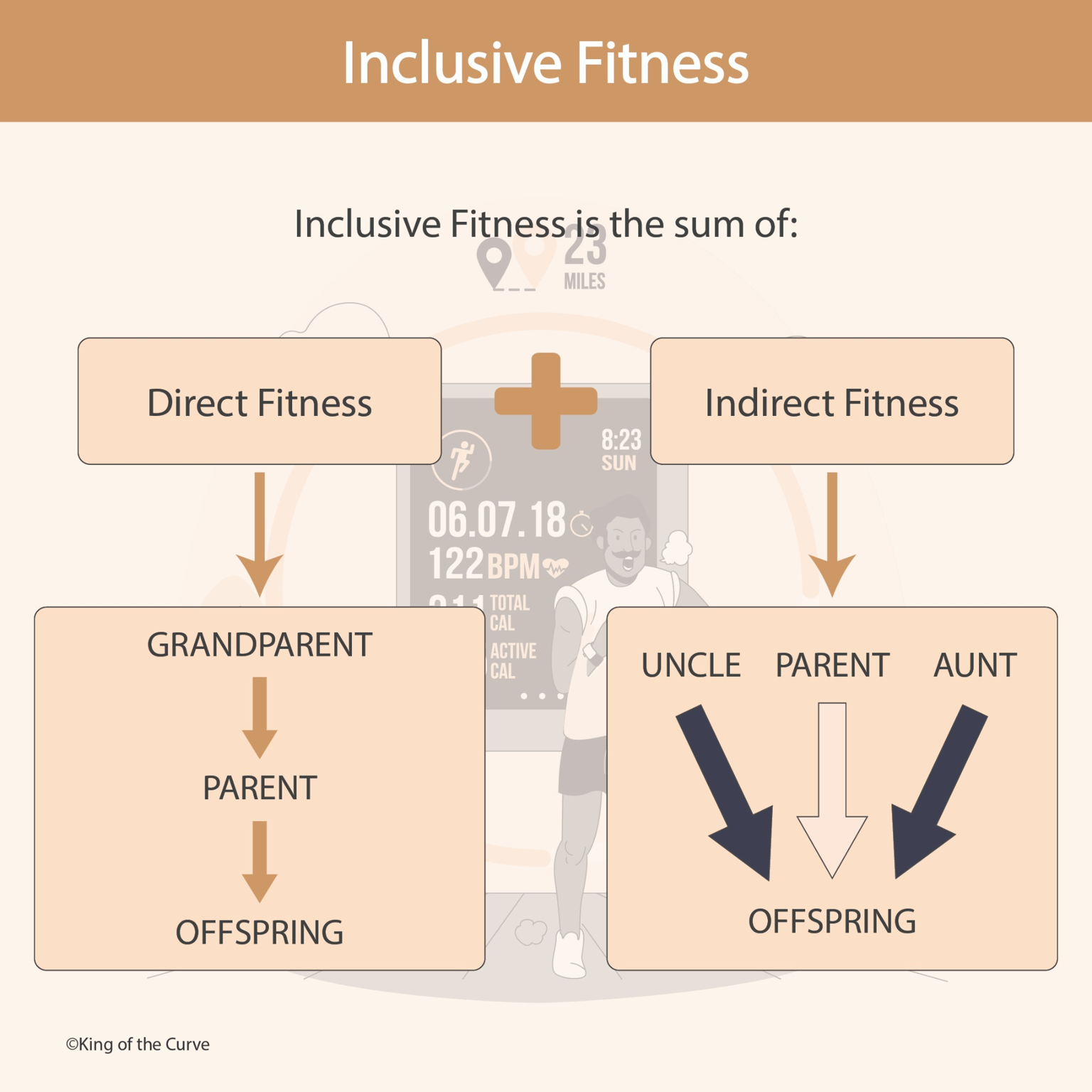
Inclusive fitness refers to the total genetic success of an organism, including both its own offspring and the offspring of relatives that share its genes. Because relatives share portions of their DNA, helping a relative reproduce can still promote the survival of shared genes. In evolutionary terms, this means that behaviors benefiting family members may be favored by natural selection even if they reduce the individual’s own chances of reproduction.
👨👩👧 Direct Fitness Explained
Direct fitness represents the genetic contribution an individual makes through its own offspring. When an organism reproduces, it passes approximately 50% of its genes to each child, ensuring that its genetic material continues into the next generation. This traditional view of fitness focuses strictly on personal reproductive success, but inclusive fitness expands the concept by considering how relatives also contribute to gene survival.
🤝 Understanding Indirect Fitness
Indirect fitness refers to the genetic benefits gained by helping relatives reproduce. Because relatives share genes, assisting them in survival or reproduction indirectly promotes the spread of those shared genes. For example, an individual helping a sibling raise offspring still contributes genetically to future generations because siblings share about 50% of their DNA.
🧬 Genetic Relatedness and Evolution
The concept of inclusive fitness relies heavily on genetic relatedness, which measures how many genes two individuals share. The closer the relationship, the greater the genetic overlap. Evolutionary biologists use relatedness values to predict when altruistic behavior may evolve, since helping close relatives preserves more shared genetic material.
| Relationship | Approximate Shared Genes | Example Contribution |
|---|---|---|
| Parent → Child | 50% | Direct fitness |
| Siblings | 50% | Indirect fitness |
| Aunt/Uncle → Niece/Nephew | 25% | Indirect fitness |
| Grandparent → Grandchild | 25% | Direct lineage support |
📈 Hamilton’s Rule and Altruism
One of the most important formulas related to inclusive fitness is Hamilton’s Rule, which predicts when altruistic behavior will evolve. The rule states that altruism is favored when the genetic relatedness multiplied by the benefit to the recipient exceeds the cost to the helper. This principle explains behaviors such as cooperative breeding, warning signals in animals, and resource sharing within family groups.
🧠 MCAT Strategy: Recognizing Inclusive Fitness Questions
On the MCAT, inclusive fitness often appears in passages discussing social animals, kin selection, or evolutionary strategies. Questions may ask students to analyze why an organism sacrifices resources or risks survival for relatives. When you encounter these scenarios, remember that the key idea is shared genetic survival, not just individual reproduction.
🧬 Why Inclusive Fitness Matters in Biology
Inclusive fitness helps scientists understand many biological phenomena, including cooperative behaviors, social insect colonies, and family-based survival strategies. For example, worker bees often sacrifice their own reproduction to support the queen, because helping close relatives ensures that shared genes are passed on to future generations. This concept bridges genetics, ecology, and evolutionary biology.

Frequently Asked Questions (FAQs)
-
Aim for 4-6 focused hours, ensuring you incorporate breaks to avoid burnout.
-
Practice mindfulness techniques, take practice exams under realistic conditions, and maintain a balanced lifestyle.
-
Set short-term goals, seek support from mentors, and reward yourself for small achievements.
-
Regular exercise improves focus, reduces stress, and enhances overall mental clarity.
-
KOTC offers personalized learning tools, gamification features, and adaptive question banks to help students stay on track without burnout.