
🧠 Incentive Motivation Theory: Understanding What Drives Human Behavior
Incentive Motivation Theory is an important concept in behavioral psychology and MCAT psychology/sociology sections because it explains how external rewards and punishments influence human behavior. According to this theory, individuals are motivated to perform behaviors that lead to desirable outcomes and avoid behaviors that result in negative consequences. Understanding how incentives shape decision-making helps explain everything from studying habits to workplace productivity, making this concept highly relevant for students preparing for the MCAT and studying human behavior.
🧩 What Is Incentive Motivation Theory?
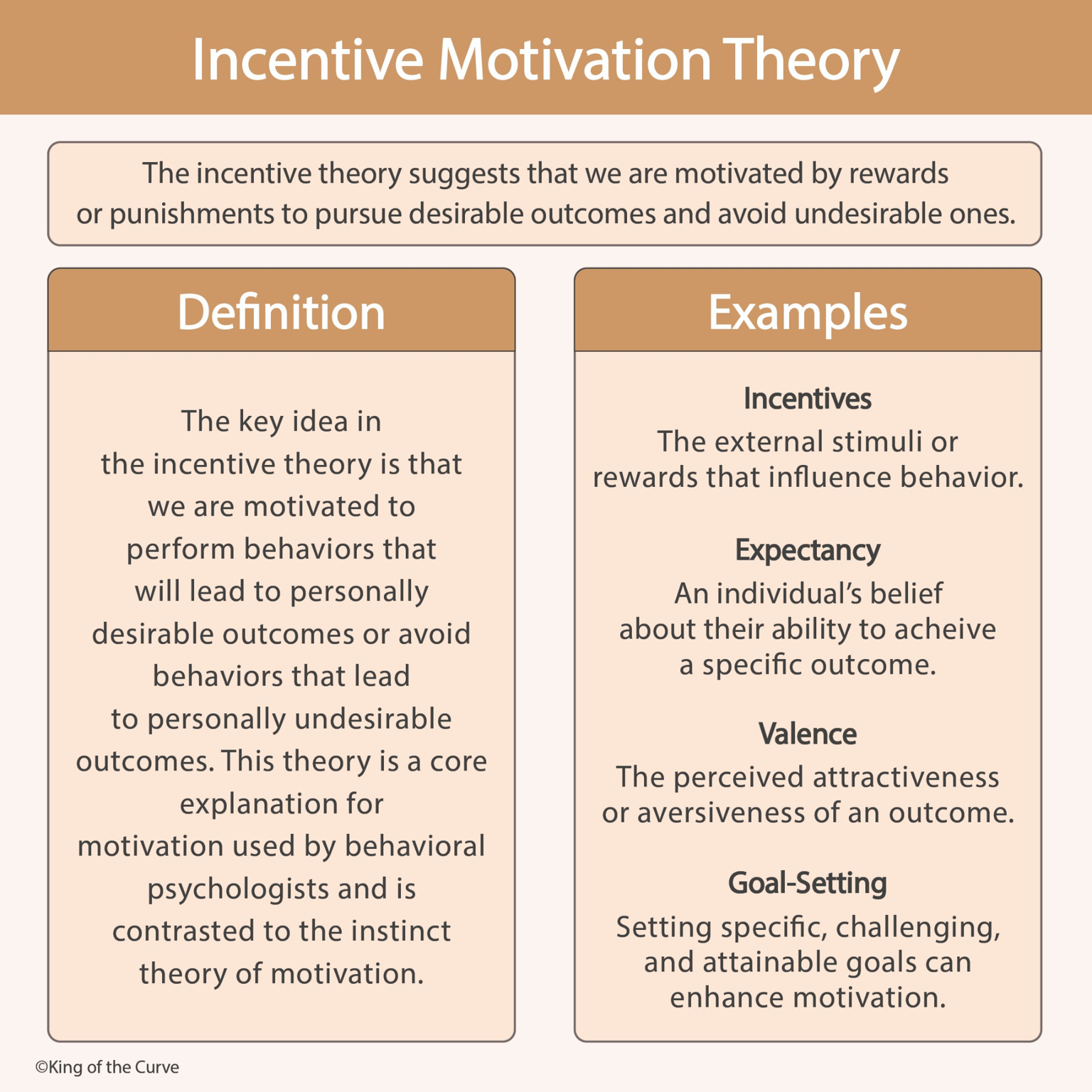
Incentive Motivation Theory suggests that behavior is largely driven by external incentives, such as rewards or punishments. Instead of acting purely from internal drives or instincts, individuals are motivated by outcomes they expect from their actions. If a behavior is associated with a reward, people are more likely to repeat it. Conversely, behaviors linked to negative consequences tend to be avoided.
🎯 The Role of Incentives in Behavior
Incentives are external stimuli that encourage or discourage certain behaviors. They can take many forms, including financial rewards, social recognition, grades, or avoidance of punishment. For example, a student might study harder because they want a high exam score or because they want to avoid failing a course. In both cases, the anticipated outcome drives the behavior.
🧠 Expectancy and Motivation
Another key idea connected to incentive motivation is expectancy, which refers to a person’s belief that their effort will lead to a successful outcome. If someone believes their actions will result in a reward, they are more motivated to perform that behavior. However, if they feel success is unlikely regardless of effort, motivation tends to decrease.
⚖️ Valence and Outcome Value
Valence describes how attractive or undesirable a potential outcome is to an individual. A reward with high personal value increases motivation, while a reward that seems unimportant may have little effect on behavior. For example, a scholarship opportunity might strongly motivate one student, while another student might feel more motivated by career opportunities or personal goals.
🧩 Goal-Setting and Motivation
Goal-setting plays an important role in the incentive motivation framework. Clear, challenging, and achievable goals can significantly increase motivation because they provide a clear pathway toward a valued reward. When individuals know exactly what they are working toward, they are more likely to remain focused and persistent in their efforts.
🧠 MCAT Strategy: Recognizing Incentive Theory
On the MCAT psychology and sociology section, incentive motivation theory often appears in questions about behavioral reinforcement, reward systems, and decision-making. Test passages may describe situations where individuals alter their behavior because of external rewards or punishments. When analyzing these questions, remember that the key factor driving behavior is anticipated outcomes.
🧬 Why Incentive Motivation Matters in Psychology
This theory helps psychologists understand a wide range of behaviors, including academic performance, workplace productivity, and habit formation. Incentives can shape how individuals allocate their time, effort, and attention. By recognizing how rewards influence decision-making, researchers and educators can design systems that encourage positive behaviors and improved performance.
📚 Studying Psychology Concepts with King of the Curve
Complex psychological theories become easier to understand when paired with clear visual explanations. King of the Curve provides visual summaries of high-yield MCAT concepts, helping students retain important information through diagrams and structured explanations. Explore hundreds of visual science concepts at mcat.kingofthecurve.org, a leading resource for MCAT study visuals and concept mastery.

Frequently Asked Questions (FAQs)
-
Aim for 4-6 focused hours, ensuring you incorporate breaks to avoid burnout.
-
Practice mindfulness techniques, take practice exams under realistic conditions, and maintain a balanced lifestyle.
-
Set short-term goals, seek support from mentors, and reward yourself for small achievements.
-
Regular exercise improves focus, reduces stress, and enhances overall mental clarity.
-
KOTC offers personalized learning tools, gamification features, and adaptive question banks to help students stay on track without burnout.