
🩸 IgM-Mediated Cold Agglutinin Disease: Causes, Mechanism, and Associations
Cold agglutinin disease (CAD) is a form of autoimmune hemolytic anemia in which IgM antibodies target red blood cells (RBCs), particularly in colder temperatures. This leads to RBC agglutination and destruction, resulting in anemia and related symptoms.
❄️ What is Cold Agglutinin Disease?
Cold agglutinin disease occurs when IgM antibodies bind to RBCs at low temperatures (usually <30°C). This binding activates the complement system, leading to hemolysis (destruction of red blood cells).
Unlike warm autoimmune hemolytic anemia, CAD is primarily complement-mediated and often occurs in peripheral body parts like fingers, ears, and toes.
⚙️ Pathophysiology
IgM antibodies bind to RBCs in cold environments
This causes RBC clumping (agglutination)
Complement activation leads to:
Intravascular hemolysis
Extravascular hemolysis (mainly in the liver)
RBCs are destroyed → resulting in anemia
🧬 Associated Conditions
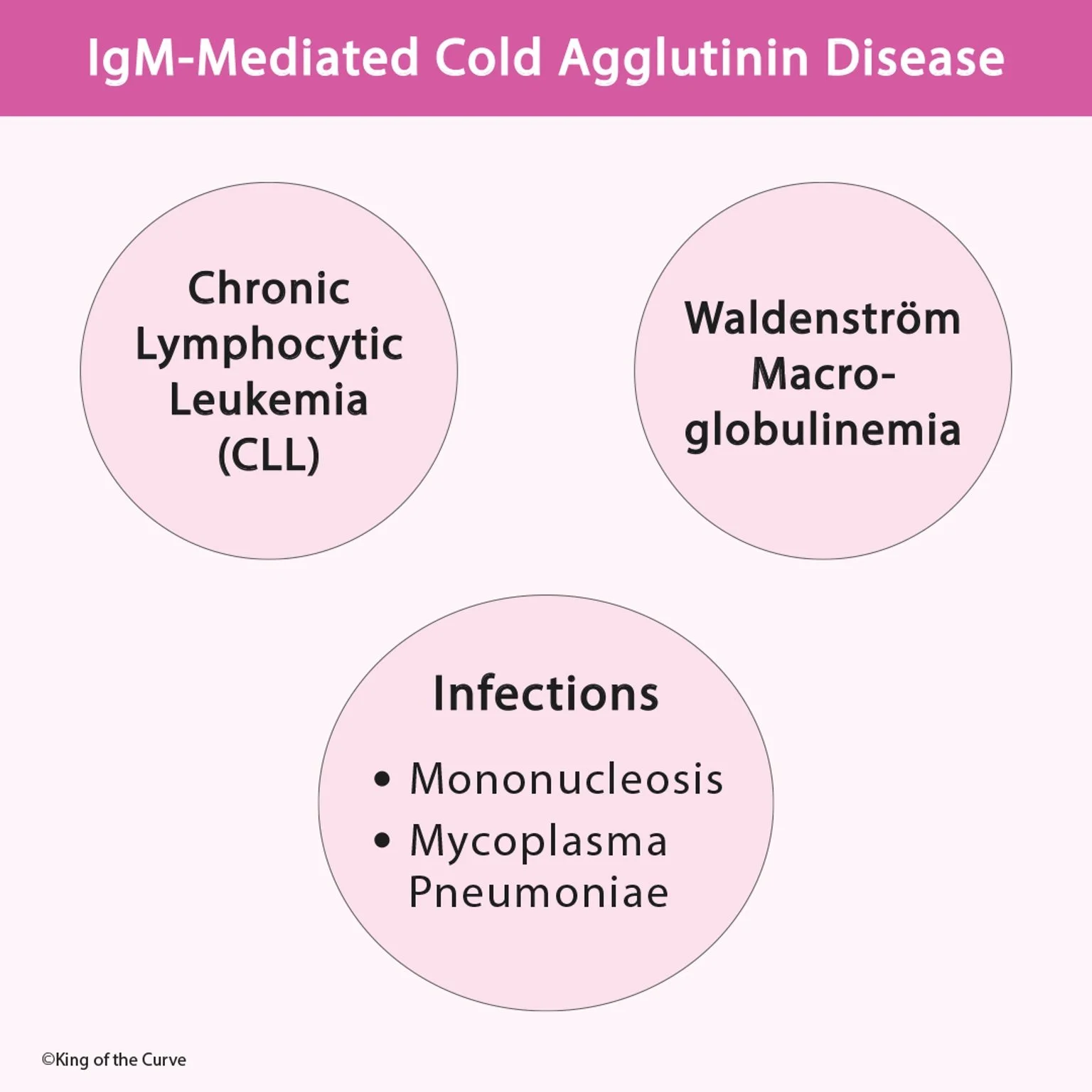
Cold agglutinin disease is commonly secondary to underlying disorders. Your diagram highlights the key associations:
🧪 Hematologic Malignancies
Chronic Lymphocytic Leukemia (CLL)
Waldenström Macroglobulinemia
These conditions produce abnormal B cells that generate IgM antibodies, increasing the risk of CAD.
🦠 Infections
Certain infections can trigger transient cold agglutinin disease:
Mononucleosis (Epstein-Barr Virus)
Mycoplasma pneumoniae
These infections stimulate antibody production, including cold-reactive IgM.
🩺 Clinical Features
Patients with CAD may present with:
Fatigue and pallor (due to anemia)
Acrocyanosis (bluish discoloration of extremities in cold)
Raynaud-like symptoms
Dark urine (hemoglobinuria in severe cases)
🔬 Diagnosis
Direct Coombs test (Direct Antiglobulin Test) → positive for complement (C3)
Elevated LDH and indirect bilirubin
Decreased haptoglobin
Peripheral smear may show RBC agglutination
💊 Management
Treatment depends on severity and underlying cause:
🧊 Avoid Cold Exposure
First-line lifestyle modification
Prevents antibody binding and symptoms
💉 Treat Underlying Condition
Especially important in CLL or Waldenström macroglobulinemia
🧪 Medications
Rituximab (targets B cells)
Complement inhibitors (in selected cases)
🧠 Key Takeaways
CAD is caused by IgM antibodies reacting at cold temperatures
Leads to complement-mediated hemolysis
Strongly associated with:
CLL
Waldenström macroglobulinemia
Infections (EBV, Mycoplasma)
Management focuses on avoiding cold and treating underlying causes

Frequently Asked Questions (FAQs)
-
Aim for 4-6 focused hours, ensuring you incorporate breaks to avoid burnout.
-
Practice mindfulness techniques, take practice exams under realistic conditions, and maintain a balanced lifestyle.
-
Set short-term goals, seek support from mentors, and reward yourself for small achievements.
-
Regular exercise improves focus, reduces stress, and enhances overall mental clarity.
-
KOTC offers personalized learning tools, gamification features, and adaptive question banks to help students stay on track without burnout.