
🧬 Heme Synthesis Pathway and Associated Disorders
Heme synthesis is a vital biochemical pathway responsible for producing heme, an iron-containing compound essential for hemoglobin, myoglobin, cytochromes, and many enzymes. This pathway occurs mainly in the liver and bone marrow and involves multiple enzymatic reactions taking place in both the mitochondria and cytosol. Defects in any of these enzymes can lead to a group of disorders known as porphyrias or sideroblastic anemia. Understanding the heme synthesis pathway helps explain many clinical diseases related to metabolism, neurology, and hematology.
⚙️ First Step of Heme Synthesis
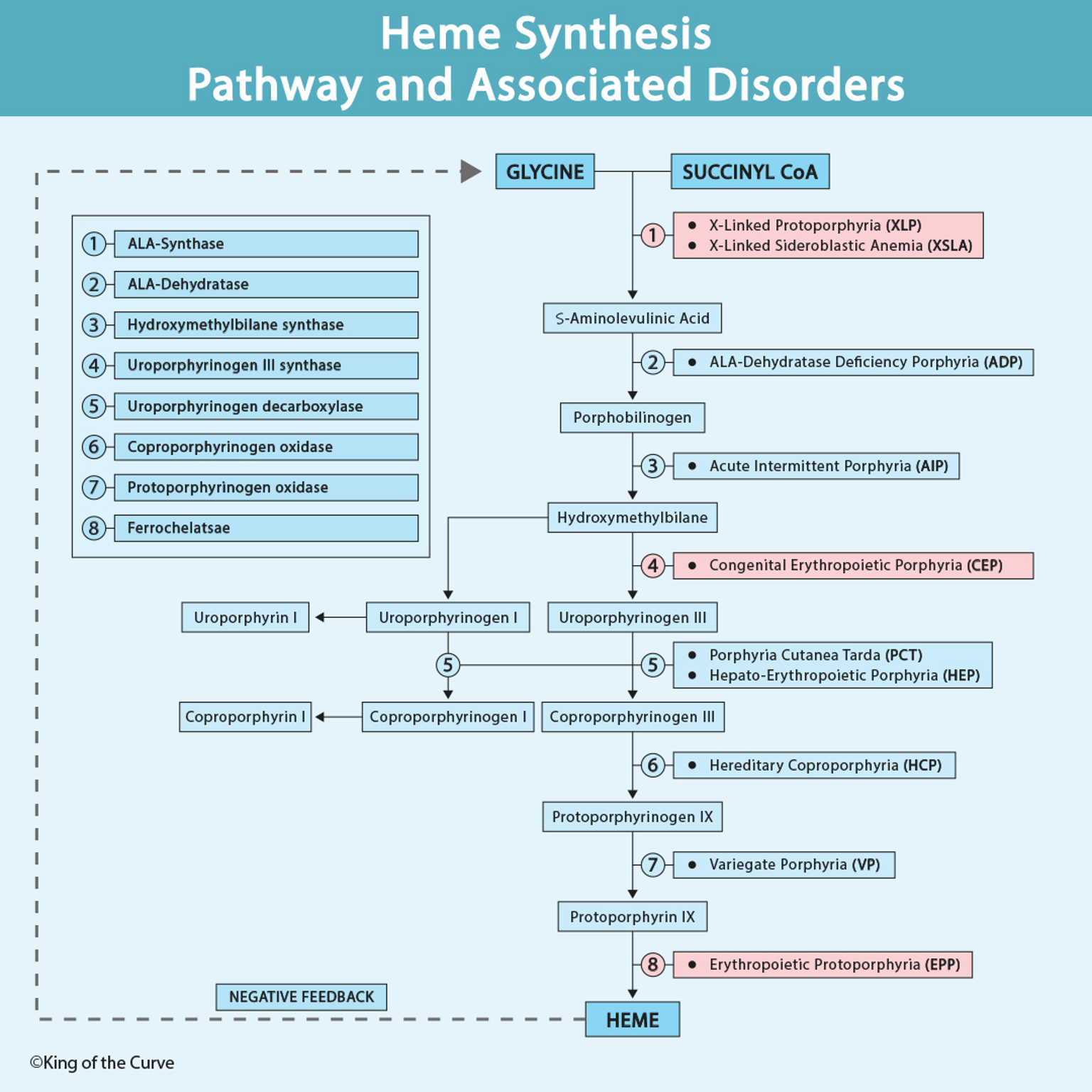
The pathway begins in the mitochondria where glycine combines with succinyl CoA to form δ-aminolevulinic acid (ALA). This reaction is catalyzed by the enzyme ALA-synthase, which is considered the rate-limiting enzyme of the pathway. Vitamin B6 acts as an important cofactor in this step. Deficiency or mutation of ALA-synthase can lead to disorders such as X-linked sideroblastic anemia (XLSA) and X-linked protoporphyria (XLP).
🧪 Formation of Porphobilinogen
ALA then moves into the cytosol where ALA-dehydratase converts it into porphobilinogen. Deficiency of this enzyme results in ALA-dehydratase deficiency porphyria (ADP), a rare metabolic disorder. Porphobilinogen molecules are later joined together by hydroxymethylbilane synthase, and deficiency of this enzyme causes Acute Intermittent Porphyria (AIP), a condition known for abdominal pain, neuropsychiatric symptoms, and dark urine.
🩸 Formation of Uroporphyrinogens
Hydroxymethylbilane is converted into uroporphyrinogen III by the enzyme uroporphyrinogen III synthase. Defects in this step produce Congenital Erythropoietic Porphyria (CEP), characterized by photosensitivity and reddish urine. Uroporphyrinogen III is then converted into coproporphyrinogen III by uroporphyrinogen decarboxylase. Deficiency here causes Porphyria Cutanea Tarda (PCT), the most common porphyria, which presents with blistering skin lesions and photosensitivity.
🔬 Final Steps Toward Heme Production
The pathway continues with the conversion of coproporphyrinogen III into protoporphyrin IX through several enzymatic reactions. Deficiencies in these enzymes lead to conditions such as Hereditary Coproporphyria (HCP) and Variegate Porphyria (VP). In the final step, ferrochelatase inserts iron into protoporphyrin IX to form heme. Deficiency of ferrochelatase causes Erythropoietic Protoporphyria (EPP), which leads to painful photosensitivity.
📋 Disorders Associated with Heme Synthesis
| Enzyme Deficiency | Associated Disorder | Main Symptoms |
|---|---|---|
| ALA-Synthase | X-Linked Sideroblastic Anemia (XLSA), X-Linked Protoporphyria (XLP) | Anemia, photosensitivity |
| ALA-Dehydratase | ALA-Dehydratase Deficiency Porphyria (ADP) | Neurologic symptoms |
| Hydroxymethylbilane Synthase | Acute Intermittent Porphyria (AIP) | Abdominal pain, psychiatric symptoms |
| Uroporphyrinogen III Synthase | Congenital Erythropoietic Porphyria (CEP) | Photosensitivity, red urine |
| Uroporphyrinogen Decarboxylase | Porphyria Cutanea Tarda (PCT) | Blistering skin lesions |
| Coproporphyrinogen Oxidase | Hereditary Coproporphyria (HCP) | Abdominal pain, neuropathy |
| Protoporphyrinogen Oxidase | Variegate Porphyria (VP) | Skin and neurologic symptoms |
| Ferrochelatase | Erythropoietic Protoporphyria (EPP) | Painful photosensitivity |
🧠 Regulation of the Pathway
Heme synthesis is tightly regulated through negative feedback inhibition. High levels of heme suppress the activity of ALA-synthase, preventing excess production. Certain drugs, alcohol, fasting, and hormonal changes can induce the pathway and trigger porphyria attacks in susceptible individuals. This is why avoiding triggers is important in managing porphyria disorders.
💡 Clinical Importance of Heme Synthesis
The heme synthesis pathway is clinically important because defects can affect the nervous system, skin, and blood cells. Many porphyrias present with either neurovisceral symptoms or photosensitivity depending on where toxic intermediates accumulate. Understanding the enzymes and associated disorders helps clinicians diagnose metabolic diseases, interpret laboratory findings, and choose appropriate treatments.
🏁 Conclusion
Heme synthesis is a complex but highly organized metabolic pathway essential for oxygen transport and cellular respiration. Each enzymatic step plays a critical role, and disruption at any point can lead to serious inherited disorders. By studying the pathway and associated porphyrias, students and healthcare professionals gain valuable insight into biochemical regulation, genetic disease mechanisms, and clinical medicine.

Frequently Asked Questions (FAQs)
-
Aim for 4-6 focused hours, ensuring you incorporate breaks to avoid burnout.
-
Practice mindfulness techniques, take practice exams under realistic conditions, and maintain a balanced lifestyle.
-
Set short-term goals, seek support from mentors, and reward yourself for small achievements.
-
Regular exercise improves focus, reduces stress, and enhances overall mental clarity.
-
KOTC offers personalized learning tools, gamification features, and adaptive question banks to help students stay on track without burnout.