
🍬 Glucose Transport in the Intestinal Epithelium
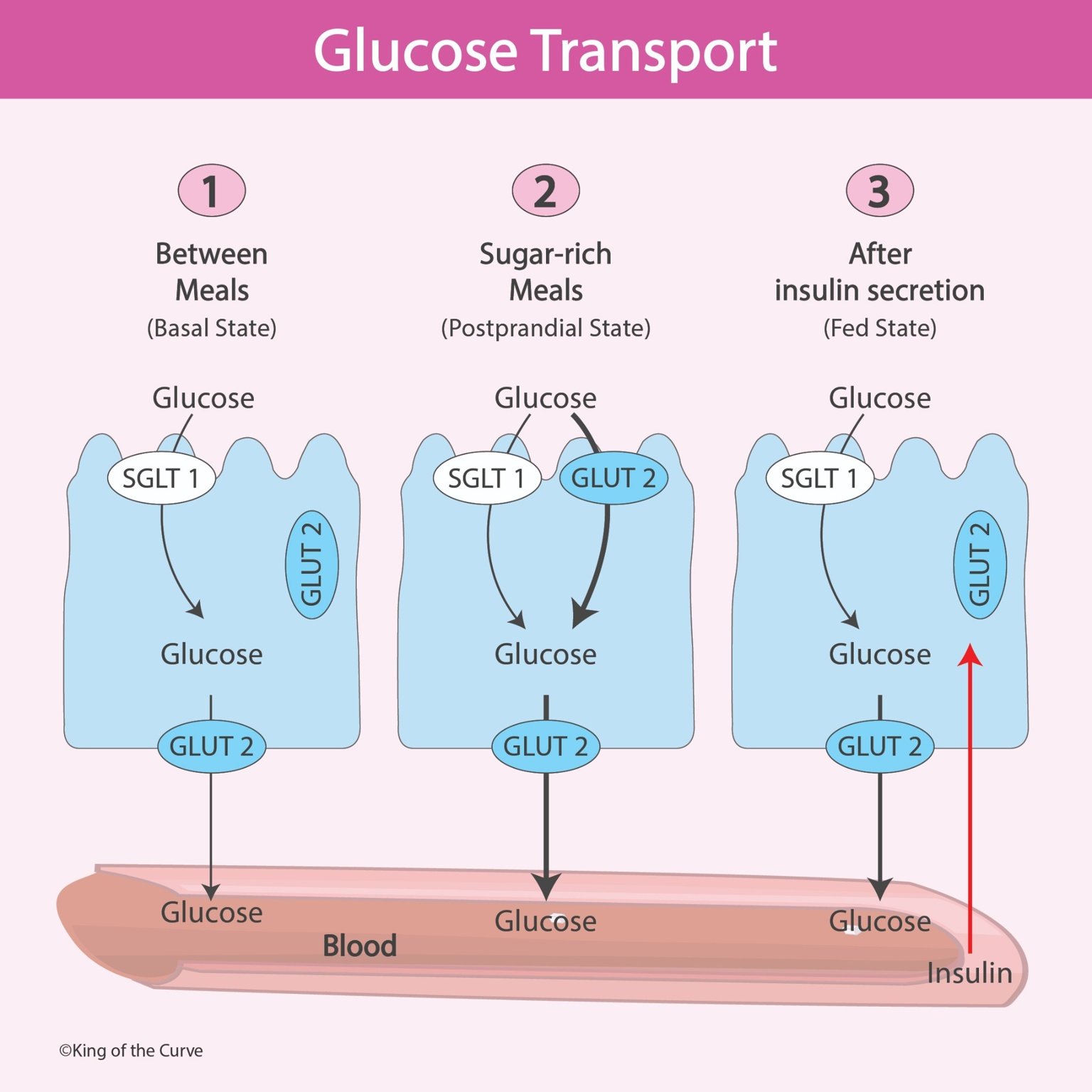
Glucose absorption in the intestine is a tightly regulated process that adapts to the body’s metabolic state. Specialized transporters on intestinal epithelial cells ensure efficient uptake of glucose from the gut lumen into the bloodstream during fasting, after meals, and in response to insulin. The diagram illustrates how glucose transport changes across basal, postprandial, and fed states.
🕒 1. Between Meals (Basal State)
In the fasting or basal state, glucose levels in the intestinal lumen are relatively low. Under these conditions, glucose enters enterocytes primarily via SGLT1 (Sodium–Glucose Linked Transporter 1) on the apical membrane. This transporter uses secondary active transport, coupling glucose uptake with sodium ions. Once inside the cell, glucose exits across the basolateral membrane into the bloodstream through GLUT2, a facilitative glucose transporter.
🍽️ 2. After Sugar-Rich Meals (Postprandial State)
Following a carbohydrate-rich meal, luminal glucose concentrations rise significantly. In addition to SGLT1, GLUT2 is transiently recruited to the apical membrane, allowing rapid, high-capacity glucose uptake by facilitated diffusion. This adaptive mechanism enhances glucose absorption during periods of abundance. Glucose then continues to leave the enterocyte through basolateral GLUT2 into the blood.
💉 3. After Insulin Secretion (Fed State)
In the fed state, elevated blood glucose stimulates insulin secretion. Insulin promotes the internalization of apical GLUT2, reducing excessive glucose absorption from the gut. Glucose transport reverts mainly to SGLT1 at the apical side, while basolateral GLUT2 continues to move absorbed glucose into the circulation. This prevents postprandial hyperglycemia and helps maintain glucose homeostasis.
🧾 Summary Table: Glucose Transport Mechanisms
| Physiological State | Apical Transporter(s) | Basolateral Transporter | Key Feature |
|---|---|---|---|
| Basal Fasting | SGLT1 | GLUT2 | Active glucose uptake at low luminal glucose |
| Postprandial Sugar-rich meal | SGLT1 + Apical GLUT2 | GLUT2 | High-capacity glucose absorption |
| Fed After insulin secretion | SGLT1 | GLUT2 | Insulin removes apical GLUT2 to limit uptake |
🔬 Key Transporters Involved
SGLT1: Active glucose uptake from the intestinal lumen (always present)
GLUT2 (apical): High-capacity glucose uptake during high luminal glucose
GLUT2 (basolateral): Glucose exit into the bloodstream
Insulin: Regulates GLUT2 trafficking after meals
🧠 Clinical Relevance
Disruption of these transport mechanisms plays a role in metabolic disorders. For example, excessive apical GLUT2 activity may contribute to postprandial hyperglycemia, while SGLT1 inhibitors are being explored to limit glucose absorption. Understanding these pathways is essential for grasping intestinal physiology and diabetes management.

Frequently Asked Questions (FAQs)
-
Aim for 4-6 focused hours, ensuring you incorporate breaks to avoid burnout.
-
Practice mindfulness techniques, take practice exams under realistic conditions, and maintain a balanced lifestyle.
-
Set short-term goals, seek support from mentors, and reward yourself for small achievements.
-
Regular exercise improves focus, reduces stress, and enhances overall mental clarity.
-
KOTC offers personalized learning tools, gamification features, and adaptive question banks to help students stay on track without burnout.