
🍞 Carbohydrate Digestive Enzymes and Their Functions
Carbohydrates are one of the body’s most important energy sources, supplying glucose to fuel the brain, muscles, and vital organs. However, most dietary carbohydrates cannot be absorbed immediately in their complex form. They must first be broken down into smaller sugars through digestion.
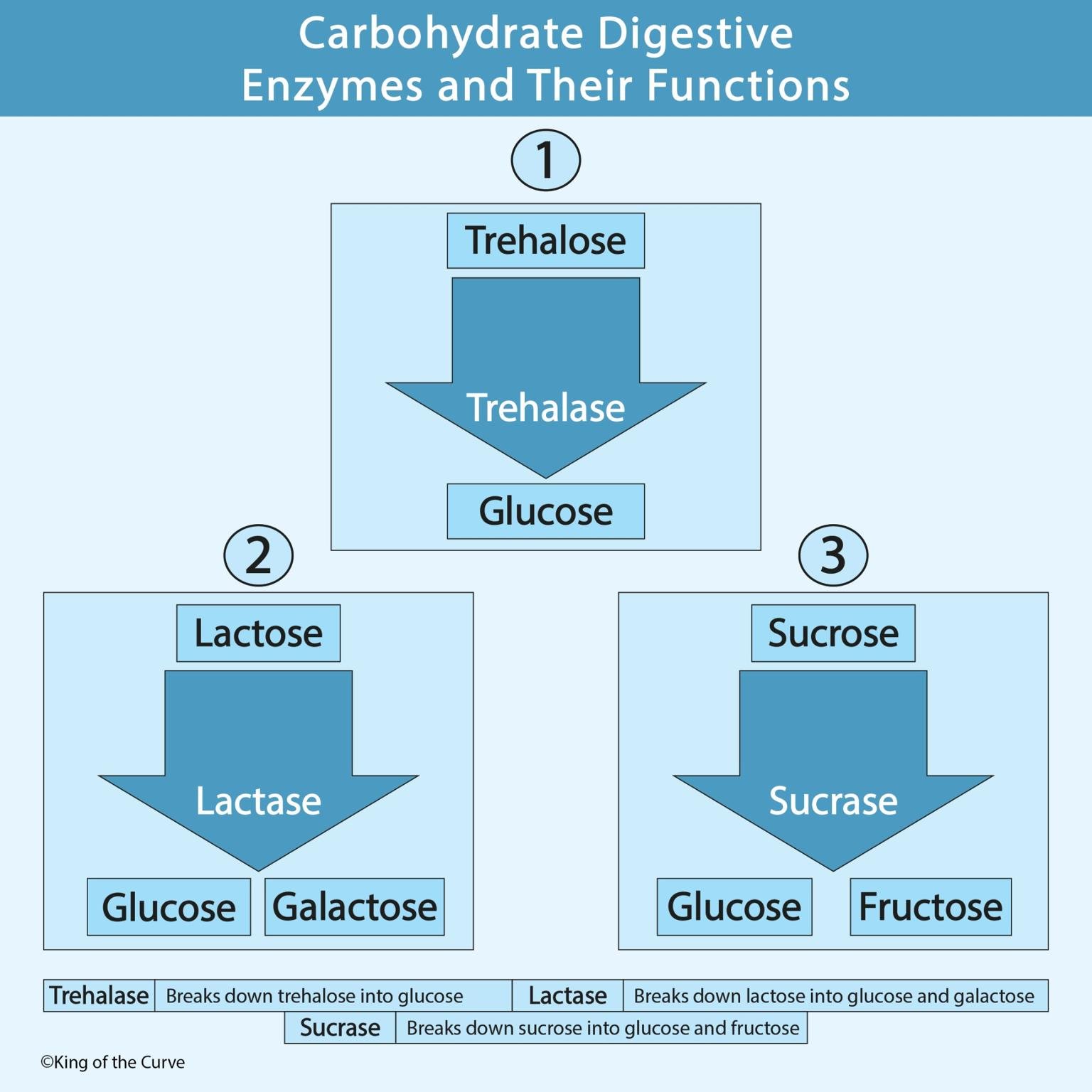
This process is made possible by digestive enzymes, specialized proteins that help convert disaccharides into absorbable monosaccharides. The infographic highlights three key enzymes involved in carbohydrate digestion: trehalase, lactase, and sucrase.
🧬 Why Carbohydrate Digestion Matters
Carbohydrate digestion primarily occurs in the small intestine, where enzymes located along the intestinal brush border break down sugars into forms that can enter the bloodstream.
Without proper enzyme function, carbohydrates remain undigested, leading to symptoms such as bloating, gas, diarrhea, and nutrient malabsorption. Understanding these enzymes is essential in both physiology and clinical medicine.
🔹 Trehalase: Breaking Down Trehalose
Trehalose is a sugar found in mushrooms, insects, and some processed foods. The enzyme trehalase is responsible for breaking trehalose into glucose, which can then be absorbed and used for energy.
Trehalase deficiency is rare, but when present, it can cause digestive discomfort after consuming trehalose-containing foods.
🥛 Lactase: Digesting Lactose in Dairy
Lactose, the main sugar in milk and dairy products, is broken down by the enzyme lactase. Lactase splits lactose into two monosaccharides:
Glucose
Galactose
Lactase deficiency is extremely common worldwide and leads to lactose intolerance, where individuals experience bloating, cramps, and diarrhea after consuming dairy products.
🍬 Sucrase: Breaking Down Sucrose (Table Sugar)
Sucrose, commonly known as table sugar, is one of the most widely consumed carbohydrates. The enzyme sucrase breaks sucrose into:
Glucose
Fructose
These sugars are then absorbed through the intestinal lining and transported into the bloodstream for energy use or storage.
Sucrase deficiency is uncommon but can contribute to carbohydrate malabsorption in some individuals.
📊 Summary Table: Key Carbohydrate Digestive Enzymes
| Enzyme | Substrate (Sugar) | Products Formed | Clinical Note |
|---|---|---|---|
| Trehalase | Trehalose | Glucose | Rare deficiency |
| Lactase | Lactose | Glucose + Galactose | Lactose intolerance common |
| Sucrase | Sucrose | Glucose + Fructose | Important for sugar digestion |
⚠️ Clinical Importance of Enzyme Deficiencies
Digestive enzyme deficiencies can significantly impact nutrition and quality of life. When disaccharides are not properly digested, they pass into the colon where bacteria ferment them, producing gas and drawing water into the intestines.
This explains why conditions like lactose intolerance cause symptoms shortly after dairy consumption. Recognizing enzyme-related disorders helps guide dietary adjustments and treatments.
✅ Conclusion
Carbohydrate digestion depends on several brush-border enzymes that convert dietary sugars into absorbable monosaccharides. Trehalase, lactase, and sucrase each play a vital role in breaking down specific disaccharides into usable energy sources.
By understanding these enzymes and their functions, students and healthcare professionals can better appreciate both normal digestion and common clinical disorders such as lactose intolerance.

Frequently Asked Questions (FAQs)
-
Aim for 4-6 focused hours, ensuring you incorporate breaks to avoid burnout.
-
Practice mindfulness techniques, take practice exams under realistic conditions, and maintain a balanced lifestyle.
-
Set short-term goals, seek support from mentors, and reward yourself for small achievements.
-
Regular exercise improves focus, reduces stress, and enhances overall mental clarity.
-
KOTC offers personalized learning tools, gamification features, and adaptive question banks to help students stay on track without burnout.