
🛡️ Gastric Mucosal Protection vs Damage
The stomach contains one of the harshest environments in the human body. Every day, it produces hydrochloric acid (H⁺) and digestive enzymes capable of breaking down proteins and aiding digestion. Yet, under normal circumstances, the stomach and duodenal lining remain intact and unharmed.
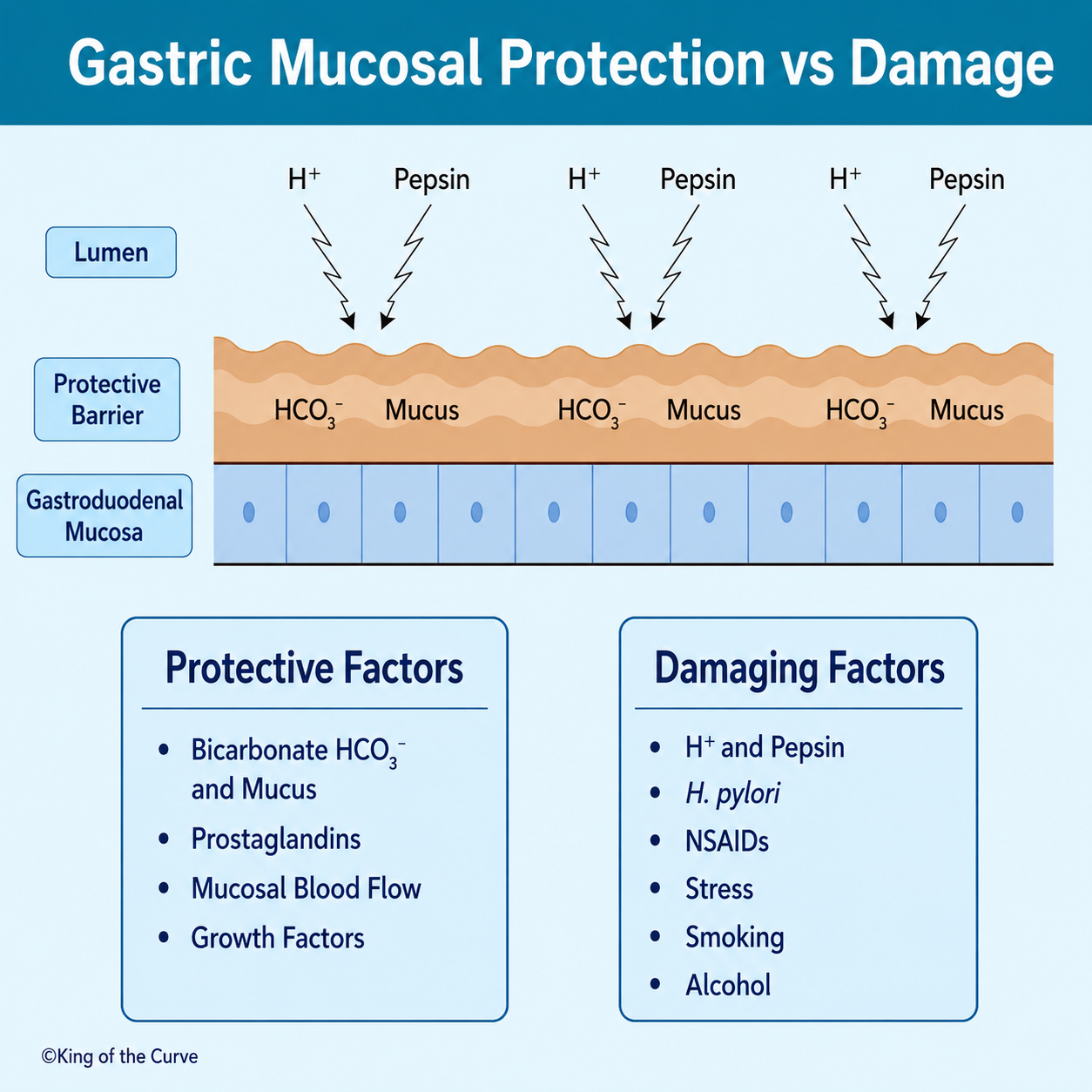
🔬 What Is the Gastric Mucosal Barrier?
The gastric mucosal barrier is a collection of physical, chemical, and physiological defenses that protect the stomach lining from acid and digestive enzymes.
Its primary functions include:
Preventing acid injury to epithelial cells
Neutralizing hydrogen ions (H⁺)
Limiting pepsin-mediated tissue damage
Promoting tissue repair and regeneration
Maintaining healthy blood flow to the stomach lining
Without these defenses, the stomach would essentially digest itself.
🛡️ Key Protective Factors of the Gastric Mucosa
Several protective mechanisms work together to maintain mucosal integrity.
🧪 1. Mucus and Bicarbonate (HCO₃⁻)
The first line of defense is a thick mucus layer covering the stomach lining.
This layer:
Creates a physical barrier between acid and epithelial cells
Traps bicarbonate ions (HCO₃⁻)
Maintains a near-neutral pH at the cell surface
Bicarbonate neutralizes hydrogen ions before they can penetrate and damage the mucosa.
Together, mucus and bicarbonate form a highly effective protective shield.
💊 2. Prostaglandins
Prostaglandins are locally acting molecules that play a critical role in gastric protection.
Their functions include:
Stimulating mucus secretion
Increasing bicarbonate production
Enhancing mucosal blood flow
Supporting epithelial repair
A reduction in prostaglandin production significantly weakens gastric defenses.
❤️ 3. Mucosal Blood Flow
Adequate blood supply is essential for maintaining a healthy gastric lining.
Blood flow helps by:
Delivering oxygen and nutrients
Removing excess acid that diffuses into tissues
Supporting cellular repair mechanisms
Transporting bicarbonate to the mucosa
Poor blood flow increases susceptibility to ulcer formation.
🌱 4. Growth Factors and Tissue Repair
The stomach lining undergoes constant renewal.
Growth factors stimulate:
Cell proliferation
Tissue regeneration
Wound healing
Restoration of damaged epithelium
These mechanisms allow minor injuries to heal rapidly before they become clinically significant.
⚠️ Major Damaging Factors
When damaging influences outweigh protective mechanisms, mucosal injury can occur.
🔥 1. Hydrogen Ions (H⁺) and Pepsin
Hydrochloric acid and pepsin are essential for digestion but can also damage tissues.
Hydrogen ions:
Lower gastric pH
Cause cellular injury when defenses fail
Pepsin:
Digests proteins
Can degrade gastric tissue during mucosal breakdown
Together, acid and pepsin are the primary direct causes of ulcer formation.
🦠 2. Helicobacter pylori
Helicobacter pylori (H. pylori) is a spiral-shaped bacterium that colonizes the stomach lining.
It contributes to mucosal damage by:
Triggering chronic inflammation
Disrupting mucus production
Weakening epithelial defenses
Increasing susceptibility to ulcers
H. pylori infection is one of the most common causes of peptic ulcer disease worldwide.
💉 3. NSAIDs
Nonsteroidal anti-inflammatory drugs (NSAIDs) such as aspirin, ibuprofen, and naproxen are major risk factors for gastric ulcers.
They cause damage by:
Inhibiting cyclooxygenase (COX) enzymes
Reducing prostaglandin synthesis
Decreasing mucus production
Lowering bicarbonate secretion
Reducing mucosal blood flow
Long-term NSAID use significantly increases ulcer risk.
😰 4. Stress
Severe physiological stress can impair gastric defenses.
Examples include:
Major trauma
Burns
Sepsis
Critical illness
These conditions may lead to stress-related mucosal disease and ulcer formation.
🚬 5. Smoking
Smoking negatively affects gastric health through multiple mechanisms.
It:
Reduces mucosal blood flow
Delays ulcer healing
Increases recurrence rates
Weakens protective barriers
Smokers are more likely to develop peptic ulcers than non-smokers.
🍺 6. Alcohol
Excessive alcohol consumption can damage the gastric mucosa.
Alcohol may:
Irritate epithelial cells
Disrupt mucus production
Increase mucosal permeability
Promote inflammation
Chronic heavy alcohol use contributes to gastritis and ulcer development.
⚖️ The Balance Between Protection and Damage
The health of the gastric lining depends on maintaining equilibrium between defensive and harmful influences.
Protective Factors
✔️ Mucus and bicarbonate
✔️ Prostaglandins
✔️ Adequate blood flow
✔️ Growth factors and repair mechanisms
Damaging Factors
❌ H⁺ and pepsin
❌ H. pylori infection
❌ NSAID use
❌ Stress
❌ Smoking
❌ Alcohol
When damaging factors overwhelm protective mechanisms, mucosal injury occurs and ulcers may develop.
🩺 Peptic Ulcer Disease (PUD)
Peptic ulcer disease refers to erosions that extend through the mucosal layer of the stomach or duodenum.
Common causes include:
H. pylori infection
Chronic NSAID use
Excess acid production
Severe physiological stress
Symptoms may include:
Burning epigastric pain
Nausea
Bloating
Gastrointestinal bleeding
Perforation in severe cases
💊 Treatment and Prevention
Modern treatment focuses on reducing damaging factors while strengthening protective mechanisms.
Common approaches include:
🔹 Acid Suppression
Proton pump inhibitors (PPIs)
H₂ receptor blockers
🔹 Eradication of H. pylori
Combination antibiotic therapy
Acid suppression medications
🔹 Lifestyle Modifications
Smoking cessation
Limiting alcohol intake
Avoiding unnecessary NSAID use
🔹 Mucosal Protection
Medications that enhance mucus production
Agents that promote healing

Frequently Asked Questions (FAQs)
-
Aim for 4-6 focused hours, ensuring you incorporate breaks to avoid burnout.
-
Practice mindfulness techniques, take practice exams under realistic conditions, and maintain a balanced lifestyle.
-
Set short-term goals, seek support from mentors, and reward yourself for small achievements.
-
Regular exercise improves focus, reduces stress, and enhances overall mental clarity.
-
KOTC offers personalized learning tools, gamification features, and adaptive question banks to help students stay on track without burnout.