
📊 Understanding Fertility Metrics
Fertility metrics are statistical measures used by demographers, public health professionals, and policymakers to evaluate population growth and reproductive patterns. These indicators help determine how frequently births occur within a population and provide insights into trends that influence healthcare planning, economic development, and social policies.
📈 Birth Rate: Measuring Overall Population Growth
The Birth Rate is one of the most commonly used demographic indicators. It measures the number of live births occurring during a year relative to the total population. This metric provides a broad overview of population growth and helps compare reproductive trends across different regions and countries.
🧮 Birth Rate Formula
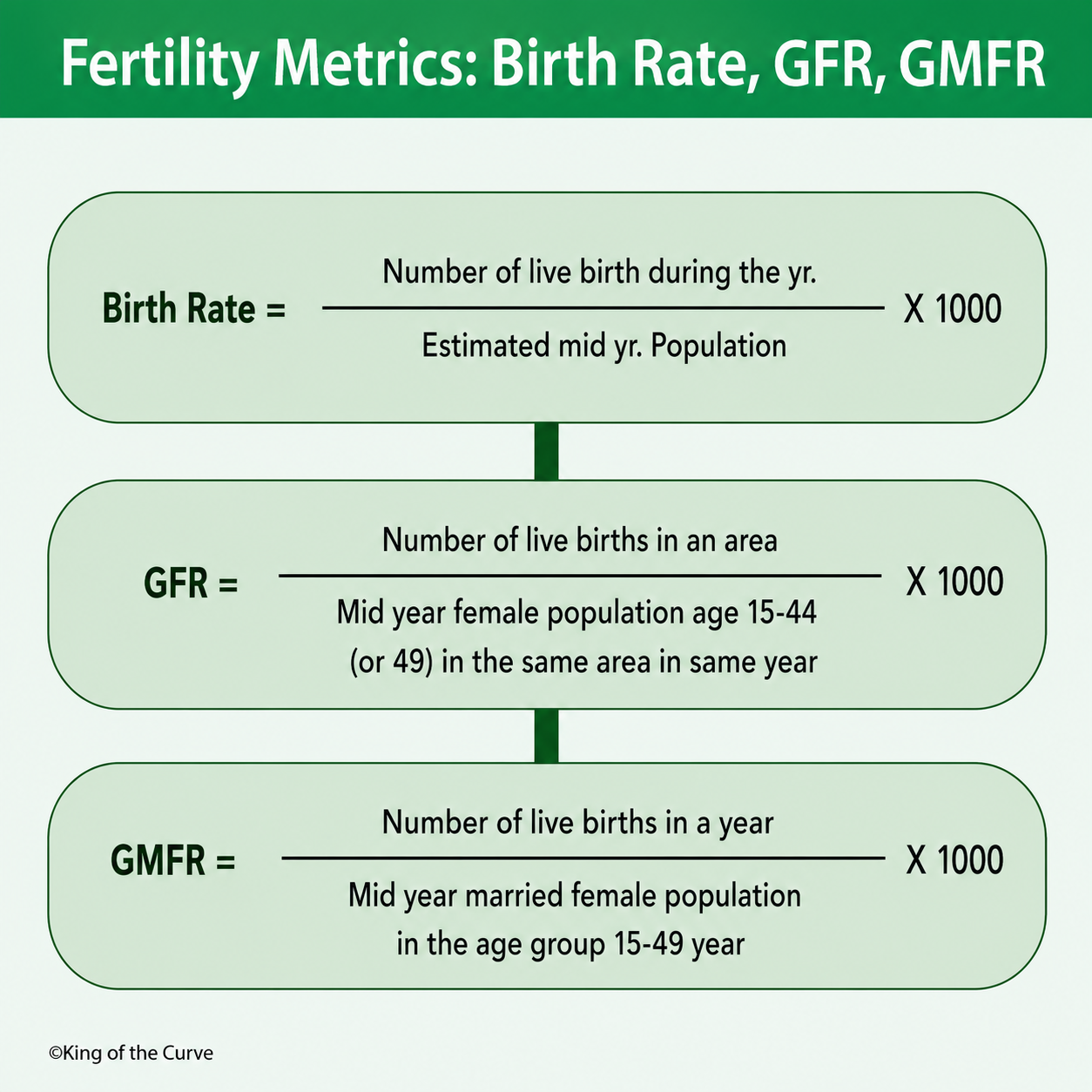
The birth rate is calculated by dividing the number of live births during a year by the estimated mid-year population and multiplying the result by 1,000. This standardization allows researchers to compare populations of different sizes more effectively.
📋 Comparison of Fertility Metrics
| Metric | Formula Basis | Population Considered | Purpose |
|---|---|---|---|
| Birth Rate | Live births ÷ Total population × 1000 | Entire population | Measures overall population growth |
| GFR | Live births ÷ Women aged 15–44 (or 49) × 1000 | Women of reproductive age | Measures fertility among potential mothers |
| GMFR | Live births ÷ Married women aged 15–49 × 1000 | Married women of reproductive age | Measures fertility among married women |
👩 General Fertility Rate (GFR)
The General Fertility Rate (GFR) provides a more focused measure of fertility by considering only women within the reproductive age range, typically 15–44 or 15–49 years. Because it excludes men, children, and older adults from the denominator, GFR offers a more accurate representation of reproductive activity than the crude birth rate.
🏠 General Marital Fertility Rate (GMFR)
The General Marital Fertility Rate (GMFR) narrows the focus even further by examining births among married women of reproductive age. This measure is particularly useful in societies where childbirth predominantly occurs within marriage and helps researchers analyze family formation patterns and reproductive behavior.
🔍 Why These Metrics Matter
Each fertility metric serves a unique purpose. Birth Rate provides a general population perspective, GFR offers insight into fertility among women capable of bearing children, and GMFR focuses specifically on married women. Together, these measures enable demographers to identify population trends, evaluate public health interventions, and forecast future population changes.
✅ Key Takeaways
Understanding Birth Rate, GFR, and GMFR is essential for interpreting demographic data accurately. While all three metrics relate to childbirth, they differ in the populations they measure and the insights they provide. Using the appropriate fertility indicator helps researchers and policymakers make informed decisions about healthcare, education, housing, and economic planning.

Frequently Asked Questions (FAQs)
-
Aim for 4-6 focused hours, ensuring you incorporate breaks to avoid burnout.
-
Practice mindfulness techniques, take practice exams under realistic conditions, and maintain a balanced lifestyle.
-
Set short-term goals, seek support from mentors, and reward yourself for small achievements.
-
Regular exercise improves focus, reduces stress, and enhances overall mental clarity.
-
KOTC offers personalized learning tools, gamification features, and adaptive question banks to help students stay on track without burnout.