
📚 Expectancy Value Theory
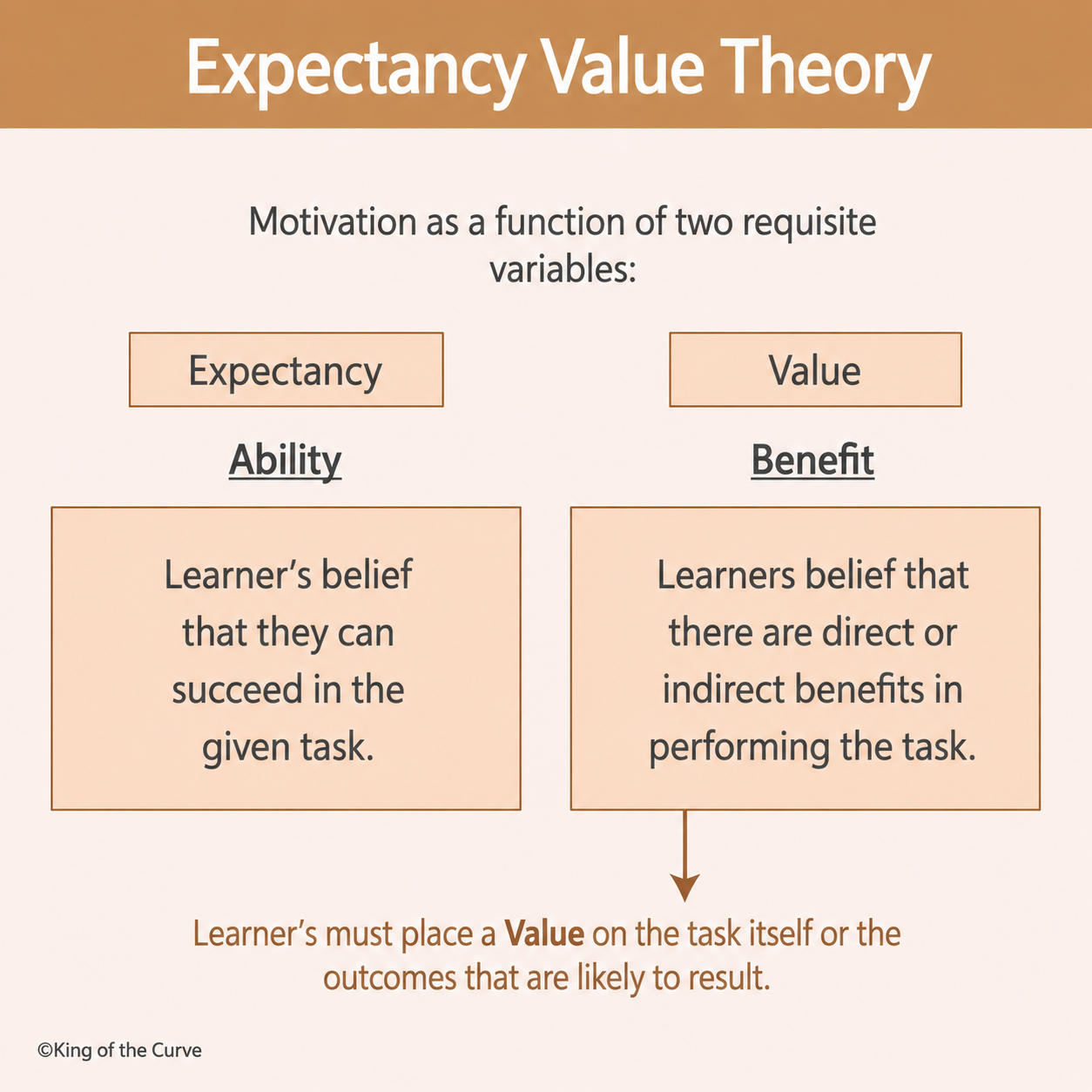
Expectancy Value Theory (EVT) is a psychological framework that explains why people choose to engage in certain tasks and avoid others. According to the theory, motivation depends on two key factors: expectancy and value. Individuals are most motivated when they believe they can succeed and when they see meaningful benefits in completing the task.
🧠 The Role of Expectancy
Expectancy refers to a learner’s belief in their ability to successfully complete a task. This belief is closely linked to confidence, previous experiences, and perceived competence. When students think they are capable of achieving success, they are more likely to invest effort and persist through challenges.
💪 Ability and Self-Belief
A central component of expectancy is the perception of ability. Learners who view themselves as capable are more willing to tackle difficult assignments and maintain motivation. Positive feedback, skill development, and successful experiences can strengthen these beliefs over time.
📊 Key Components of Expectancy Value Theory
The following table summarizes the two major elements that influence motivation according to Expectancy Value Theory:
| Component | Focus | Description |
|---|---|---|
| Expectancy | Ability | Learner’s belief that they can successfully complete a task |
| Value | Benefit | Learner’s perception that the task provides meaningful rewards or outcomes |
💎 Understanding Value
Value represents the importance, usefulness, or enjoyment associated with a task. Even if learners believe they can succeed, they may lack motivation if they do not see any benefit in the activity. Perceived value often comes from personal goals, future opportunities, or intrinsic interest.
🚀 Benefits Influence Engagement
Students are more likely to participate actively when they recognize direct or indirect benefits from learning. These benefits may include better grades, career opportunities, personal growth, or satisfaction from mastering new skills. The stronger the perceived reward, the greater the motivation.
🔄 How Expectancy and Value Work Together
Expectancy and value are interdependent. High confidence with low value may still result in low motivation, while high value with low confidence can create anxiety or avoidance. Maximum motivation occurs when learners both believe they can succeed and see the task as worthwhile.
✅ Why Expectancy Value Theory Matters
Expectancy Value Theory provides valuable insights for educators, students, and professionals seeking to improve motivation. By building confidence and highlighting meaningful benefits, instructors can encourage greater engagement and persistence. Understanding these two factors helps create learning environments that foster long-term success and achievement.

Frequently Asked Questions (FAQs)
-
Aim for 4-6 focused hours, ensuring you incorporate breaks to avoid burnout.
-
Practice mindfulness techniques, take practice exams under realistic conditions, and maintain a balanced lifestyle.
-
Set short-term goals, seek support from mentors, and reward yourself for small achievements.
-
Regular exercise improves focus, reduces stress, and enhances overall mental clarity.
-
KOTC offers personalized learning tools, gamification features, and adaptive question banks to help students stay on track without burnout.