
🧬 The Endolysosomal Pathway: Endosomes, Lysosomes, and Cellular Recycling
The endolysosomal pathway is a cellular trafficking system that receives material through endocytosis, sorts it within endosomes, recycles selected components, and sends other material to lysosomes for degradation. It is essential for maintaining cellular homeostasis and controlling the composition of the plasma membrane.
📥 Endocytosis Brings Material Into the Cell
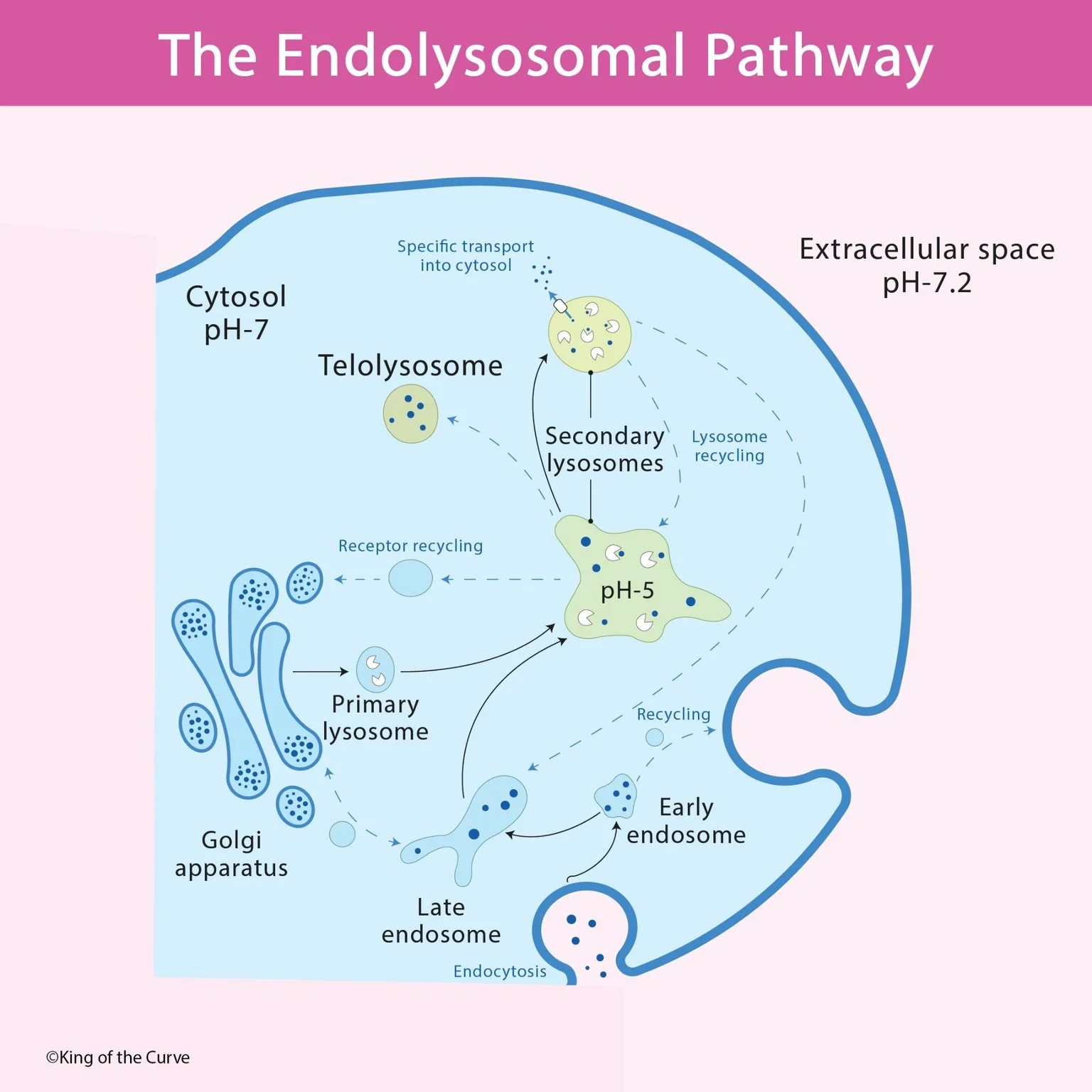
The pathway begins when the plasma membrane internalizes extracellular molecules and membrane proteins through endocytosis. The resulting vesicles deliver their contents to early endosomes, which function as major sorting stations within the cell.
🔀 Early Endosomes Sort Cellular Cargo
Inside the early endosome, cargo can follow different routes. Some receptors and membrane components are returned to the plasma membrane through recycling pathways, while other molecules remain in the endosomal system and move toward degradation.
📦 Early Endosomes Mature Into Late Endosomes
As early endosomes mature into late endosomes, their internal environment becomes progressively more acidic. This maturation involves changes in membrane proteins, trafficking machinery, and cargo organization that prepare material for delivery to lysosomes.
⚗️ Why Does Endosomal pH Matter?
Acidification is an important feature of the pathway. Proton pumps, particularly V-type H⁺-ATPases, move protons into endosomal and lysosomal compartments. The increasingly acidic environment helps separate ligands from receptors and provides suitable conditions for lysosomal enzymes.
♻️ Receptor Recycling Conserves Cellular Resources
Not everything entering an endosome is destroyed. Many receptors are separated from their ligands and transported back to the plasma membrane. Receptor recycling allows cells to reuse important membrane proteins rather than continually synthesizing replacements.
| 🧬 Compartment | 📘 Main Role | ⚗️ Relative Environment |
|---|---|---|
| Early endosome | Cargo sorting and receptor recycling | Mildly acidic |
| Late endosome | Transfers degradation-bound cargo | More acidic |
| Lysosome | Macromolecule degradation | Strongly acidic |
| Recycling pathway | Returns selected cargo to the plasma membrane | Sorting / reuse |
🧪 Lysosomes Are the Cell’s Degradative Compartments
Lysosomes contain acid hydrolases capable of breaking down proteins, lipids, nucleic acids, and carbohydrates. Lysosomal enzymes are synthesized through the endomembrane system and delivered to lysosomal compartments, where the acidic environment supports their activity.
🔄 Degradation Products Can Be Reused
Lysosomal degradation does not simply dispose of cellular material. Small molecules produced during degradation—such as amino acids and sugars—can be transported back into the cytosol and reused in metabolism and biosynthesis. This makes the pathway an important part of cellular recycling.
🎯 MCAT High-Yield Takeaway
For the MCAT, remember the general flow: endocytosis → early endosome → late endosome → lysosomal degradation, while selected receptors and membrane components can be recycled back to the plasma membrane. Also remember that compartments become increasingly acidic as cargo moves toward lysosomal degradation.

Frequently Asked Questions (FAQs)
-
Aim for 4-6 focused hours, ensuring you incorporate breaks to avoid burnout.
-
Practice mindfulness techniques, take practice exams under realistic conditions, and maintain a balanced lifestyle.
-
Set short-term goals, seek support from mentors, and reward yourself for small achievements.
-
Regular exercise improves focus, reduces stress, and enhances overall mental clarity.
-
KOTC offers personalized learning tools, gamification features, and adaptive question banks to help students stay on track without burnout.