
🫁 Embryological Development of the Lungs
The development of the lungs is one of the most fascinating processes in human embryology, transforming a simple foregut outgrowth into a highly specialized organ capable of gas exchange. Understanding the stages of lung development is essential for MCAT, medical school, nursing, and physiology courses because it connects anatomy, embryology, and neonatal health.
🌱 The Beginning of Lung Development
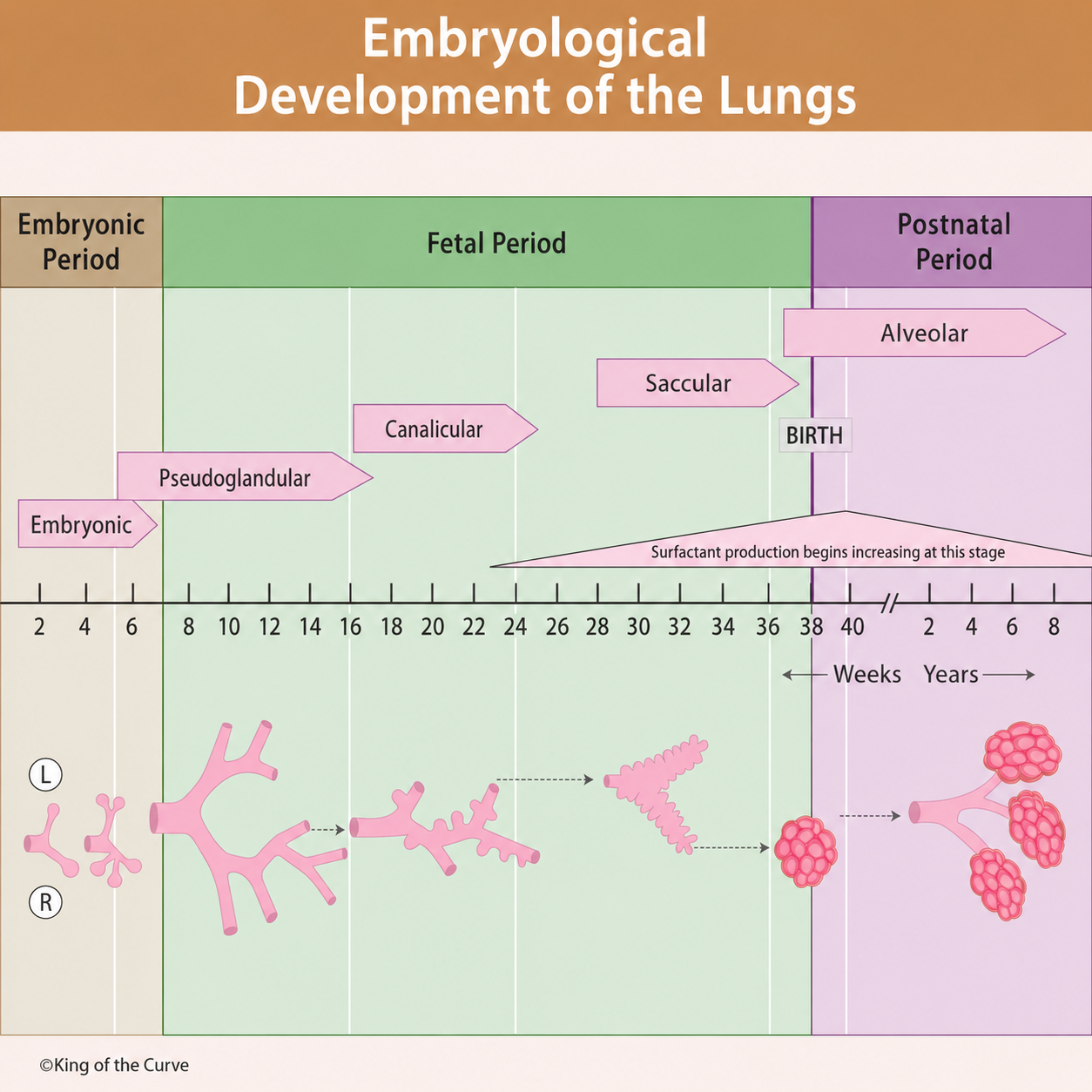
Lung development begins during the embryonic period when the respiratory diverticulum buds from the foregut. This early structure gives rise to the trachea, bronchi, and future respiratory tree. During these first weeks, the basic framework of the respiratory system is established. Although gas exchange is not yet possible, the groundwork for future lung function is already being laid.
🔬 The Pseudoglandular Stage (Weeks 5–16)
During the pseudoglandular stage, extensive branching of the airways occurs, producing the conducting portions of the respiratory system. The developing lung resembles glandular tissue under a microscope, which explains the name of this phase. Bronchi and bronchioles continue to form, but no structures capable of gas exchange are present yet. As a result, a fetus born during this stage cannot survive outside the womb.
📊 Stages of Embryological Lung Development
| Stage | Time Period | Major Events |
|---|---|---|
| Embryonic | Weeks 4–7 | Formation of lung bud, trachea, and primary bronchi |
| Pseudoglandular | Weeks 5–16 | Branching of conducting airways |
| Canalicular | Weeks 16–26 | Development of respiratory bronchioles and vascularization |
| Saccular | Weeks 26–38 | Formation of terminal sacs and increased surfactant production |
| Alveolar | Late fetal stage to ~8 years | Expansion and maturation of alveoli |
🌬️ The Canalicular Stage (Weeks 16–26)
The canalicular stage marks a critical transition toward respiratory viability. Respiratory bronchioles begin to develop, and blood vessels proliferate throughout the lung tissue. This increased vascularization allows the future gas exchange surfaces to become closely associated with the circulatory system. Premature infants born late in this stage may survive with intensive medical support, although respiratory complications remain common.
🫧 The Saccular Stage (Weeks 26–38)
During the saccular stage, terminal sacs begin to form and resemble primitive alveoli. One of the most important events during this period is the increasing production of pulmonary surfactant by type II pneumocytes. Surfactant reduces surface tension within the lungs and prevents alveolar collapse after birth. This developmental milestone significantly improves the chances of survival for premature infants.
👶 The Alveolar Stage and Birth
The alveolar stage begins before birth and continues for several years afterward. During this phase, alveoli multiply dramatically and become more efficient at gas exchange. At birth, the lungs contain only a fraction of the alveoli present in adulthood. Continued growth and maturation throughout childhood enable the respiratory system to meet the body's increasing oxygen demands.
🎯 MCAT and Clinical Significance
Lung development is a high-yield topic on the MCAT because it integrates embryology, physiology, and pathology. Students are frequently tested on surfactant production, neonatal respiratory distress syndrome (NRDS), and the developmental timeline of the lungs. A common exam question involves identifying the stage during which surfactant production becomes sufficient for survival outside the uterus. Understanding these concepts provides a strong foundation for future medical studies and clinical practice.

Frequently Asked Questions (FAQs)
-
Aim for 4-6 focused hours, ensuring you incorporate breaks to avoid burnout.
-
Practice mindfulness techniques, take practice exams under realistic conditions, and maintain a balanced lifestyle.
-
Set short-term goals, seek support from mentors, and reward yourself for small achievements.
-
Regular exercise improves focus, reduces stress, and enhances overall mental clarity.
-
KOTC offers personalized learning tools, gamification features, and adaptive question banks to help students stay on track without burnout.