
🧪 Electrolyte Concentration in Pancreatic Secretions & Plasma Levels
The pancreas plays a major role in digestion by releasing enzyme-rich secretions and bicarbonate-containing fluids into the small intestine. These pancreatic secretions contain important electrolytes such as sodium (Na⁺), bicarbonate (HCO₃⁻), chloride (Cl⁻), and potassium (K⁺). The concentration of these electrolytes changes depending on the pancreatic flow rate and helps maintain proper digestive function and pH balance.
⚙️ Pancreatic Flow Rate and Electrolyte Changes
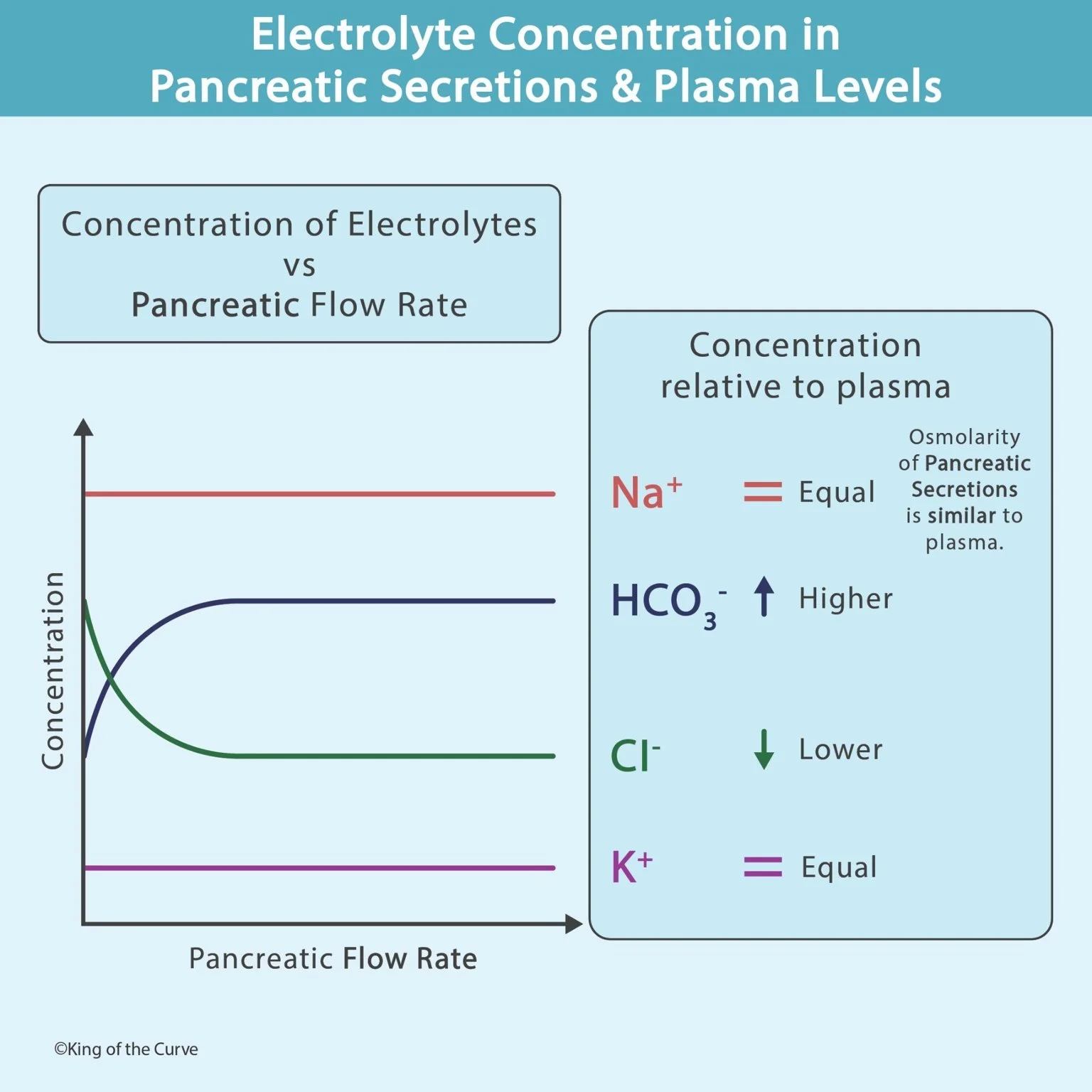
As pancreatic flow rate increases, the composition of pancreatic secretions changes significantly. The graph in the infographic illustrates how different electrolytes respond to increased secretion rates.
🔹 Sodium (Na⁺)
Sodium concentration remains relatively constant and stays approximately equal to plasma concentration regardless of pancreatic flow rate. This stability helps maintain osmotic balance in pancreatic fluids.
🔹 Bicarbonate (HCO₃⁻)
Bicarbonate concentration increases as pancreatic flow rises. This increase is especially important because bicarbonate neutralizes acidic chyme entering the duodenum from the stomach. Secretin stimulates ductal cells of the pancreas to release bicarbonate-rich fluid.
🔹 Chloride (Cl⁻)
Chloride concentration decreases as bicarbonate secretion increases. This inverse relationship occurs because bicarbonate and chloride are exchanged across pancreatic duct cells.
🔹 Potassium (K⁺)
Potassium levels remain relatively constant and close to plasma concentration, similar to sodium.
🧬 Importance of Bicarbonate in Digestion
Bicarbonate secretion is one of the most important functions of the exocrine pancreas. When acidic stomach contents enter the duodenum, bicarbonate neutralizes the acid and creates an alkaline environment necessary for pancreatic digestive enzymes to function effectively.
Without sufficient bicarbonate secretion, intestinal enzymes may become inactive, and the intestinal lining may be damaged by gastric acid. Disorders such as cystic fibrosis and chronic pancreatitis can impair bicarbonate secretion and lead to digestive complications.
📈 Osmolarity of Pancreatic Secretions
Although individual electrolyte concentrations change, the osmolarity of pancreatic secretions remains similar to plasma osmolarity. This isotonic nature ensures proper movement of fluids and electrolytes across pancreatic ducts and intestinal tissues.
The pancreas carefully regulates electrolyte transport through specialized channels and exchangers located in ductal epithelial cells. Hormonal control, particularly by secretin, plays a major role in maintaining this balance.
📊 Comparison of Electrolyte Concentrations in Pancreatic Secretions
| Electrolyte | Relative to Plasma | Change with Increased Pancreatic Flow | Main Function |
|---|---|---|---|
| Na+ (Sodium) | Approximately equal | Remains relatively constant | Maintains osmotic balance and fluid movement |
| HCO3− (Bicarbonate) | Higher | Increases significantly | Neutralizes acidic chyme in the duodenum |
| Cl− (Chloride) | Lower | Decreases as bicarbonate rises | Participates in ion exchange with bicarbonate |
| K+ (Potassium) | Approximately equal | Remains relatively constant | Supports cellular electrical activity and electrolyte balance |
🧠 Key Takeaway Table
| Feature | Pancreatic Secretion Characteristic |
|---|---|
| Osmolarity | Similar to plasma |
| Most Increased Electrolyte | Bicarbonate (HCO3−) |
| Electrolyte that Decreases | Chloride (Cl−) |
| Hormone Stimulating Bicarbonate Secretion | Secretin |
| Main Digestive Role | Neutralization of stomach acid |
| Clinical Importance | Evaluates pancreatic exocrine function |
🏥 Clinical Significance
Knowledge of pancreatic electrolyte secretion is clinically important in diagnosing pancreatic disorders and understanding digestive physiology. Changes in bicarbonate secretion may indicate pancreatic insufficiency, duct obstruction, or cystic fibrosis.
Electrolyte analysis of pancreatic secretions can also help evaluate exocrine pancreatic function during specialized diagnostic testing. Understanding these physiological principles is essential for medical students, healthcare professionals, and researchers studying gastrointestinal function.
✅ Conclusion
Pancreatic secretions contain carefully regulated electrolyte concentrations that support digestion and maintain intestinal pH balance. As pancreatic flow rate increases, bicarbonate levels rise while chloride levels fall, whereas sodium and potassium remain relatively stable. These electrolyte patterns are essential for proper digestive enzyme activity and overall gastrointestinal health.

Frequently Asked Questions (FAQs)
-
Aim for 4-6 focused hours, ensuring you incorporate breaks to avoid burnout.
-
Practice mindfulness techniques, take practice exams under realistic conditions, and maintain a balanced lifestyle.
-
Set short-term goals, seek support from mentors, and reward yourself for small achievements.
-
Regular exercise improves focus, reduces stress, and enhances overall mental clarity.
-
KOTC offers personalized learning tools, gamification features, and adaptive question banks to help students stay on track without burnout.