
🔌 Electric Circuit Diagrams Explained: Switch On vs Switch Off
Electric circuit diagrams are essential tools for understanding how electricity flows through a system. Whether you're a beginner in physics or brushing up on basic electronics, learning how to interpret these diagrams is a key skill.
⚡ What is an Electric Circuit?
An electric circuit is a closed loop that allows electric current to flow. It typically includes:
🔋 Power source (Battery)
💡 Load (Lamp)
🔘 Switch (controls current flow)
🔗 Conducting wires (path for electricity)
For a device like a lamp to work, the circuit must be complete (closed).
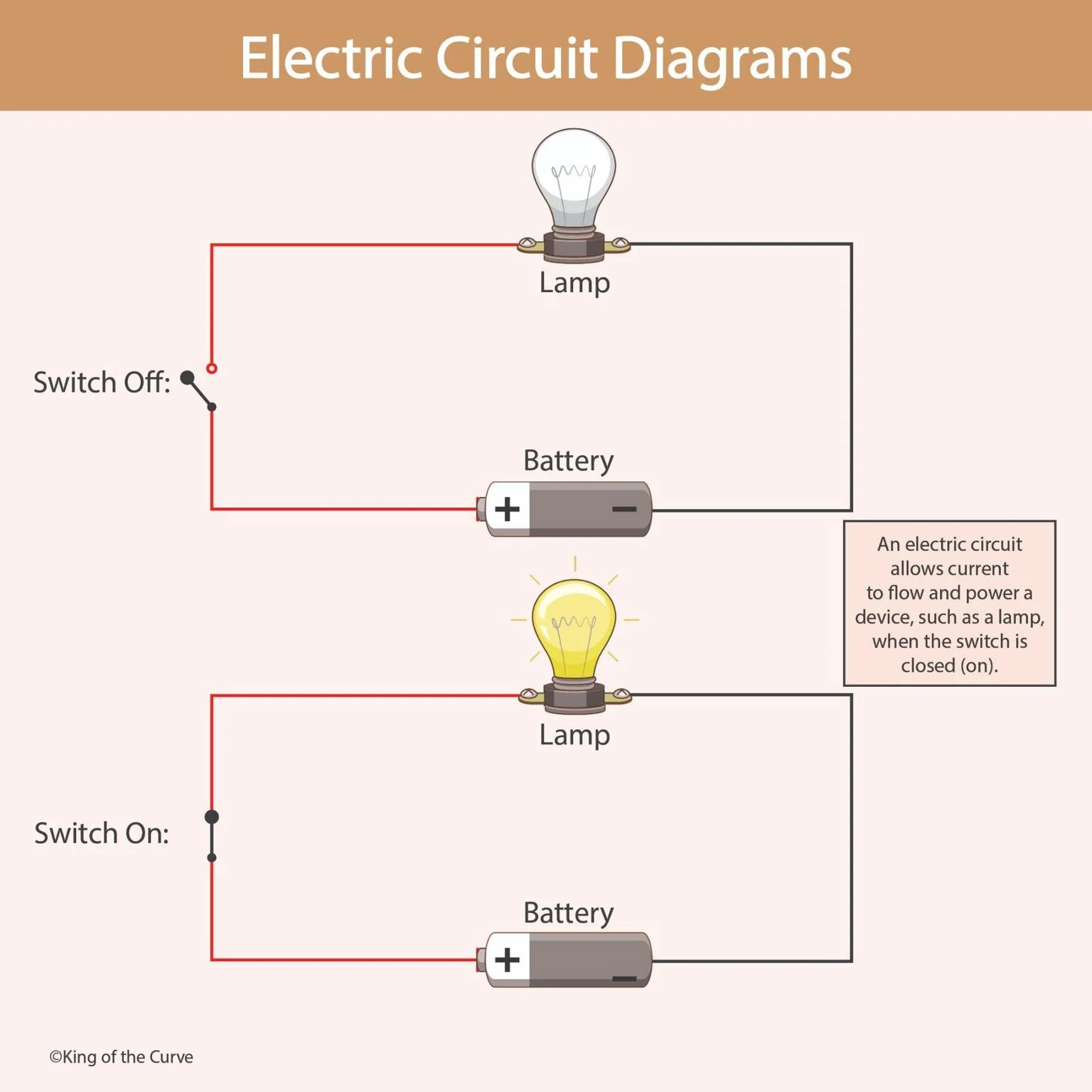
🔴 Switch Off: Open Circuit
When the switch is off, the circuit is open, meaning the path for current is broken.
What happens:
❌ No complete path for electricity
⚡ Current cannot flow
💡 Lamp remains off
Key idea:
Even though all components are connected, a single break in the circuit stops everything.
🟢 Switch On: Closed Circuit
When the switch is on, the circuit becomes closed, forming a complete loop.
What happens:
✅ Circuit is complete
⚡ Current flows from the battery
💡 Lamp lights up
Key idea:
Electric current flows only when the circuit is fully closed.
🔄 How Current Flows
In the diagram:
Current flows from the positive (+) terminal of the battery
Travels through the wire and lamp
Returns to the negative (–) terminal
This continuous loop powers the lamp.
🧠 Why This Matters
Understanding simple circuits helps you:
Build basic electronic devices
Troubleshoot electrical problems
Grasp more advanced physics concepts like resistance and voltage
📌 Real-Life Examples
You encounter this concept daily:
💡 Light switches at home
🔦 Flashlights
🔌 Phone chargers
All rely on opening and closing circuits.
✅ Summary
| State | Circuit Type | Current Flow | Lamp |
|---|---|---|---|
| Switch Off | Open | ❌ No | Off |
| Switch On | Closed | ✅ Yes | On |
🚀 Final Thought
A simple switch controls whether electricity flows or not making it one of the most powerful and fundamental components in any electrical system.

Frequently Asked Questions (FAQs)
-
Aim for 4-6 focused hours, ensuring you incorporate breaks to avoid burnout.
-
Practice mindfulness techniques, take practice exams under realistic conditions, and maintain a balanced lifestyle.
-
Set short-term goals, seek support from mentors, and reward yourself for small achievements.
-
Regular exercise improves focus, reduces stress, and enhances overall mental clarity.
-
KOTC offers personalized learning tools, gamification features, and adaptive question banks to help students stay on track without burnout.