
🩺 Dysphagia: A Clinical Approach to Swallowing Difficulty
Dysphagia, or difficulty swallowing, is a common clinical complaint that can range from mild discomfort to a serious medical condition. Understanding its underlying causes is essential for accurate diagnosis and effective management. Broadly, dysphagia is categorized into oropharyngeal and esophageal types, each with distinct clinical features and causes.
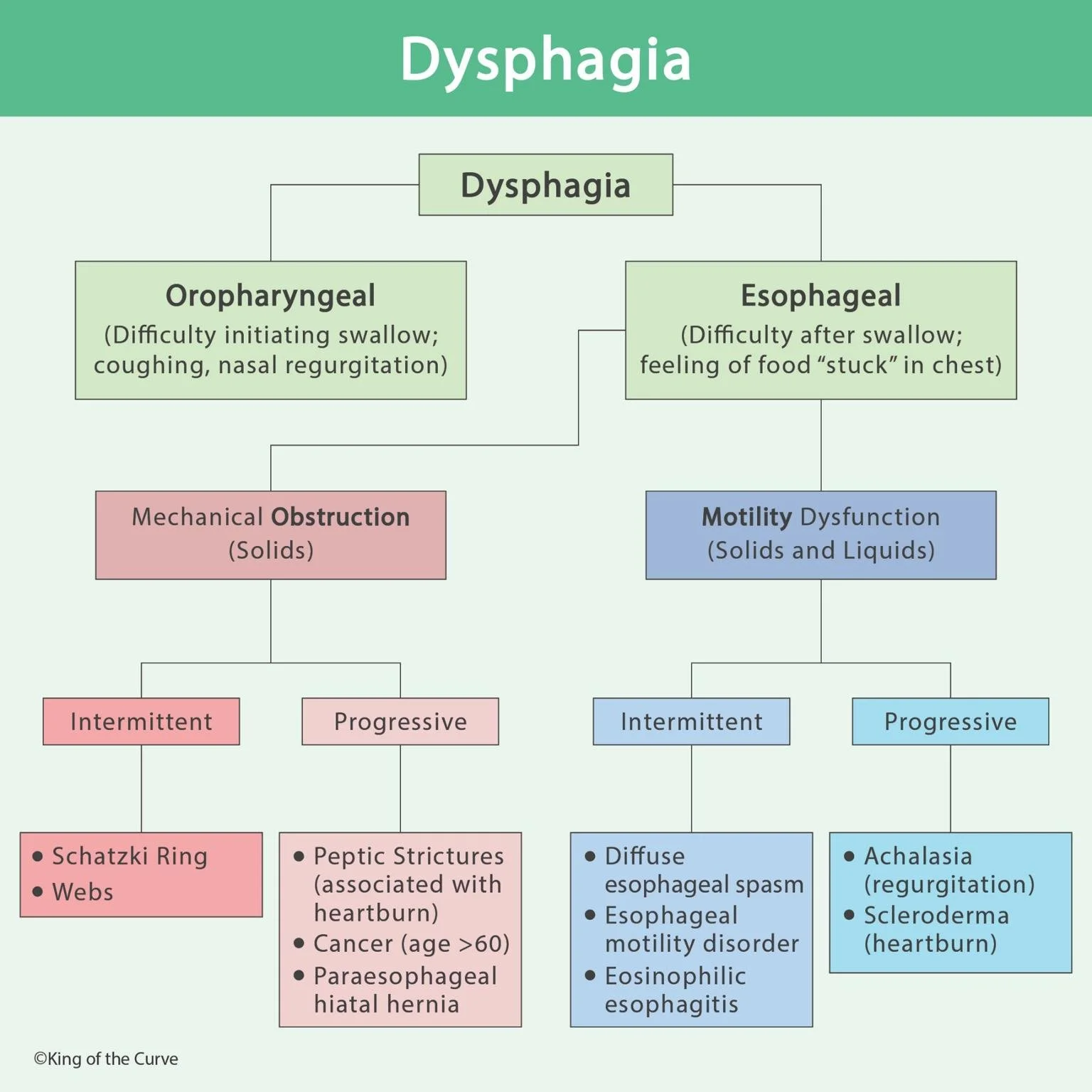
🧠 Types of Dysphagia
🔹 Oropharyngeal Dysphagia
This type involves difficulty initiating a swallow. It is often associated with:
Coughing أثناء swallowing
Nasal regurgitation
Choking or aspiration
It typically suggests a neuromuscular or neurological problem, affecting the coordination of swallowing muscles.
🔹 Esophageal Dysphagia
This occurs after swallowing, where the patient feels that food is “stuck” in the chest. It is commonly due to structural or motility issues within the esophagus.
⚙️ Esophageal Dysphagia: Key Causes
Esophageal dysphagia can be divided into two major categories:
🚧 Mechanical Obstruction (Solids > Liquids)
Patients initially have difficulty swallowing solids, which may progress over time.
🔸 Intermittent
Schatzki ring
Esophageal webs
🔸 Progressive
Peptic strictures (often with heartburn)
Esophageal cancer (especially age >60)
Paraesophageal hiatal hernia
🔄 Motility Disorders (Solids + Liquids)
These conditions affect the movement of food through the esophagus and typically involve both solids and liquids from the start.
🔸 Intermittent
Diffuse esophageal spasm
Esophageal motility disorders
Eosinophilic esophagitis
🔸 Progressive
Achalasia (often with regurgitation)
Scleroderma (associated with reflux/heartburn)
📊 Summary Table
| Type | Pattern | Common Causes |
|---|---|---|
| Mechanical | Solids only → Progressive | Strictures, Cancer, Hernia |
| Mechanical | Intermittent | Schatzki ring, Webs |
| Motility | Solids + Liquids | Spasm, Eosinophilic esophagitis |
| Motility | Progressive | Achalasia, Scleroderma |
🚨 Clinical Clues to Differentiate Causes
Solids first → then liquids → Mechanical obstruction
Solids + liquids from start → Motility disorder
Progressive symptoms → Likely malignancy or worsening obstruction
Intermittent symptoms → Functional or mild structural issue
🎯 Why This Matters
Recognizing the pattern of dysphagia is critical because it can:
Help identify serious conditions like esophageal cancer early
Guide appropriate investigations (e.g., endoscopy, manometry)
Improve patient outcomes through timely treatment
💡 Final Takeaway
Dysphagia is not just a symptom it’s a diagnostic clue. By carefully analyzing whether the issue is with initiation vs passage, and solids vs liquids, clinicians can quickly narrow down the underlying cause and act accordingly.

Frequently Asked Questions (FAQs)
-
Aim for 4-6 focused hours, ensuring you incorporate breaks to avoid burnout.
-
Practice mindfulness techniques, take practice exams under realistic conditions, and maintain a balanced lifestyle.
-
Set short-term goals, seek support from mentors, and reward yourself for small achievements.
-
Regular exercise improves focus, reduces stress, and enhances overall mental clarity.
-
KOTC offers personalized learning tools, gamification features, and adaptive question banks to help students stay on track without burnout.