
💊 Drug Classifications: Understanding the Major Types and Their Effects
Drugs affect the body and mind in different ways depending on how they interact with the central nervous system (CNS). Understanding the major classifications of drugs helps in recognizing their effects, risks, and medical uses. Broadly, drugs can be divided into four main categories: stimulants, depressants, hallucinogens, and narcotics.
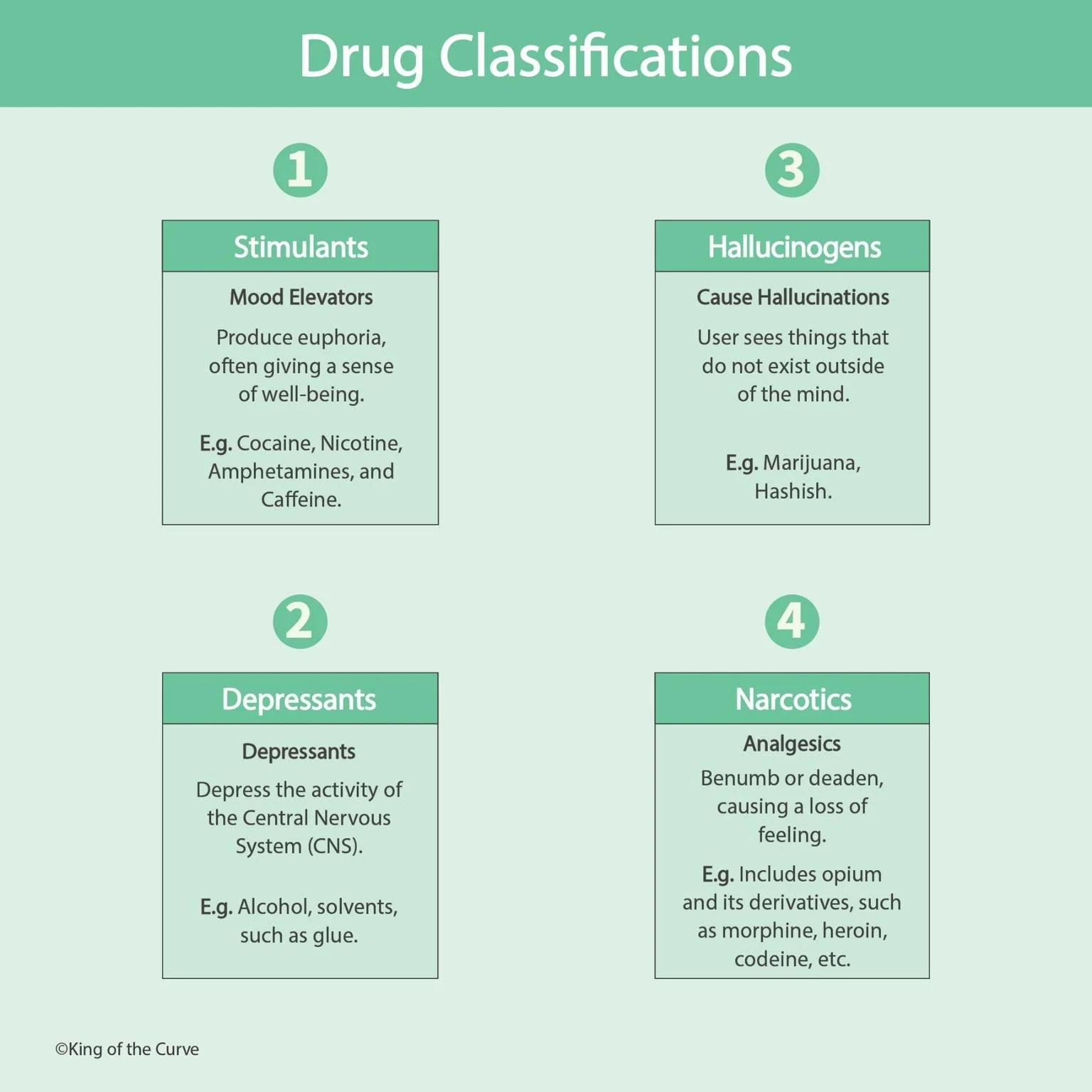
⚡ 1. Stimulants: Mood Elevators
Stimulants are substances that increase the activity of the central nervous system, leading to heightened alertness, energy, and mood. They often produce feelings of euphoria and well-being, which is why they can be addictive.
Common effects include:
Increased heart rate
Enhanced focus and alertness
Reduced fatigue
Examples: Cocaine, nicotine, amphetamines, and caffeine
While stimulants can improve performance in the short term, excessive use can lead to anxiety, insomnia, and cardiovascular issues.
😌 2. Depressants: Slowing the System
Depressants work in the opposite way—they slow down brain activity and reduce stimulation in the CNS. These drugs are often used medically to relieve anxiety, promote sleep, or control seizures.
Common effects include:
Relaxation and calmness
Slower breathing and heart rate
Reduced anxiety
Examples: Alcohol and solvents (e.g., glue)
However, high doses can be dangerous, potentially leading to respiratory depression and loss of consciousness.
🌈 3. Hallucinogens: Altering Perception
Hallucinogens affect the brain in a way that distorts perception, thoughts, and sensory experiences. Users may see or hear things that are not present in reality.
Common effects include:
Visual and auditory hallucinations
Altered sense of time and space
Emotional changes
Examples: Marijuana and hashish
These substances can lead to unpredictable psychological effects, including anxiety, paranoia, or confusion.
💉 4. Narcotics: Pain Relievers
Narcotics, also known as opioids, are powerful drugs primarily used for pain relief. They work by binding to opioid receptors in the brain, reducing the perception of pain.
Common effects include:
Pain relief
Drowsiness
Feelings of relaxation
Examples: Morphine, heroin, codeine, and other opium derivatives
Although effective for medical use, narcotics carry a high risk of dependence and addiction.
📊 Summary Table
| Drug Class | Main Effect | Common Uses | Examples |
|---|---|---|---|
| Stimulants | Increase CNS activity | Boost alertness | Cocaine, caffeine, nicotine |
| Depressants | Decrease CNS activity | Relaxation, sleep | Alcohol, solvents |
| Hallucinogens | Alter perception | Recreational/psych | Marijuana, hashish |
| Narcotics | Pain relief (analgesic) | Medical pain control | Morphine, heroin, codeine |
⚠️ Risks and Considerations
While some drugs have legitimate medical uses, misuse can lead to serious health consequences, including addiction, organ damage, and mental health disorders. Understanding these classifications is essential for both education and prevention.
🧠 Final Thoughts
Drug classifications provide a framework for understanding how substances interact with the body. Whether stimulating, calming, altering perception, or relieving pain, each category plays a distinct role in medicine and society.
Awareness of their effects helps individuals make informed decisions and promotes safer use in clinical settings.

Frequently Asked Questions (FAQs)
-
Aim for 4-6 focused hours, ensuring you incorporate breaks to avoid burnout.
-
Practice mindfulness techniques, take practice exams under realistic conditions, and maintain a balanced lifestyle.
-
Set short-term goals, seek support from mentors, and reward yourself for small achievements.
-
Regular exercise improves focus, reduces stress, and enhances overall mental clarity.
-
KOTC offers personalized learning tools, gamification features, and adaptive question banks to help students stay on track without burnout.