
🧠 Drive Reduction Theory: Understanding What Motivates Us
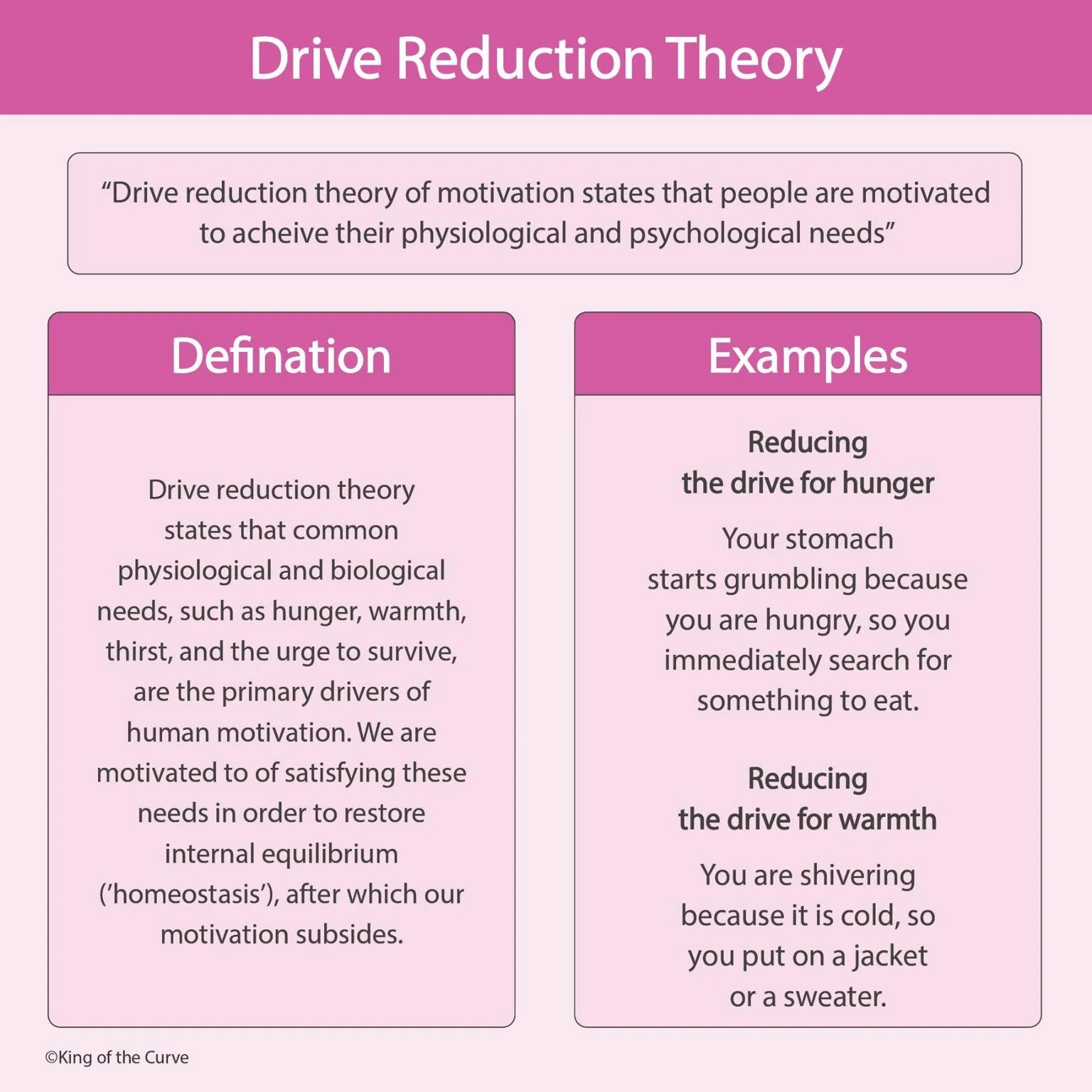
Drive Reduction Theory is a psychological concept that explains how humans are motivated to fulfill basic physiological and biological needs. According to this theory, when the body experiences discomfort or imbalance such as hunger, thirst, or cold it creates a “drive” that pushes us to take action.
⚙️ How Drive Reduction Works
At its core, this theory suggests a simple cycle:
Physiological imbalance occurs (e.g., hunger, thirst)
A drive is created (feeling uncomfortable or uneasy)
Action is taken (eating, drinking, seeking warmth)
Balance is restored (homeostasis)
Drive is reduced
This process ensures survival by encouraging behaviors essential for maintaining the body’s internal stability.
📖 Definition Explained
Drive Reduction Theory emphasizes that basic biological needs are the primary drivers of human motivation. These include:
Hunger
Thirst
Warmth
Survival instincts
When these needs are unmet, the body generates a drive that compels us to act. Once satisfied, our motivation decreases because the internal imbalance has been corrected.
💡 Real-Life Examples
🍔 Reducing the Drive for Hunger
When you haven’t eaten for hours, your stomach starts to growl. This discomfort signals a biological need. As a result, you actively seek food. Once you eat, the hunger disappears, and your motivation to find food decreases.
🧥 Reducing the Drive for Warmth
If you feel cold, your body creates a drive to restore warmth. You might put on a jacket or move to a warmer place. After warming up, the discomfort fades, and the drive is reduced.
⚖️ Key Concept: Homeostasis
A central idea in Drive Reduction Theory is homeostasis—the body’s ability to maintain a stable internal environment.
Whenever balance is disrupted, the body automatically triggers behaviors to restore it. This makes the theory especially important in understanding survival-driven behaviors.
📊 Summary Table
| Concept | Explanation |
|---|---|
| Drive | Internal tension caused by unmet needs |
| Motivation | The urge to reduce the drive |
| Behavior | Actions taken to satisfy needs |
| Homeostasis | Restored internal balance |
| Outcome | Reduced motivation after need fulfillment |
⚠️ Limitations of the Theory
While Drive Reduction Theory explains many basic behaviors, it has some limitations:
It does not explain behaviors without biological needs, such as curiosity or thrill-seeking
It overlooks emotional and cognitive motivations
It cannot fully explain why people sometimes act against survival needs
🧩 Final Thoughts
Drive Reduction Theory provides a foundational understanding of motivation by focusing on biological needs and survival. While it may not explain all human behavior, it remains a key concept in psychology for understanding how internal imbalances push us to act.
By recognizing these drives, we gain insight into everyday behaviors from eating when hungry to seeking comfort when cold highlighting how deeply our actions are tied to maintaining balance within the body.

Frequently Asked Questions (FAQs)
-
Aim for 4-6 focused hours, ensuring you incorporate breaks to avoid burnout.
-
Practice mindfulness techniques, take practice exams under realistic conditions, and maintain a balanced lifestyle.
-
Set short-term goals, seek support from mentors, and reward yourself for small achievements.
-
Regular exercise improves focus, reduces stress, and enhances overall mental clarity.
-
KOTC offers personalized learning tools, gamification features, and adaptive question banks to help students stay on track without burnout.