
🧠 Cranial Nerve Reflexes: A Quick Clinical Guide
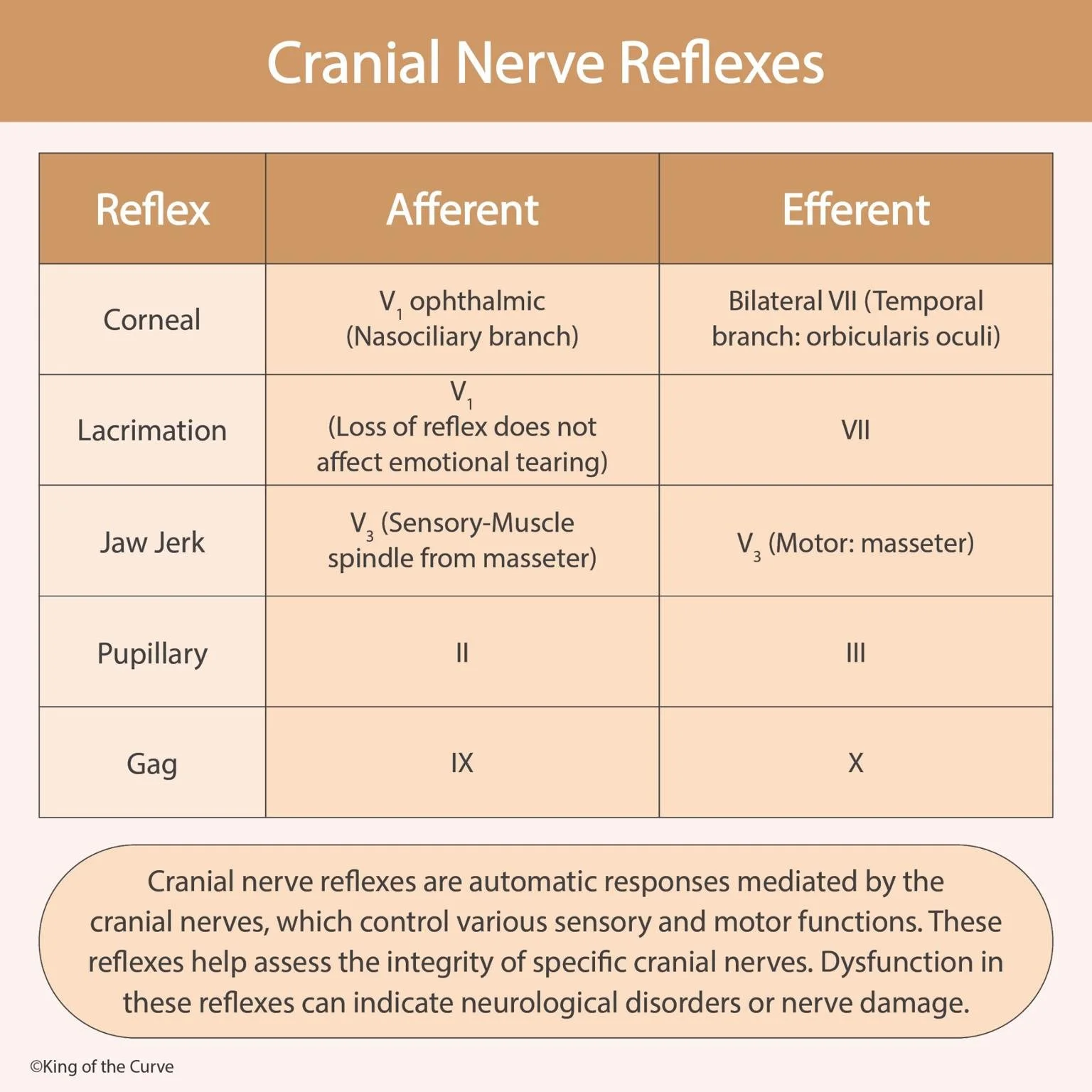
Cranial nerve reflexes are automatic, involuntary responses mediated by specific cranial nerves. These reflexes play a crucial role in neurological examinations, helping clinicians assess the integrity of both sensory (afferent) and motor (efferent) pathways.
🔍 What Are Afferent and Efferent Pathways?
Each reflex involves two components:
Afferent limb (sensory): Carries the stimulus to the brain
Efferent limb (motor): Carries the response from the brain to muscles
Damage to either pathway can disrupt the reflex, making them valuable diagnostic tools.
📊 Key Cranial Nerve Reflexes
1. 👁️ Corneal Reflex
Afferent: CN V₁ (Ophthalmic branch – nasociliary nerve)
Efferent: CN VII (Facial nerve – orbicularis oculi)
Function: Blinking when the cornea is touched
👉 Clinical tip: Absence may indicate trigeminal or facial nerve damage
2. 😢 Lacrimation Reflex
Afferent: CN V₁
Efferent: CN VII
Function: Tear production
👉 Note: Loss of this reflex does not affect emotional crying
3. 🦷 Jaw Jerk Reflex
Afferent: CN V₃ (Trigeminal – sensory from muscle spindle)
Efferent: CN V₃ (Motor to masseter)
Function: Jaw closure when tapped
👉 Clinical tip: An exaggerated reflex suggests upper motor neuron lesions
4. 👁️ Pupillary Light Reflex
Afferent: CN II (Optic nerve)
Efferent: CN III (Oculomotor nerve)
Function: Constriction of pupils in response to light
👉 Important for assessing midbrain function
5. 🤢 Gag Reflex
Afferent: CN IX (Glossopharyngeal nerve)
Efferent: CN X (Vagus nerve)
Function: Contraction of pharyngeal muscles
👉 Clinical tip: Absence may indicate brainstem or vagus nerve dysfunction
🧪 Clinical Importance
Cranial nerve reflexes are essential in neurological examinations, especially in emergency and critical care settings. They help localize lesions within the brainstem and identify whether the issue lies in the sensory input or motor output pathway.
For example:
Loss of corneal reflex → CN V or VII involvement
Abnormal pupillary reflex → possible brainstem injury
Absent gag reflex → risk of aspiration
⚠️ When Reflexes Are Abnormal
Abnormal reflexes can indicate:
Peripheral nerve damage
Brainstem lesions
Stroke or trauma
Neurodegenerative disorders
Evaluating multiple reflexes together provides a more accurate clinical picture rather than relying on a single test.
🧠 Key Takeaway
Cranial nerve reflexes are simple yet powerful tools in clinical diagnosis. By understanding their afferent and efferent components, clinicians can quickly assess neurological function and detect serious underlying conditions.

Frequently Asked Questions (FAQs)
-
Aim for 4-6 focused hours, ensuring you incorporate breaks to avoid burnout.
-
Practice mindfulness techniques, take practice exams under realistic conditions, and maintain a balanced lifestyle.
-
Set short-term goals, seek support from mentors, and reward yourself for small achievements.
-
Regular exercise improves focus, reduces stress, and enhances overall mental clarity.
-
KOTC offers personalized learning tools, gamification features, and adaptive question banks to help students stay on track without burnout.