
🧠 Brain Waves and Sleep Stages
Sleep is more than just rest it’s one of the most testable neuroscience topics on the MCAT and NCLEX. EEG recordings reveal distinct brainwave patterns that correspond to different stages of sleep, helping students understand how the brain cycles through wakefulness, light sleep, deep sleep, and dreaming. Mastering these stages makes passage-based questions far easier to recognize.
🌙 Wakefulness and Alpha Waves
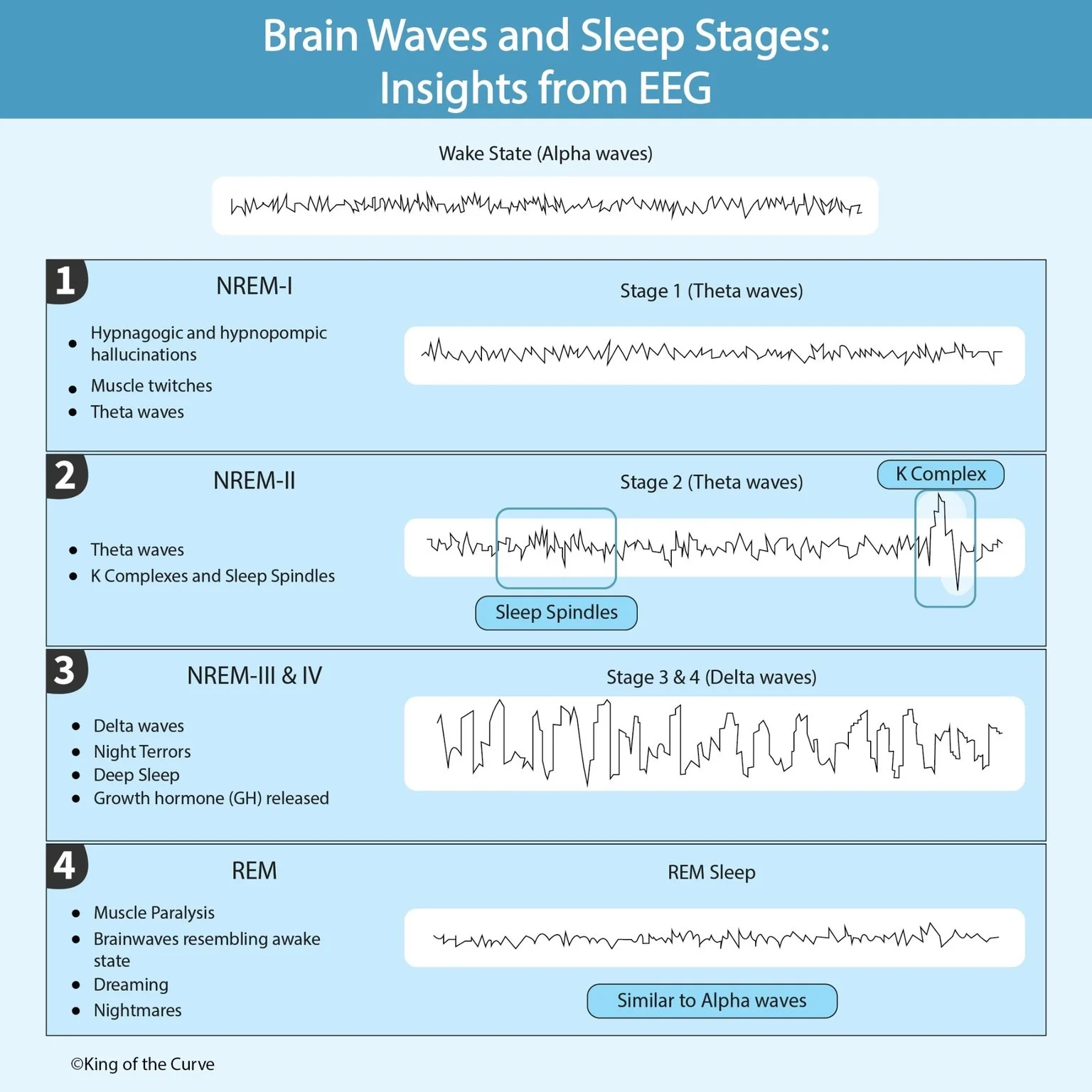
When you are awake but relaxed, your brain produces alpha waves, which are moderate-frequency signals commonly seen when your eyes are closed. This is the baseline state before entering sleep. MCAT questions often use alpha waves to represent calm wakefulness rather than deep concentration or sleep.
💤 NREM Stage 1: Theta Waves
The first stage of non-REM sleep is a transition period where theta waves appear. This stage is associated with hypnagogic hallucinations (the feeling of falling) and sudden muscle twitches. On exams, Stage 1 is often described as very light sleep where a person can be easily awakened.
🌟 NREM Stage 2: Sleep Spindles and K Complexes
Stage 2 is one of the most important sleep stages for the MCAT because it has unique EEG markers: sleep spindles and K complexes. Sleep spindles are bursts of brain activity linked to memory consolidation, while K complexes are large spikes that help protect sleep from external disturbances. If you see these terms in a passage, Stage 2 is the answer.
🌊 Deep Sleep (Stages 3 & 4): Delta Waves
Stages 3 and 4 are considered slow-wave sleep, dominated by delta waves, which are very slow but high in amplitude. This is the deepest stage of sleep, where the body focuses on physical restoration and growth hormone release. Night terrors and sleepwalking are also linked to this stage, making it clinically important.
🎭 REM Sleep: Dreaming and Paralysis
REM sleep is the stage most associated with vivid dreaming. Interestingly, the EEG pattern resembles wakefulness, but the body experiences muscle paralysis to prevent acting out dreams. REM is also critical for emotional processing and memory consolidation, which is why it frequently appears in psychology-based MCAT questions.
📊 Quick EEG Sleep Stage Table
| Sleep Stage | Key Brain Waves | Unique Feature | High-Yield Exam Clue |
|---|---|---|---|
| Wake State | Alpha waves | Relaxed awareness | Eyes closed, calm |
| Stage 1 (NREM I) | Theta waves | Hallucinations, twitches | Feeling of falling |
| Stage 2 (NREM II) | Theta + Spindles + K complexes | Memory support | Spindles = Stage 2 |
| Stage 3/4 (NREM III/IV) | Delta waves | Deep restorative sleep | Growth hormone release |
| REM Sleep | Similar to alpha/beta | Dreaming + paralysis | EEG looks awake |
🚀 MCAT Tip: How Sleep Stages Show Up in Passages
The MCAT rarely asks directly about “Stage 2 sleep.” Instead, passages describe EEG findings like spindles, delta waves, or REM paralysis. A quick strategy is to memorize the signature markers: Spindles = Stage 2, Delta = Deep sleep, REM = Dreaming + paralysis. For more visual learning tools, visit mcat.kingofthecurve.org, where King of the Curve provides 1000+ illustrated guides and an adaptive Q-bank built for long-term retention.

Frequently Asked Questions (FAQs)
-
Aim for 4-6 focused hours, ensuring you incorporate breaks to avoid burnout.
-
Practice mindfulness techniques, take practice exams under realistic conditions, and maintain a balanced lifestyle.
-
Set short-term goals, seek support from mentors, and reward yourself for small achievements.
-
Regular exercise improves focus, reduces stress, and enhances overall mental clarity.
-
KOTC offers personalized learning tools, gamification features, and adaptive question banks to help students stay on track without burnout.