
🧠 Carbohydrate Digestion Explained
Carbohydrate digestion is a fundamental biochemical process that converts complex polysaccharides like starch into absorbable monosaccharides such as glucose. This process involves multiple enzymes acting sequentially from the mouth to the small intestine. Understanding this pathway is crucial for MCAT preparation, as it integrates concepts from biochemistry, physiology, and metabolism.
🍞 Starch as the Starting Point
Starch is the primary dietary carbohydrate and serves as the starting molecule in carbohydrate digestion. It is a polysaccharide composed of long chains of glucose units. Because of its complex structure, it cannot be directly absorbed and must first be broken down into smaller molecules.
🔬 Role of α-Amylase
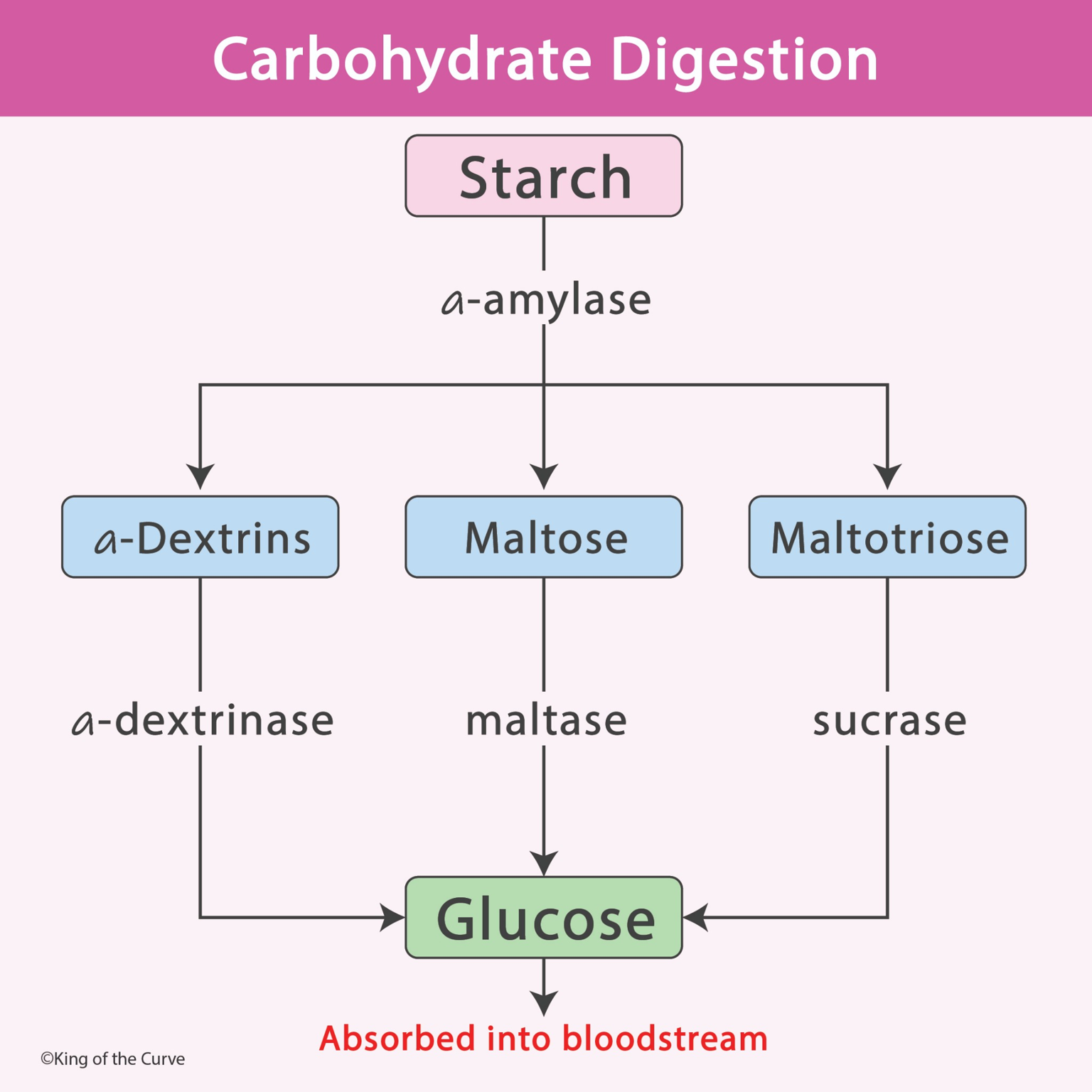
The enzyme α-amylase initiates carbohydrate digestion by breaking down starch into smaller fragments. This enzyme is found in saliva and pancreatic secretions, and it specifically targets internal α-1,4 glycosidic bonds, producing intermediate products.
🔹 Formation of Intermediate Products
As α-amylase acts on starch, it produces three main intermediates:
α-dextrins
Maltose
Maltotriose
These smaller carbohydrates still require further enzymatic digestion before absorption.
⚙️ Breakdown by α-Dextrinase
α-dextrinase specifically acts on α-dextrins by cleaving α-1,6 glycosidic bonds. This step is crucial because branching points in starch cannot be broken down by α-amylase alone. The result is further breakdown into glucose units.
🧪 Maltase and Its Function
Maltase is an enzyme located in the brush border of the small intestine. It breaks down maltose into two glucose molecules, facilitating absorption into the bloodstream.
🔄 Sucrase and Maltotriose Digestion
Sucrase, another brush border enzyme, helps break down maltotriose into glucose. Although commonly associated with sucrose digestion, it also contributes to the final steps of carbohydrate breakdown.
🩸 Absorption of Glucose
The final product of carbohydrate digestion is glucose. Once formed, glucose is absorbed through the intestinal lining into the bloodstream, where it becomes available for cellular energy production.
📊 Summary of Carbohydrate Digestion
| Stage | Enzyme | Substrate | Product |
|---|---|---|---|
| Initial Digestion | α-amylase | Starch | α-dextrins, maltose, maltotriose |
| Branch Breakdown | α-dextrinase | α-dextrins | Glucose |
| Disaccharide Breakdown | Maltase | Maltose | Glucose |
| Final Breakdown | Sucrase | Maltotriose | Glucose |
🎯 Key Takeaways
Carbohydrate digestion is a stepwise enzymatic process that transforms starch into glucose, the body’s primary energy source. Each enzyme has a specific role, and understanding these steps is essential for mastering metabolism and digestion topics on the MCAT.

Frequently Asked Questions (FAQs)
-
Aim for 4-6 focused hours, ensuring you incorporate breaks to avoid burnout.
-
Practice mindfulness techniques, take practice exams under realistic conditions, and maintain a balanced lifestyle.
-
Set short-term goals, seek support from mentors, and reward yourself for small achievements.
-
Regular exercise improves focus, reduces stress, and enhances overall mental clarity.
-
KOTC offers personalized learning tools, gamification features, and adaptive question banks to help students stay on track without burnout.