
🧬 Ca²⁺ Handling in the Nephron: Physiology and Clinical Relevance
Calcium (Ca²⁺) balance is tightly regulated by the kidneys, with different segments of the nephron playing specific roles in reabsorption. Understanding where and how calcium is handled is essential for interpreting electrolyte disorders and the effects of medications like diuretics. The nephron ensures that the majority of filtered calcium is reabsorbed, with less than 1% ultimately excreted in urine.
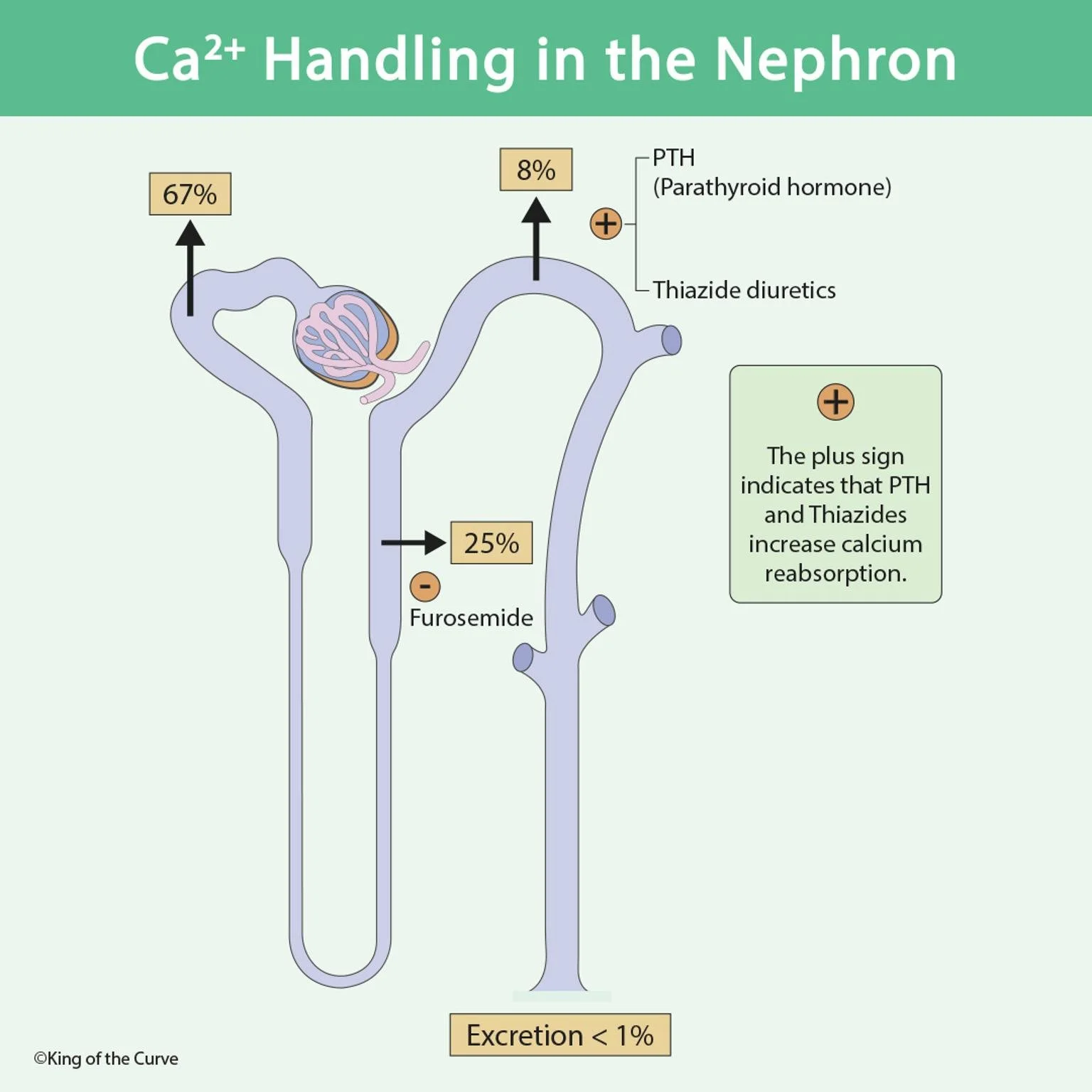
🔍 Segmental Calcium Reabsorption
🟣 Proximal Tubule (≈67%)
The majority of calcium reabsorption occurs here.
It is passive and paracellular, driven by solvent drag and sodium/water movement.
Not significantly regulated by hormones.
🟡 Thick Ascending Limb of Loop of Henle (≈25%)
Calcium reabsorption occurs via paracellular pathways, driven by a positive luminal voltage.
Furosemide (loop diuretics) inhibits this process → leads to increased calcium excretion.
🔵 Distal Convoluted Tubule (≈8%)
Calcium reabsorption is active and transcellular.
Strongly regulated by:
Parathyroid hormone (PTH) ↑ Ca²⁺ reabsorption
Thiazide diuretics ↑ Ca²⁺ reabsorption
⚖️ Hormonal and Drug Effects
➕ PTH (Parathyroid Hormone)
Increases calcium reabsorption in the distal tubule
Plays a major role in maintaining serum calcium levels
➕ Thiazide Diuretics
Enhance calcium reabsorption in the distal convoluted tubule
Clinically useful in preventing kidney stones
➖ Loop Diuretics (Furosemide)
Inhibit calcium reabsorption in the thick ascending limb
Can lead to increased urinary calcium loss
⚠️ Role of Magnesium and Electrolyte Balance
Magnesium levels play an important supportive role in calcium handling within the nephron. Hypomagnesemia can impair parathyroid hormone (PTH) release and reduce its effectiveness, leading to decreased calcium reabsorption and potential hypocalcemia. Additionally, sodium balance influences calcium transport—conditions that increase sodium excretion often increase calcium excretion as well. This close relationship explains why certain diuretics affect both sodium and calcium handling simultaneously.
🧾 Clinical Importance in Disease States
Alterations in calcium handling are commonly seen in several disease states. For instance, hyperparathyroidism leads to increased calcium reabsorption in the distal nephron, contributing to hypercalcemia. In contrast, chronic kidney disease (CKD) disrupts normal calcium and phosphate balance, often resulting in secondary hyperparathyroidism. Recognizing these patterns helps clinicians identify underlying disorders and tailor treatments, especially when managing electrolyte imbalances or preventing complications like kidney stones and bone disease.
📊 Summary Table
| Nephron Segment | % Ca²⁺ Reabsorbed | Mechanism | Regulation |
|---|---|---|---|
| Proximal Tubule | ~67% | Passive (paracellular) | Minimal |
| Thick Ascending Limb | ~25% | Paracellular (voltage-driven) | ↓ by loop diuretics |
| Distal Convoluted Tubule | ~8% | Active (transcellular) | ↑ by PTH & thiazides |
| Final Excretion | <1% | — | — |
🧠 Clinical Insight
Calcium handling in the nephron has important clinical implications. For example, loop diuretics are sometimes used in cases of hypercalcemia to promote calcium excretion, while thiazide diuretics are used to reduce calcium loss in patients prone to kidney stones. Understanding these mechanisms helps guide appropriate therapeutic decisions.
🩺 Key Takeaway
Most calcium is reabsorbed before reaching the distal nephron, but fine regulation occurs in the distal convoluted tubule, where hormones and medications exert their effects. This makes the distal nephron a critical target for managing calcium-related disorders.

Frequently Asked Questions (FAQs)
-
Aim for 4-6 focused hours, ensuring you incorporate breaks to avoid burnout.
-
Practice mindfulness techniques, take practice exams under realistic conditions, and maintain a balanced lifestyle.
-
Set short-term goals, seek support from mentors, and reward yourself for small achievements.
-
Regular exercise improves focus, reduces stress, and enhances overall mental clarity.
-
KOTC offers personalized learning tools, gamification features, and adaptive question banks to help students stay on track without burnout.