
🧠 Brain Waves Explained: Frequencies and Their Functions (MCAT EEG Guide)
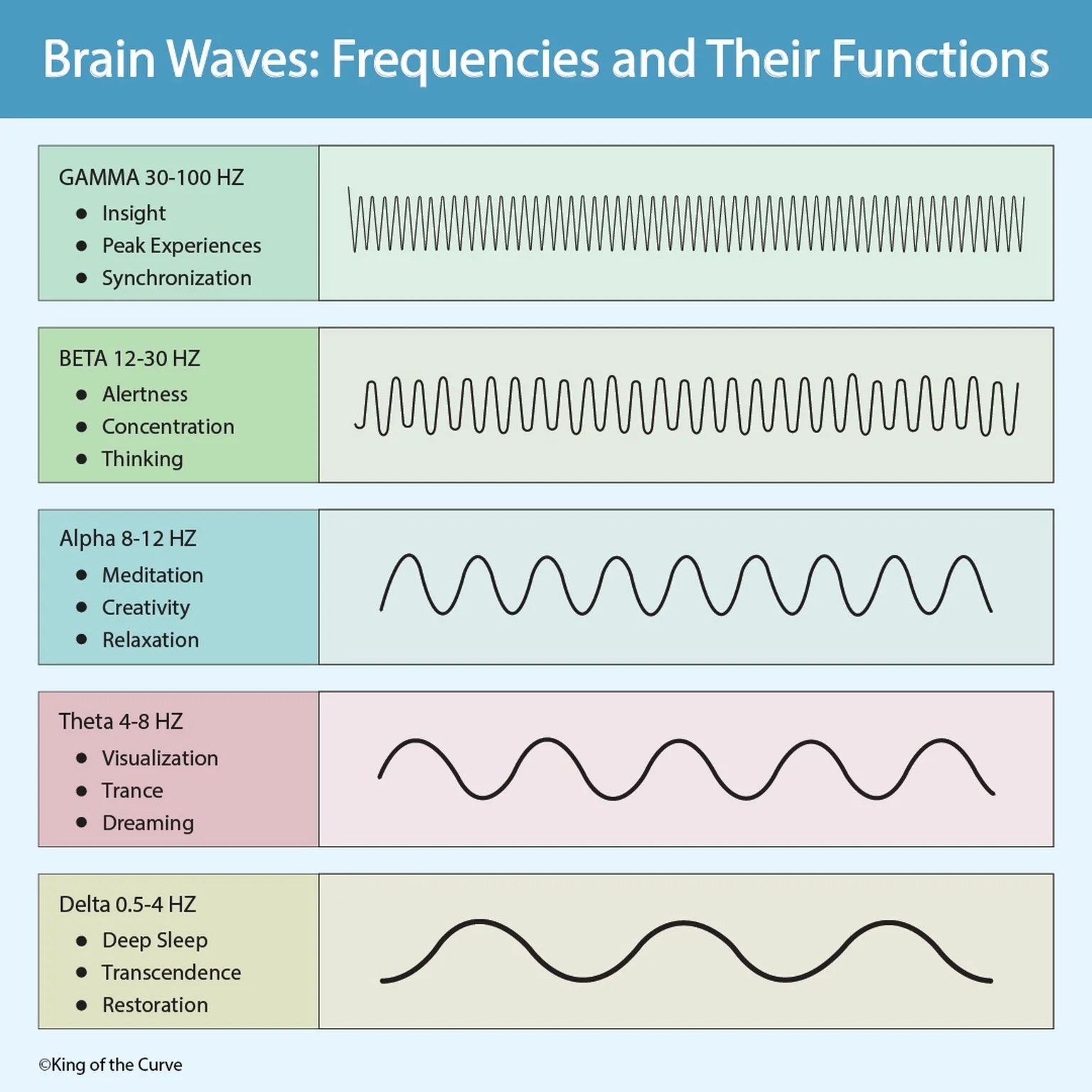
Brain waves are one of the most fascinating and most testable neuroscience concepts on the MCAT, NCLEX, and other health exams. Every thought, emotion, and stage of sleep is tied to electrical activity in the brain, which can be measured using an EEG (electroencephalogram). These signals occur in different frequency ranges, and each range is associated with specific mental states, from deep sleep to intense focus.
⚡ Why Brain Wave Frequencies Matter for the MCAT
On the MCAT, brain waves often appear in psychology and biology passages involving sleep cycles, consciousness, meditation studies, or neurological disorders. Instead of asking you to memorize numbers directly, the exam will describe a patient’s EEG pattern and ask what mental state they are likely experiencing. Knowing the frequency bands helps you quickly connect the waveform to the correct brain function.
🌟 Gamma Waves (30–100 Hz): Insight and Peak Awareness
Gamma waves are the fastest brain waves and are linked to moments of intense cognitive activity. They are associated with insight, peak experiences, and synchronization of information across brain regions. Gamma activity may increase during complex problem-solving, making it relevant to high-level thinking and learning.
🔥 Beta Waves (12–30 Hz): Alertness and Concentration
Beta waves dominate during normal waking life when you are actively focused. These waves are tied to alertness, concentration, and logical thinking. MCAT passages may connect beta waves to studying, active decision-making, or anxiety-related brain states because beta activity reflects an engaged and stimulated mind.
🌿 Alpha Waves (8–12 Hz): Relaxation and Creativity
Alpha waves appear when you are awake but calm, such as during meditation or quiet reflection. They are strongly linked to relaxation, creativity, and stress reduction. Alpha waves are often described in MCAT questions as the EEG pattern seen when someone closes their eyes and enters a peaceful resting state.
🌙 Theta Waves (4–8 Hz): Dreaming and Visualization
Theta waves are slower brain waves commonly associated with early sleep stages, daydreaming, and deep visualization. They are often present during Stage 1 NREM sleep and are linked to dreaming-like mental states. On exams, theta waves may show up in scenarios involving hypnagogic hallucinations or light sleep transitions.
💤 Delta Waves (0.5–4 Hz): Deep Sleep and Restoration
Delta waves are the slowest, highest-amplitude brain waves and dominate during the deepest stages of sleep. They are essential for physical restoration, immune support, and growth hormone release. MCAT and NCLEX questions frequently connect delta waves with deep sleep disorders such as sleepwalking or night terrors.
📊 Brain Wave Frequency Table (High-Yield Summary)
| Brain Wave Type | Frequency Range | Main Function | MCAT Clue |
|---|---|---|---|
| Gamma | 30–100 Hz | Insight, peak cognition | Highest frequency |
| Beta | 12–30 Hz | Alertness, thinking | Active focus |
| Alpha | 8–12 Hz | Relaxation, meditation | Calm wakefulness |
| Theta | 4–8 Hz | Visualization, light sleep | Stage 1 sleep |
| Delta | 0.5–4 Hz | Deep sleep, restoration | Slow-wave sleep |
🚀 MCAT Tip: How EEG Brain Waves Show Up in Passages
The MCAT won’t just ask “What is theta?” Instead, it will describe an EEG showing slower waves and ask whether the subject is asleep, dreaming, or deeply unconscious. A quick shortcut is:
Fast waves (Gamma/Beta) = Awake and thinking
Medium waves (Alpha) = Relaxed wakefulness
Slow waves (Theta/Delta) = Sleep and restoration
Practicing these patterns visually is one of the easiest ways to boost recall.

Frequently Asked Questions (FAQs)
-
Aim for 4-6 focused hours, ensuring you incorporate breaks to avoid burnout.
-
Practice mindfulness techniques, take practice exams under realistic conditions, and maintain a balanced lifestyle.
-
Set short-term goals, seek support from mentors, and reward yourself for small achievements.
-
Regular exercise improves focus, reduces stress, and enhances overall mental clarity.
-
KOTC offers personalized learning tools, gamification features, and adaptive question banks to help students stay on track without burnout.