
In sociology, status refers to a position a person occupies within a social group or society. Being a sibling, student, employee, or friend represents a social status. The term does not necessarily indicate wealth, popularity, or prestige. Sociologists distinguish between ascribed and achieved statuses by examining how people acquire these positions.
👶 Ascribed Status: Assigned Without Personal Choice
An ascribed status is assigned at birth or acquired involuntarily later in life. It does not depend primarily on an individual’s accomplishments. Common examples include age, family background, and certain kinship positions. A person becomes older through the passage of time, for instance, rather than earning an age category through effort. Ascribed statuses can influence expectations and opportunities.
🎓 Achieved Status: Acquired Through Actions and Participation
An achieved status is acquired through actions, decisions, participation, or accomplishments. Examples include becoming a university graduate, joining a sports team, or entering an occupation. “Achieved” does not necessarily mean prestigious, desirable, or entirely voluntary. These statuses also depend on circumstances and available opportunities, so personal effort alone does not explain how someone obtains them.
🧩 Understanding the Examples in the Diagram
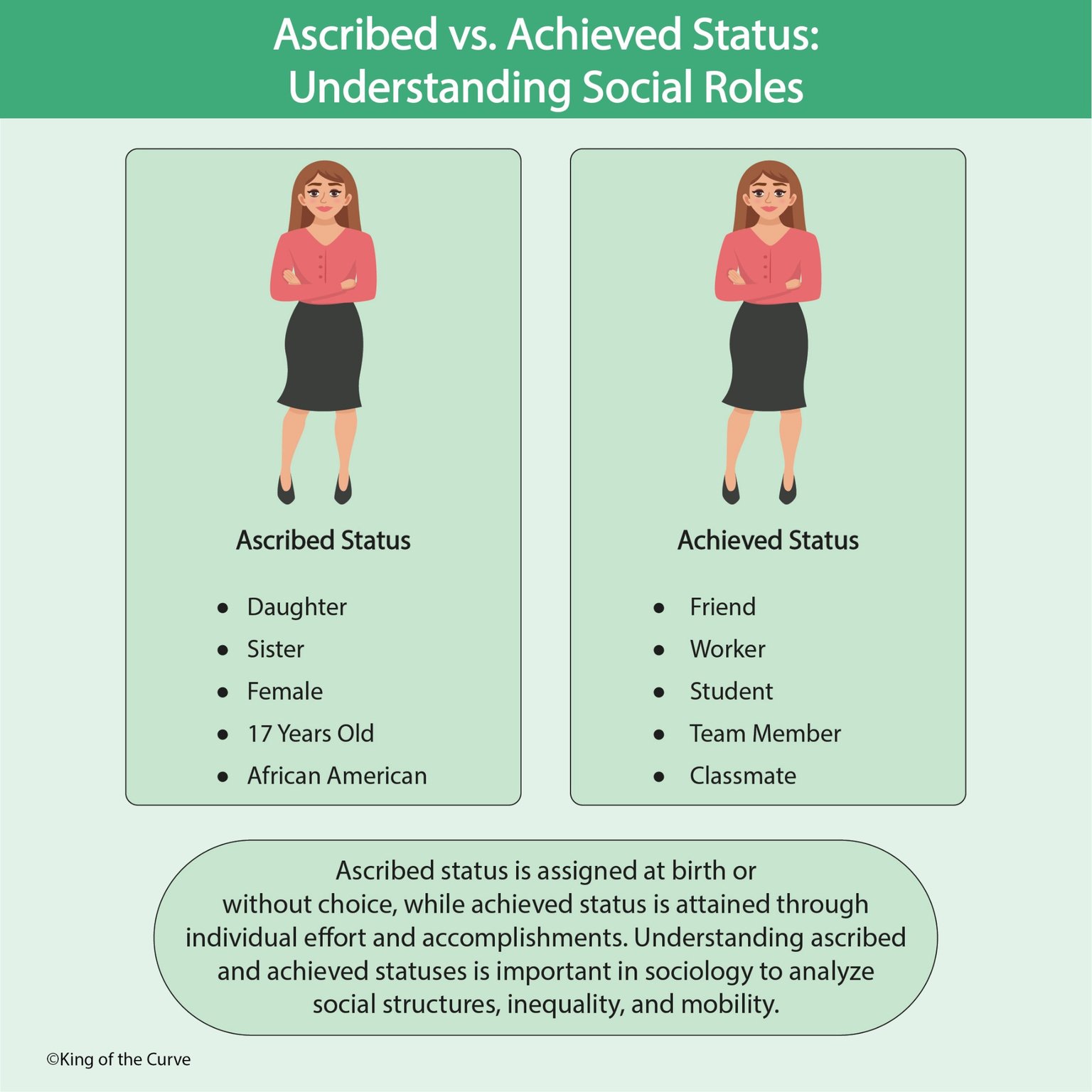
The diagram presents daughter, sister, age, and socially assigned categories as examples of ascribed status. Friend, worker, student, team member, and classmate illustrate positions acquired through relationships or participation. Some examples require context: compulsory schooling limits choice, and family relationships can develop through adoption or marriage. The distinction concerns how a position is acquired, rather than whether it can ever change.
📊 Comparing Ascribed and Achieved Status
Both types of status shape social experiences, but their routes of acquisition differ. Neither category determines a person’s abilities, character, or worth.
| Feature | Ascribed Status | Achieved Status |
|---|---|---|
| Main basis | Assigned at birth or acquired involuntarily | Acquired through actions, participation, or accomplishments |
| Personal control | Usually limited control over assignment | Often involves some agency, within social constraints |
| Typical examples | Age category, family background, inherited title | Graduate, employee, elected official, team member |
| Relationship to effort | Does not require personal accomplishment | May involve effort, qualifications, or participation |
| Possibility of change | Some change over time; others remain relatively stable | Can change as activities, relationships, and circumstances change |
| Influence on opportunities | Can shape access to resources and social expectations | Can affect responsibilities, recognition, and access to resources |
🎭 Status and Role: Position and Expected Behavior
A social role consists of the behaviors and expectations associated with a status. “Student” is a status, while attending classes, completing assignments, and following academic rules are associated role expectations. These expectations vary across cultures and institutions. Distinguishing status from role helps explain how a social position becomes connected to everyday behavior.
🔗 Status Sets and Master Status
A person’s status set includes all the statuses they occupy at a particular time. Someone may simultaneously be a daughter, friend, student, employee, and team member. A master status is a status that strongly influences how others perceive and respond to that person, potentially overshadowing other positions. It can be ascribed or achieved, and its importance depends on the social context.
⚖️ How Status Relates to Inequality and Mobility
Ascribed statuses can influence access to education, employment, social networks, and other resources. These conditions can affect the achieved statuses a person has opportunities to acquire. Social mobility refers to movement between positions in a system of social stratification, such as changes in socioeconomic standing. Understanding both status types helps explain how individual actions interact with institutional opportunities and barriers.
💬 Role Conflict and Role Strain in Everyday Life
Holding several statuses can create competing expectations. Role conflict occurs when expectations associated with different roles clash, such as an employee’s work shift overlapping with a student’s examination. Role strain occurs when demands within one role become difficult to manage, such as a student balancing several assignments. These concepts show how the expectations attached to social positions influence daily decisions and relationships.

Frequently Asked Questions (FAQs)
-
Aim for 4-6 focused hours, ensuring you incorporate breaks to avoid burnout.
-
Practice mindfulness techniques, take practice exams under realistic conditions, and maintain a balanced lifestyle.
-
Set short-term goals, seek support from mentors, and reward yourself for small achievements.
-
Regular exercise improves focus, reduces stress, and enhances overall mental clarity.
-
KOTC offers personalized learning tools, gamification features, and adaptive question banks to help students stay on track without burnout.