
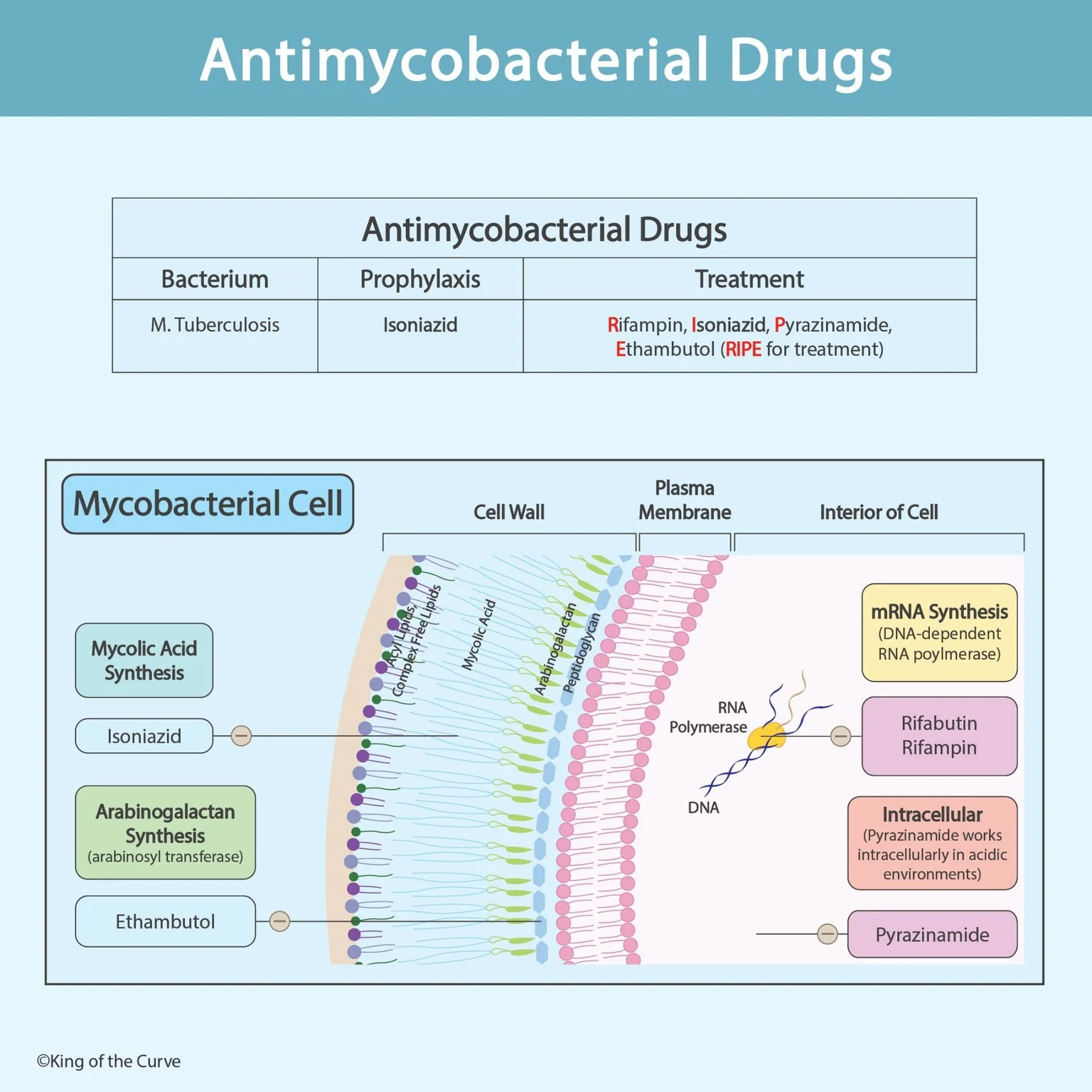
Mycobacterium tuberculosis, the bacterium responsible for tuberculosis (TB), has a lipid-rich cell envelope containing mycolic acids. This protective barrier contributes to its resistance to many ordinary antibiotics. Antimycobacterial drugs target different bacterial processes, including cell-wall formation and RNA synthesis. The drugs shown in the diagram are primarily associated with TB treatment; other mycobacterial infections require different combinations.
🎯 Understanding the RIPE Combination
RIPE stands for rifampin, isoniazid, pyrazinamide, and ethambutol. These medicines form the initial phase of a widely used regimen for drug-susceptible TB. Combining drugs targets different bacterial populations and reduces the likelihood of resistance developing. Treatment selection depends on susceptibility results, disease characteristics, and patient factors. Shorter regimens are also available for eligible patients.
🧱 Isoniazid: Blocking Mycolic Acid Synthesis
Isoniazid interferes with the production of mycolic acids, essential components of the mycobacterial cell envelope. It requires activation inside the bacterium and is particularly effective against actively multiplying organisms. Important adverse effects include liver injury and peripheral neuropathy. Pyridoxine, or vitamin B6, is commonly prescribed alongside isoniazid for people at increased risk of neuropathy.
🧬 Rifampin: Inhibiting RNA Synthesis
Rifampin, also called rifampicin, inhibits bacterial DNA-dependent RNA polymerase, preventing transcription of DNA into RNA. It can cause orange-red discoloration of urine, sweat, and tears. Important concerns include liver injury and drug interactions caused by enzyme induction. Rifabutin belongs to the same drug family and may be selected in particular situations because its interaction profile differs.
📊 Comparing the Main Antituberculosis Drugs
The four RIPE drugs have distinct mechanisms and adverse effects. Connecting each medicine with its target helps explain why they work together and why monitoring differs between drugs.
| Drug | Main Mechanism or Activity | Important Adverse Effects |
|---|---|---|
| Rifampin | Inhibits bacterial DNA-dependent RNA polymerase | Liver injury, orange-red body fluids, and drug interactions |
| Isoniazid | Inhibits mycolic acid synthesis after bacterial activation | Liver injury and peripheral neuropathy |
| Pyrazinamide | Converted to pyrazinoic acid; activity is favored by acidic conditions | Liver injury, hyperuricemia, and joint pain |
| Ethambutol | Inhibits arabinosyltransferases involved in cell-wall synthesis | Optic neuropathy, including reduced visual acuity and altered color vision |
🧪 Pyrazinamide: Activity in Acidic Conditions
Pyrazinamide is converted by bacterial pyrazinamidase into pyrazinoic acid. Its activity is favored by acidic conditions, making it useful against bacterial populations that other drugs may eliminate less effectively. Its mechanism is complex and is not fully understood. Important adverse effects include liver injury and increased uric acid levels, which may contribute to joint pain or gout.
👁️ Ethambutol: Disrupting Cell-Wall Assembly
Ethambutol inhibits arabinosyltransferases involved in building the mycobacterial cell wall, including its arabinogalactan component. It helps protect a multidrug regimen while susceptibility information is being established. Its characteristic toxicity is optic neuropathy, which can affect visual sharpness and color discrimination. Visual assessment and attention to new vision changes are therefore important during treatment.
🛡️ Latent TB Infection and Preventive Treatment
Latent TB infection means that a person is infected without evidence of active TB disease. Treatment reduces the risk of progression to active disease. Although the diagram lists isoniazid under prophylaxis, it is only one option. Short-course rifamycin-based regimens are generally preferred when appropriate, while longer isoniazid regimens remain alternatives. Active TB must be excluded before starting treatment for latent infection.
🔍 Monitoring Treatment and Preventing Resistance
Successful TB treatment requires an effective combination of medicines taken for the prescribed duration. Follow-up evaluates treatment response, adherence, adverse effects, and drug interactions. Monitoring may include liver tests, visual assessment, and bacteriologic testing, depending on the regimen and individual risk factors. Recognizing toxicity early and supporting treatment completion help prevent complications, relapse, and acquired drug resistance.

Frequently Asked Questions (FAQs)
-
Aim for 4-6 focused hours, ensuring you incorporate breaks to avoid burnout.
-
Practice mindfulness techniques, take practice exams under realistic conditions, and maintain a balanced lifestyle.
-
Set short-term goals, seek support from mentors, and reward yourself for small achievements.
-
Regular exercise improves focus, reduces stress, and enhances overall mental clarity.
-
KOTC offers personalized learning tools, gamification features, and adaptive question banks to help students stay on track without burnout.