
❤️ Atrial Pressure Regulation: Understanding Systolic, Diastolic, and Mean Pressure
Atrial pressure regulation plays a crucial role in maintaining efficient cardiac function and circulation. This guide breaks down how pressure changes across the cardiac cycle using simple explanations and visuals.
🫀 What Is Atrial Pressure?
Atrial pressure refers to the pressure within the atria of the heart, especially the right atrium. It reflects venous return and helps assess cardiac performance and fluid status.
📊 Key Components of Atrial Pressure
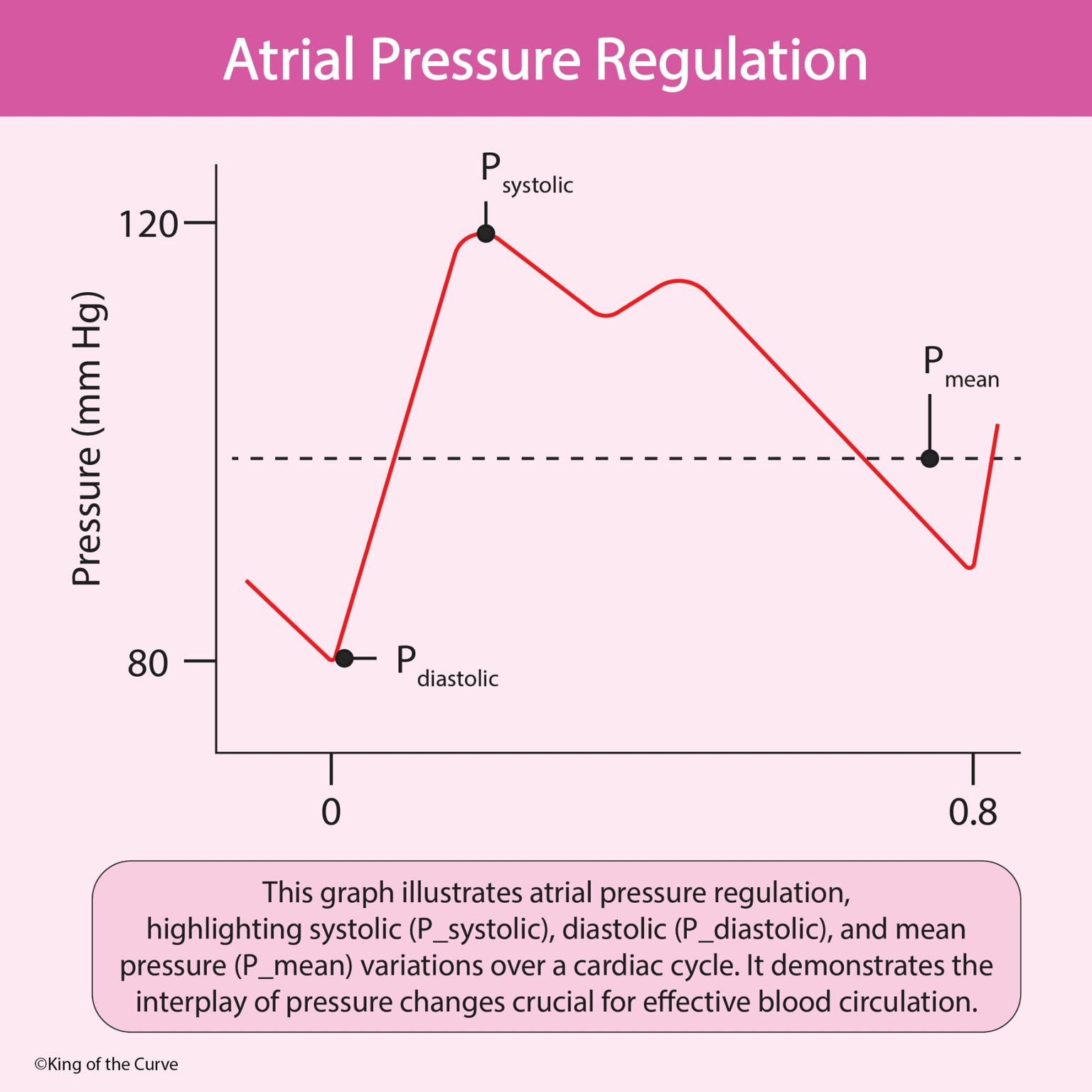
🔺 Systolic Pressure (Pₛᵧₛₜₒₗᵢc)
Peak pressure during heart contraction
Indicates pumping strength
Highest point on the graph
🔻 Diastolic Pressure (P_dᵢₐₛₜₒₗᵢc)
Lowest pressure during relaxation
Reflects ventricular filling
Important for preload assessment
➖ Mean Pressure (Pₘₑₐₙ)
Average pressure across the cardiac cycle
Represents equilibrium state
Clinically used in CVP monitoring
🔄 Changes During the Cardiac Cycle
Atrial pressure fluctuates due to:
Blood returning from veins
Atrial contraction & relaxation
Ventricular filling dynamics
These variations ensure efficient blood circulation throughout the body.
🏥 Clinical Significance
💔 Heart Failure
Increased atrial pressure
Indicates fluid overload
⚠️ Shock / Hypovolemia
Decreased atrial pressure
Suggests low blood volume
🩺 CVP Monitoring
Right atrial pressure used clinically
Helps guide fluid therapy
📋 Summary Table
| Type of Pressure | Description | Clinical Importance |
|---|---|---|
| Systolic Pressure | Peak pressure during contraction | Indicates cardiac strength |
| Diastolic Pressure | Lowest pressure during relaxation | Reflects ventricular filling |
| Mean Pressure | Average pressure over cycle | Used in CVP monitoring |
🧠 Final Thoughts
Understanding atrial pressure regulation helps you interpret cardiovascular function and clinical conditions more effectively. Mastering these concepts is especially valuable for MCAT, USMLE, and medical studies.

Frequently Asked Questions (FAQs)
-
Aim for 4-6 focused hours, ensuring you incorporate breaks to avoid burnout.
-
Practice mindfulness techniques, take practice exams under realistic conditions, and maintain a balanced lifestyle.
-
Set short-term goals, seek support from mentors, and reward yourself for small achievements.
-
Regular exercise improves focus, reduces stress, and enhances overall mental clarity.
-
KOTC offers personalized learning tools, gamification features, and adaptive question banks to help students stay on track without burnout.