
The ABO blood group system classifies blood into four main types: A, B, AB, and O. These groups depend on whether red blood cells carry A antigens, B antigens, both, or neither. Understanding this relationship helps explain why some donor red blood cells are compatible with a recipient while others can trigger an immune reaction.
🧬 What Are A and B Antigens?
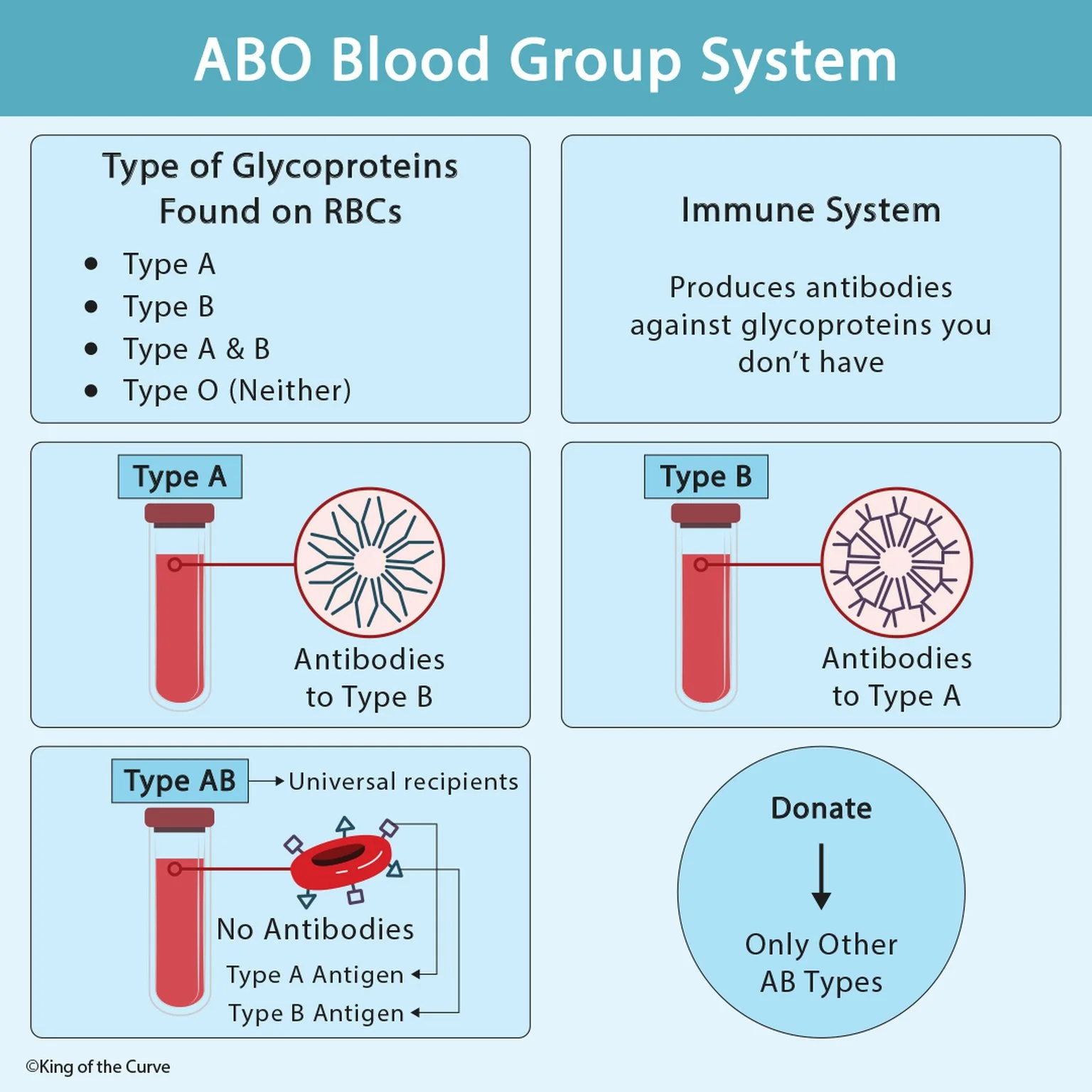
A and B antigens are carbohydrate structures carried on glycoproteins and glycolipids at the red blood cell surface. Type A cells display A antigens, type B cells display B antigens, and type AB cells display both. Type O cells lack A and B antigens, but they still carry other surface structures, including the usual H antigen precursor.
🛡️ How Antibodies Relate to Blood Type
People typically develop antibodies against the ABO antigens their own red blood cells lack. Type A blood usually contains anti-B antibodies, type B contains anti-A, and type O contains both. Type AB normally contains neither anti-A nor anti-B, which does not mean that people with AB blood have no antibodies at all.
📊 ABO Blood Group Compatibility Table
For red blood cell transfusions, the recipient’s antibodies must not attack the donor’s A or B antigens. The table below summarizes standard ABO compatibility only; Rh status, other blood group antibodies, and pretransfusion testing must also be considered. Compatibility rules differ for plasma transfusions.
| Blood Type | A/B Antigens on Red Cells | Usual ABO Antibodies in Plasma | Can Receive Red Cells From* | Can Donate Red Cells To* |
|---|---|---|---|---|
| A | A | Anti-B | A, O | A, AB |
| B | B | Anti-A | B, O | B, AB |
| AB | A and B | Neither anti-A nor anti-B | A, B, AB, O | AB |
| O | Neither A nor B | Anti-A and anti-B | O | A, B, AB, O |
*ABO compatibility for red blood cell transfusions only. Rh status, other blood group antibodies, and pretransfusion testing must also be considered. Plasma compatibility rules differ.
🔴 Why Type O Is Called a Universal Red Cell Donor
Type O red blood cells lack A and B antigens, so a recipient’s anti-A or anti-B antibodies have no corresponding targets on those cells. When RhD status is included, O negative is commonly called the universal red cell donor type. This designation applies to red cells and does not make every O-negative blood product universally compatible.
🟣 Why Type AB Can Receive Different Red Cell Types
People with type AB blood normally lack anti-A and anti-B antibodies, allowing them to receive red cells from all four ABO groups. When RhD is included, AB positive is commonly called the universal red cell recipient type. Compatibility testing remains necessary because blood group systems beyond ABO and RhD can also affect transfusion safety.
💧 Why Plasma Compatibility Works Differently
A plasma transfusion transfers the donor’s antibodies, so those antibodies must be compatible with the recipient’s red cells. AB plasma normally contains neither anti-A nor anti-B, making it the universal ABO plasma donor type. Conversely, an AB recipient generally receives AB plasma because their red cells carry both A and B antigens.
⚠️ What Happens During an ABO-Incompatible Transfusion?
If incompatible red cells enter the circulation, the recipient’s antibodies can bind to their A or B antigens. This can activate complement and cause rapid destruction of red blood cells, called intravascular hemolysis. The possibility of this serious reaction explains why accurate identification, blood typing, and compatibility testing are essential.
🧪 How Blood Typing and Crossmatching Improve Safety
Blood typing establishes a person’s ABO and RhD groups, while antibody screening checks for additional clinically significant red cell antibodies. Crossmatching then assesses compatibility between the intended donor red cells and the recipient. Together, these steps provide a more complete safety assessment than relying on a blood type label alone.

Frequently Asked Questions (FAQs)
-
Aim for 4-6 focused hours, ensuring you incorporate breaks to avoid burnout.
-
Practice mindfulness techniques, take practice exams under realistic conditions, and maintain a balanced lifestyle.
-
Set short-term goals, seek support from mentors, and reward yourself for small achievements.
-
Regular exercise improves focus, reduces stress, and enhances overall mental clarity.
-
KOTC offers personalized learning tools, gamification features, and adaptive question banks to help students stay on track without burnout.