
🩺 The Vessels of the Abdominal Wall: Anatomy & Clinical Importance
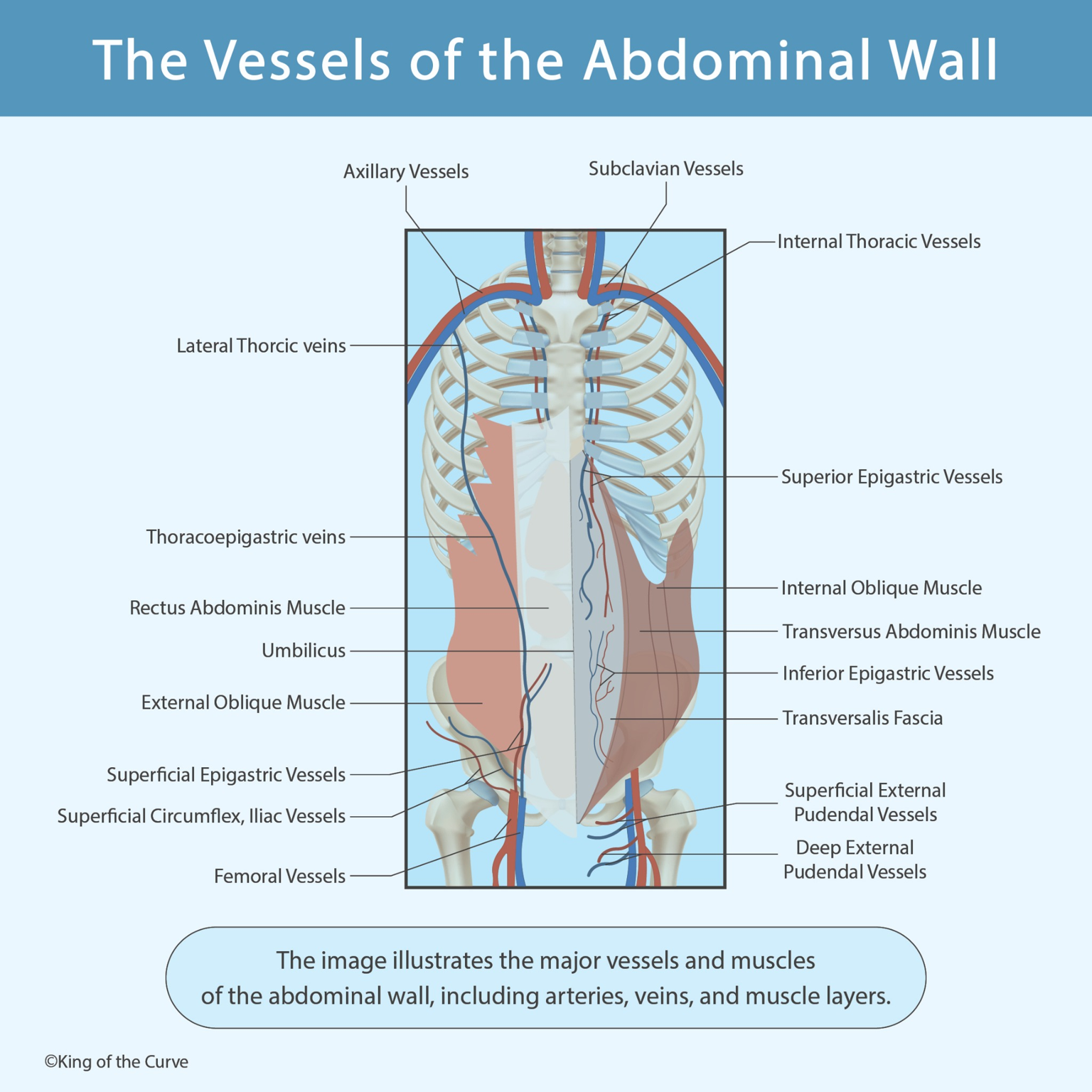
The abdominal wall contains a rich network of arteries and veins that supply and drain the skin, muscles, and fascia of the abdomen. These vessels not only nourish the tissues but also form key pathways of collateral circulation, especially when major vessels are blocked. Understanding the vessels of the abdominal wall is essential in surgery, anatomy, trauma care, and procedures involving the abdomen.
🔍 Why Are Abdominal Wall Vessels Important?
The abdominal wall plays a major role in:
✅ Protection of abdominal organs
✅ Movement and posture
✅ Supporting internal pressure for breathing and defecation
✅ Holding a strong blood supply for muscle and skin health
Because this area is frequently involved in incisions, surgeries (C-sections, hernia repairs), injections, and trauma, knowing the vascular layout prevents bleeding complications and improves surgical safety.
🩸 Key Arteries of the Abdominal Wall
The abdominal wall receives blood mainly from:
Superior epigastric artery (from internal thoracic artery)
Inferior epigastric artery (from external iliac artery)
Superficial epigastric artery (from femoral artery)
Superficial circumflex iliac artery
Thoracoepigastric and lateral thoracic veins (important for venous flow)
A major feature is the anastomosis between superior and inferior epigastric vessels, providing an alternate pathway of blood if one route is obstructed.
🧠 Abdominal Wall Vessels & Muscle Layers
The vessels lie within or between abdominal muscles such as:
External oblique
Internal oblique
Transversus abdominis
Rectus abdominis
They travel through connective layers such as the transversalis fascia, supplying different structural layers along the way.
📊 Table: Major Vessels of the Abdominal Wall (Summary)
| Vessel Name | Type | Origin / Drainage | Main Function / Area Supplied |
|---|---|---|---|
| Superior Epigastric | Artery | Internal thoracic artery | Supplies upper anterior abdominal wall |
| Inferior Epigastric | Artery | External iliac artery | Supplies lower anterior abdominal wall & rectus abdominis |
| Superficial Epigastric | Artery | Femoral artery | Supplies superficial lower abdominal skin |
| Superficial Circumflex Iliac | Artery | Femoral artery | Supplies skin and fascia near iliac crest |
| Thoracoepigastric veins | Vein | Connect lateral thoracic ↔ superficial epigastric | Collateral venous pathway (cavo-caval) |
| Lateral thoracic veins | Vein | Drain into axillary vein | Drain lateral chest & upper abdominal wall |
| Deep external pudendal | Vessel | Femoral region | Supplies skin near genital region |
⚠️ Clinical Significance
✅ 1. Collateral Circulation
If the inferior vena cava (IVC) is blocked, veins like thoracoepigastric veins enlarge and form alternate drainage routes, which may appear as visible abdominal wall veins.
✅ 2. Surgery & Incisions
The inferior epigastric artery is especially important during:
laparoscopic port placements
C-sections
hernia repairs
Injury to this vessel can cause significant internal bleeding.
✅ 3. Varicose Veins and Portal Hypertension
Enlarged superficial abdominal veins may also indicate:
portal hypertension
liver disease
venous obstruction
✅ Key Takeaway
The abdominal wall contains both deep and superficial vessels that supply its muscles and skin. The superior and inferior epigastric vessels form a crucial arterial connection, and superficial veins such as thoracoepigastric veins act as important alternate venous routes in obstruction cases. This anatomy is highly important in clinical practice and surgical safety.

Frequently Asked Questions (FAQs)
-
Aim for 4-6 focused hours, ensuring you incorporate breaks to avoid burnout.
-
Practice mindfulness techniques, take practice exams under realistic conditions, and maintain a balanced lifestyle.
-
Set short-term goals, seek support from mentors, and reward yourself for small achievements.
-
Regular exercise improves focus, reduces stress, and enhances overall mental clarity.
-
KOTC offers personalized learning tools, gamification features, and adaptive question banks to help students stay on track without burnout.