
🌡️ Types of Fever and Associated Conditions
A fever is an elevation in body temperature caused by an increase in the hypothalamic temperature set point. It commonly occurs during infection or inflammation when pyrogens stimulate the production of prostaglandin E₂ (PGE₂). For the MCAT, fever patterns can help illustrate how physiological responses change over time.
📈 Continuous Fever
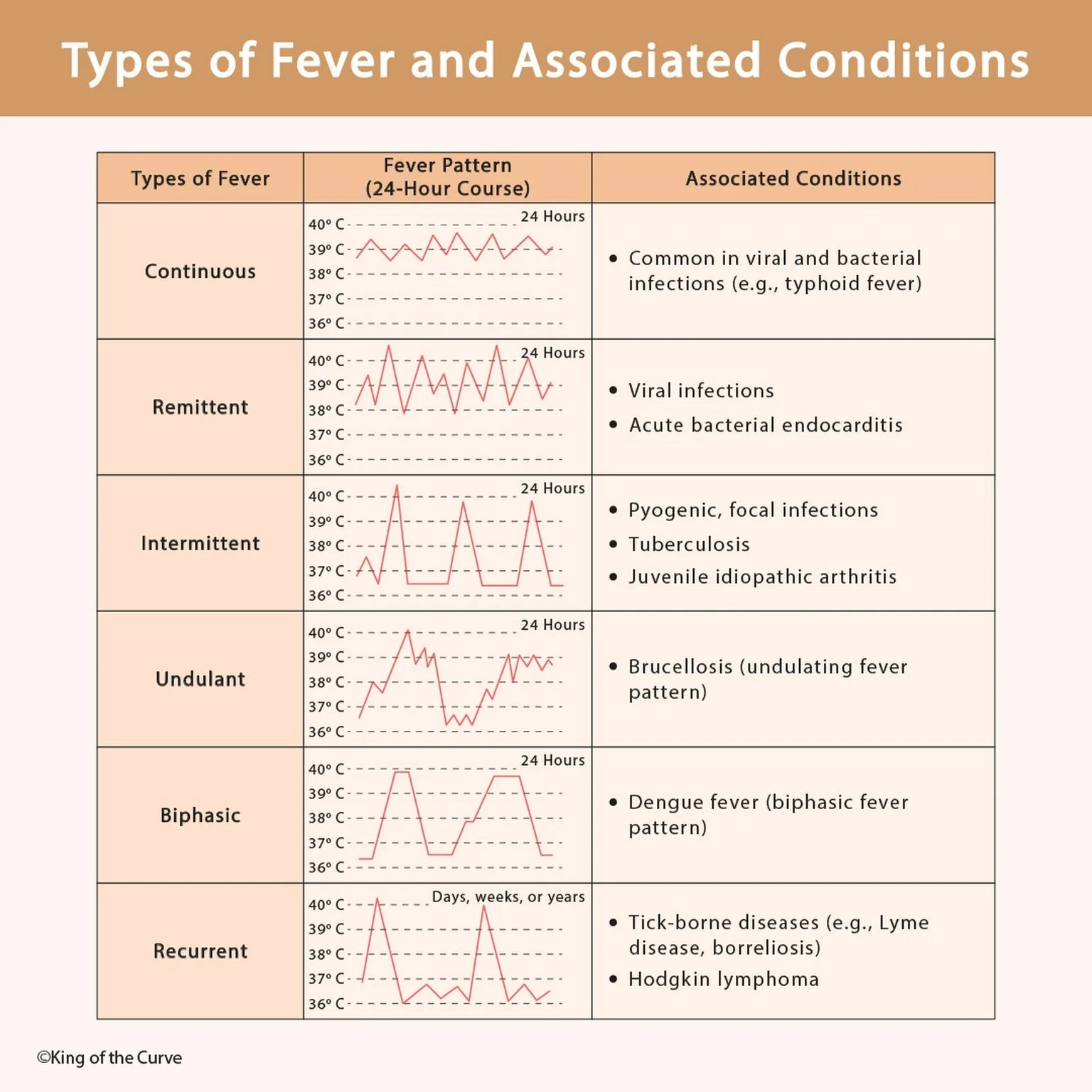
Continuous fever remains elevated throughout the day with relatively small temperature fluctuations and does not return to normal. This pattern can occur in several infectious diseases and has classically been associated with conditions such as typhoid fever.
🌡️ Remittent Fever
In remittent fever, body temperature fluctuates noticeably during a 24-hour period but remains above the normal range. The temperature rises and falls without completely returning to baseline. This pattern may be seen with various infectious and inflammatory conditions.
📉 Intermittent Fever
Intermittent fever is characterized by periods of elevated temperature separated by periods when the temperature returns to normal. Depending on the underlying disease, these episodes may occur at predictable or irregular intervals. Certain infections and inflammatory disorders can produce this pattern.
🌊 Undulant Fever
Undulant fever shows a gradual rise and fall in temperature over time, creating a wave-like pattern. It is classically associated with brucellosis, a bacterial zoonotic infection. The term “undulant” reflects the characteristic waxing and waning of the fever.
🔄 Biphasic Fever
A biphasic fever consists of two distinct febrile periods separated by an interval of improvement or lower temperature. This pattern is sometimes described in dengue, although fever patterns alone are not sufficient to diagnose a specific disease.
♻️ Recurrent Fever
Recurrent fever involves febrile episodes separated by longer periods of normal temperature, potentially over days or weeks. Recurrent or relapsing fever patterns may occur with some tick-borne infections and other infectious, inflammatory, or malignant conditions.
📊 Types of Fever Comparison
| 🌡️ Type of Fever | 📈 Temperature Pattern | 🩺 Common Association |
|---|---|---|
| Continuous | Remains elevated with only small fluctuations | Typhoid fever; some bacterial/viral infections |
| Remittent | Fluctuates but does not return to normal | Various infections; classically described with infective endocarditis |
| Intermittent | Fever spikes with return to normal between episodes | Some pyogenic infections; malaria is a classic periodic example |
| Undulant | Gradual, wave-like rise and fall | Brucellosis |
| Biphasic | Two febrile phases separated by improvement | Dengue can show a biphasic pattern |
| Recurrent | Fever episodes separated by longer afebrile periods | Relapsing/tick-borne infections; some inflammatory or malignant conditions |
🧠 Fever vs Hyperthermia
A key MCAT distinction is fever versus hyperthermia. During fever, the hypothalamic set point increases, so the body actively generates and conserves heat to reach the new target. In hyperthermia, the set point remains unchanged, but body temperature rises because heat production or environmental heat exceeds the body's ability to dissipate it.
🎯 MCAT High-Yield Takeaway
Remember the basic patterns: continuous stays elevated, remittent fluctuates without returning to normal, intermittent returns to normal between spikes, undulant rises and falls gradually, biphasic has two distinct fever phases, and recurrent returns after longer afebrile intervals. On MCAT-style questions, combine the fever pattern with the underlying physiology and other clinical information rather than using the pattern alone to identify a disease.

Frequently Asked Questions (FAQs)
-
Aim for 4-6 focused hours, ensuring you incorporate breaks to avoid burnout.
-
Practice mindfulness techniques, take practice exams under realistic conditions, and maintain a balanced lifestyle.
-
Set short-term goals, seek support from mentors, and reward yourself for small achievements.
-
Regular exercise improves focus, reduces stress, and enhances overall mental clarity.
-
KOTC offers personalized learning tools, gamification features, and adaptive question banks to help students stay on track without burnout.