
🧬 Tumor Lysis Syndrome: A High-Yield Metabolic Emergency
Tumor lysis syndrome (TLS) is a potentially life-threatening metabolic complication caused by the rapid destruction of tumor cells. When large numbers of malignant cells break down, their intracellular contents enter the bloodstream, producing characteristic electrolyte and metabolic abnormalities. TLS most commonly occurs after treatment of rapidly proliferating, treatment-sensitive cancers, particularly hematologic malignancies.
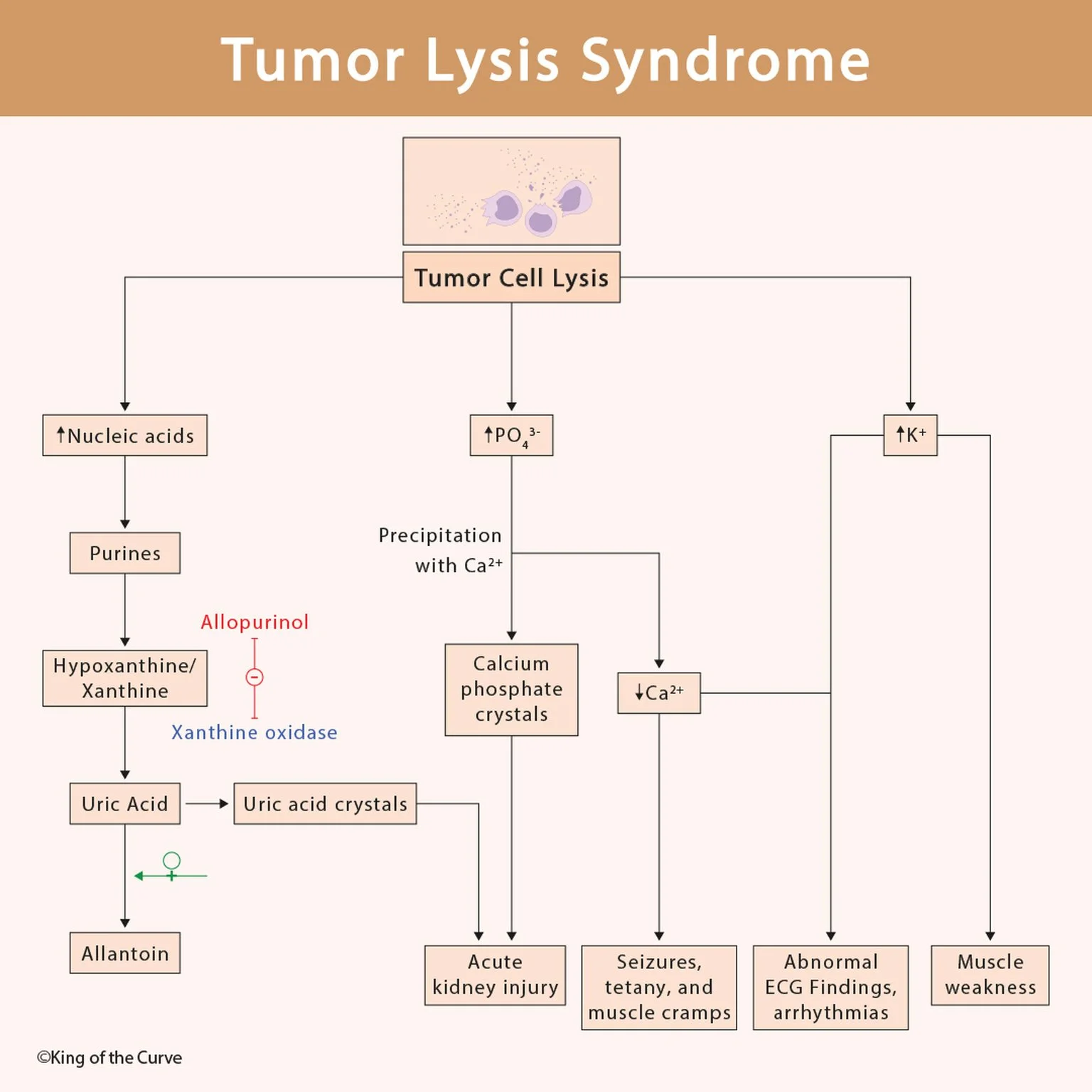
⚡ What Happens During Tumor Cell Lysis?
Tumor cells contain large amounts of potassium, phosphate, and nucleic acids. Rapid cell destruction releases these substances into the circulation. The classic laboratory pattern includes hyperkalemia, hyperphosphatemia, hypocalcemia, and hyperuricemia, which can affect the kidneys, heart, muscles, and nervous system.
🧪 Nucleic Acids and Uric Acid
Released nucleic acids are metabolized into purines and then into hypoxanthine and xanthine. Xanthine oxidase contributes to their conversion to uric acid. Excess uric acid can precipitate within renal tubules and contribute to acute kidney injury, making purine metabolism an important part of understanding TLS.
💊 Allopurinol and Uric Acid Formation
Allopurinol inhibits xanthine oxidase, decreasing the formation of new uric acid from hypoxanthine and xanthine. This mechanism explains its role in TLS prevention. Another drug, rasburicase, acts differently by converting uric acid into the more soluble compound allantoin.
🧂 Hyperphosphatemia and Hypocalcemia
Rapid cell breakdown releases intracellular phosphate, causing hyperphosphatemia. Excess phosphate can bind calcium and form calcium phosphate deposits, lowering circulating calcium levels. This secondary hypocalcemia may produce neuromuscular manifestations such as muscle cramps, tetany, or seizures.
❤️ Hyperkalemia and the Heart
Potassium released from lysed cells can rapidly produce hyperkalemia. Elevated serum potassium is particularly dangerous because it can disrupt cardiac electrical activity, producing ECG abnormalities and potentially serious arrhythmias. Hyperkalemia can also contribute to muscle weakness.
| 🧪 Abnormality | ⚙️ Cause | ⚠️ Important Consequence |
|---|---|---|
| Hyperkalemia | Intracellular K+ release | Arrhythmias, muscle weakness |
| Hyperphosphatemia | Intracellular phosphate release | Calcium phosphate precipitation |
| Hypocalcemia | Phosphate binds Ca2+ | Tetany, cramps, seizures |
| Hyperuricemia | Nucleic acid breakdown | Acute kidney injury |
🩺 Why the Kidneys Are at Risk
The kidneys are especially vulnerable in TLS. Uric acid and calcium phosphate can precipitate within renal structures, while other physiologic disturbances may further impair renal function. Acute kidney injury can then reduce the body's ability to eliminate potassium, phosphate, and uric acid, potentially worsening the metabolic abnormalities.
🛡️ Prevention and Management Principles
Patients at significant risk for TLS are identified before cancer treatment whenever possible. Prevention and treatment can involve IV hydration, close monitoring of electrolytes and renal function, management of dangerous electrolyte abnormalities, and uric-acid–lowering therapy such as allopurinol or rasburicase when clinically appropriate. Severe cases may require renal replacement therapy.
🎯 MCAT High-Yield Takeaway
Remember the core chain: rapid tumor destruction → ↑ K⁺, ↑ phosphate, ↑ uric acid, and ↓ Ca²⁺. Hyperkalemia threatens cardiac function, hypocalcemia can cause neuromuscular symptoms, and uric acid plus calcium phosphate precipitation can contribute to kidney injury. Connecting tumor cell contents to these downstream effects makes the entire pathway much easier to remember.

Frequently Asked Questions (FAQs)
-
Aim for 4-6 focused hours, ensuring you incorporate breaks to avoid burnout.
-
Practice mindfulness techniques, take practice exams under realistic conditions, and maintain a balanced lifestyle.
-
Set short-term goals, seek support from mentors, and reward yourself for small achievements.
-
Regular exercise improves focus, reduces stress, and enhances overall mental clarity.
-
KOTC offers personalized learning tools, gamification features, and adaptive question banks to help students stay on track without burnout.