
🧬 T Cell Differentiation Pathways: A High-Yield Immunology Guide
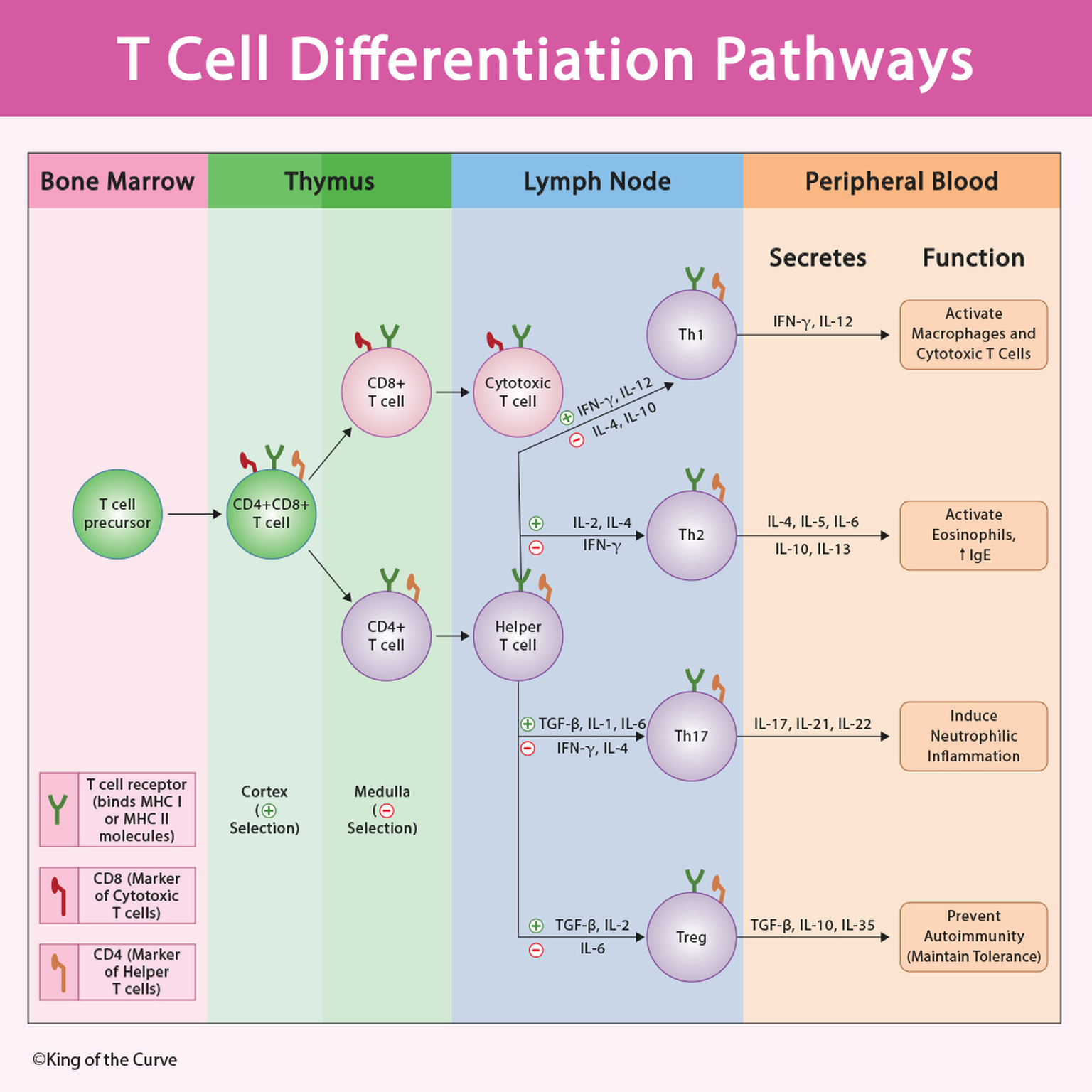
T cells originate from hematopoietic stem cells in the bone marrow, but their maturation occurs primarily in the thymus. Immature T-cell precursors migrate to the thymus, where they undergo a carefully regulated selection process before entering the circulation as functional T lymphocytes.
🧪 What Happens in the Thymus?
Developing thymocytes progress through several stages, including a CD4⁺CD8⁺ double-positive stage. In the thymic cortex, positive selection favors cells capable of recognizing self-MHC molecules. Negative selection, occurring mainly in the medulla, removes many T cells that bind self-antigens too strongly, helping establish self-tolerance.
🛡️ CD4⁺ vs CD8⁺ T Cells
Mature T cells generally become either CD4⁺ helper T cells or CD8⁺ cytotoxic T cells. CD4⁺ T cells recognize antigens presented on MHC class II, whereas CD8⁺ T cells recognize antigens presented on MHC class I. Activated CD8⁺ cells can differentiate into cytotoxic T lymphocytes that kill infected or abnormal cells.
🔵 How Do Helper T Cells Differentiate?
After activation in secondary lymphoid tissues such as lymph nodes, naïve CD4⁺ T cells can differentiate into specialized subsets. The surrounding cytokine environment influences which pathway develops. Important subsets include Th1, Th2, Th17, and regulatory T cells (Tregs), each with a distinct immune function.
🔥 Th1 Cells and Cell-Mediated Immunity
Th1 cells are associated with cell-mediated immune responses, particularly against intracellular pathogens. They characteristically produce IFN-γ and help activate macrophages while supporting cytotoxic immune responses. For MCAT purposes, Th1 responses can be contrasted with the antibody- and allergy-associated functions of Th2 cells.
🦠 Th2 and Th17 Responses
Th2 cells produce cytokines including IL-4, IL-5, and IL-13 and promote responses involving eosinophils and IgE, making them especially relevant to parasitic infections and allergic responses. Th17 cells, meanwhile, produce IL-17 family cytokines and promote recruitment of neutrophils, contributing to inflammatory defense against extracellular microbes.
⚖️ Regulatory T Cells Maintain Tolerance
Regulatory T cells (Tregs) suppress excessive immune activity and help maintain peripheral self-tolerance. They are commonly associated with immunoregulatory cytokines such as IL-10 and TGF-β. Their activity helps prevent inappropriate immune responses against the body's own tissues.
📊 Major T Cell Types at a Glance
| 🧬 T Cell Type | 🧪 Key Signals / Products | 🎯 Major Function |
|---|---|---|
| CD8⁺ cytotoxic T cell | Cytotoxic effector molecules | Kills infected or abnormal cells |
| Th1 | IFN-γ | Activates macrophages and supports cell-mediated immunity |
| Th2 | IL-4, IL-5, IL-13 | Activates eosinophil responses and promotes IgE-associated immunity |
| Th17 | IL-17 family cytokines | Promotes neutrophilic inflammation |
| Treg | IL-10, TGF-β | Suppresses immune responses and maintains tolerance |
🎯 MCAT High-Yield Takeaway
Remember the pathway as bone marrow → thymus → peripheral lymphoid tissue → specialized T-cell response. The highest-yield distinctions are CD8⁺/MHC I vs CD4⁺/MHC II, thymic positive and negative selection, and the functions of the major helper T-cell subsets. Connecting each cell type with its cytokines and immune function makes complex immunology questions much easier to organize.

Frequently Asked Questions (FAQs)
-
Aim for 4-6 focused hours, ensuring you incorporate breaks to avoid burnout.
-
Practice mindfulness techniques, take practice exams under realistic conditions, and maintain a balanced lifestyle.
-
Set short-term goals, seek support from mentors, and reward yourself for small achievements.
-
Regular exercise improves focus, reduces stress, and enhances overall mental clarity.
-
KOTC offers personalized learning tools, gamification features, and adaptive question banks to help students stay on track without burnout.