
🦠 Serological Markers of Hepatitis B Virus (HBV) Infection
Hepatitis B virus (HBV) serology can initially seem complicated because several antigens and antibodies appear or disappear at different stages of infection. For the MCAT, the key is not simply memorizing marker names it is understanding what each marker tells you about current infection, infectivity, immunity, and the timing of exposure.
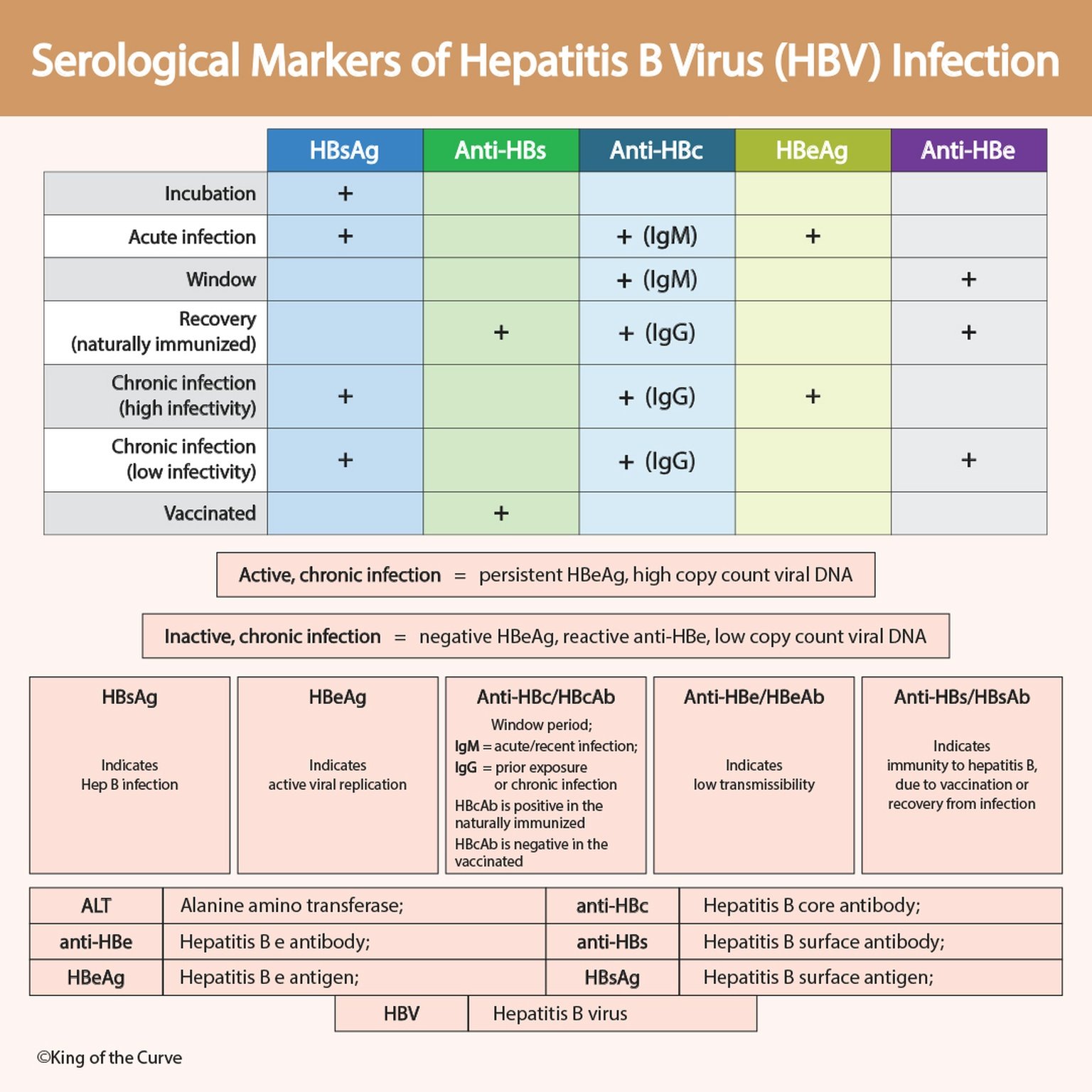
🧬 HBsAg: Is the Virus Present?
Hepatitis B surface antigen (HBsAg) is one of the most important markers of active HBV infection. A positive HBsAg indicates that viral antigen is present in the blood and therefore suggests current HBV infection, whether acute or chronic. If HBsAg persists for more than six months, this supports a diagnosis of chronic hepatitis B infection.
🛡️ Anti-HBs: Is the Patient Immune?
Anti-HBs, the antibody against hepatitis B surface antigen, indicates immunity to HBV. It can develop after successful recovery from a natural infection or after hepatitis B vaccination. A vaccinated individual typically has anti-HBs without anti-HBc, because the vaccine contains surface antigen rather than core antigen.
🧪 Anti-HBc: Has Natural Infection Occurred?
Anti-HBc, the antibody against hepatitis B core antigen, is especially useful for distinguishing natural infection from vaccination. IgM anti-HBc suggests recent or acute infection, whereas IgG anti-HBc indicates previous exposure and can persist after recovery or during chronic infection. Because the vaccine does not contain core antigen, vaccinated individuals should not develop anti-HBc.
| 🩺 Clinical State | 🦠 HBsAg | 🛡️ Anti-HBs | 🧬 Anti-HBc | ⚡ HBeAg | 📉 Anti-HBe |
|---|---|---|---|---|---|
| Incubation | + | − | Variable / − | May be + | − |
| Acute infection | + | − | IgM + | Often + | − |
| Window period | − | − | IgM + | − | May be + |
| Recovered | − | + | IgG + | − | Often + |
| Chronic, high infectivity | + | − | IgG + | + | − |
| Chronic, lower infectivity | + | − | IgG + | − | + |
| Vaccinated | − | + | − | − | − |
🔬 HBeAg: How Actively Is the Virus Replicating?
HBeAg generally correlates with active viral replication and greater infectivity. A patient who is HBsAg-positive and HBeAg-positive is typically considered more infectious than one who has lost HBeAg. However, HBV DNA measurement is a more direct assessment of viral replication, and some HBV variants can replicate despite negative HBeAg.
📉 Anti-HBe: What Does Seroconversion Mean?
Development of anti-HBe often accompanies declining viral replication and reduced infectivity. The transition from HBeAg positivity to anti-HBe positivity is called HBeAg seroconversion. For exam purposes, associate HBeAg with higher infectivity and anti-HBe with generally lower infectivity, while remembering that HBV DNA provides the clearest assessment of viral load.
🪟 The Window Period: A Classic MCAT Concept
The window period occurs after HBsAg has disappeared but before anti-HBs becomes detectable. This creates a period when both HBsAg and anti-HBs may test negative. The key marker during this interval is IgM anti-HBc, making it a classic high-yield testing point.
| 🧪 Marker | 🎯 High-Yield Interpretation |
|---|---|
| HBsAg | Current HBV infection |
| Anti-HBs | Immunity from recovery or vaccination |
| IgM anti-HBc | Acute/recent infection; important in the window period |
| IgG anti-HBc | Previous natural exposure or chronic infection |
| HBeAg | Usually higher viral replication / infectivity |
| Anti-HBe | Usually lower viral replication / infectivity |
| HBV DNA | Direct indicator of viral replication / viral load |
💉 Vaccination vs. Natural Immunity
A useful MCAT distinction is whether immunity resulted from vaccination or previous infection. Vaccinated: anti-HBs positive and anti-HBc negative. Recovered from natural infection: anti-HBs positive and anti-HBc IgG positive. The presence of anti-HBc therefore tells you that the immune system has encountered the actual virus rather than only the vaccine surface antigen.
🧠 MCAT Memory Trick
Think of the markers as answering separate questions: HBsAg = infection present, anti-HBs = immunity, anti-HBc = natural exposure, IgM anti-HBc = recent infection, and HBeAg = increased replication/infectivity. During the window period, remember the particularly important clue: IgM anti-HBc remains detectable even when HBsAg and anti-HBs are both negative.
🎯 MCAT Takeaway
HBV serology becomes much easier when you interpret the markers as a pattern rather than individually. Acute infection typically features HBsAg + IgM anti-HBc; chronic infection features persistent HBsAg + IgG anti-HBc; recovery produces anti-HBs + IgG anti-HBc; and vaccination produces anti-HBs alone among the major screening markers. These patterns allow you to quickly distinguish active disease, previous exposure, immunity, and vaccination status on MCAT-style questions.

Frequently Asked Questions (FAQs)
-
Aim for 4-6 focused hours, ensuring you incorporate breaks to avoid burnout.
-
Practice mindfulness techniques, take practice exams under realistic conditions, and maintain a balanced lifestyle.
-
Set short-term goals, seek support from mentors, and reward yourself for small achievements.
-
Regular exercise improves focus, reduces stress, and enhances overall mental clarity.
-
KOTC offers personalized learning tools, gamification features, and adaptive question banks to help students stay on track without burnout.