
🧠 Schwann Cell Function in Axonal Regeneration
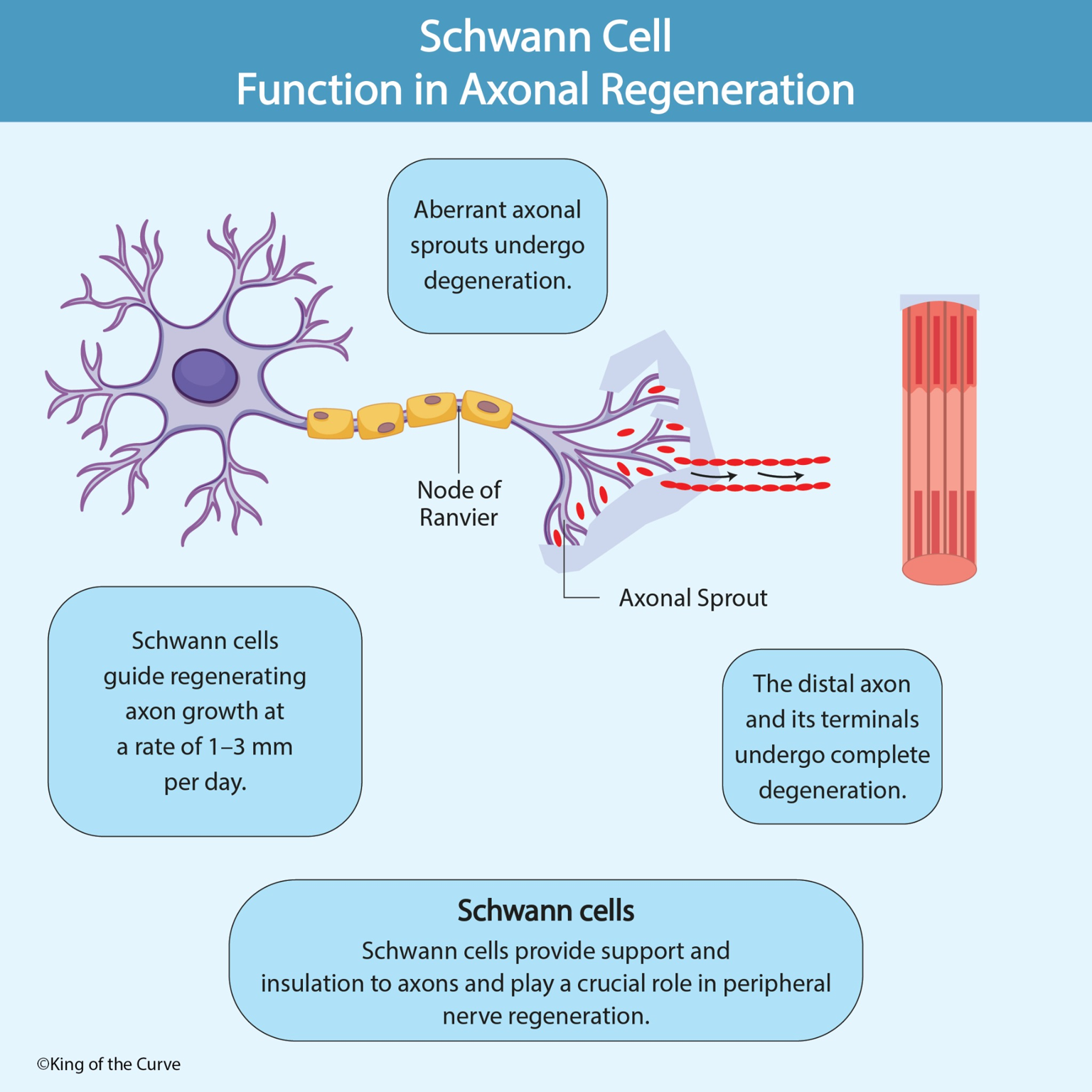
Peripheral nerve injuries differ fundamentally from central nervous system injuries because axonal regeneration is possible in the peripheral nervous system (PNS). This regenerative ability is largely due to the critical role played by Schwann cells, which actively support, guide, and remyelinate injured axons.
🔬 Schwann Cells as Guides for Regrowth
After injury, Schwann cells undergo phenotypic changes that make regeneration possible. They align longitudinally to form Bands of Büngner, which act as physical pathways directing regenerating axons toward their original targets. Axonal regrowth typically occurs at a rate of 1–3 mm per day, a fact frequently tested in exams.
In addition to providing structural guidance, Schwann cells secrete neurotrophic factors such as nerve growth factor (NGF), which promote axonal survival and elongation. These chemical signals ensure that regenerating axons remain viable during their long journey to reinnervate target organs.
🧬 Selective Axonal Survival
Initially, multiple axonal sprouts emerge from the proximal stump. However, not all sprouts survive. Aberrant or misdirected axonal sprouts undergo degeneration, while the correctly aligned axon continues growing within the Schwann cell pathway. This selective process ensures accurate and organized nerve regeneration rather than chaotic reinnervation.
⚡ Remyelination and Functional Recovery
Once the regenerating axon reaches its target tissue, Schwann cells begin remyelination. This restores saltatory conduction at the nodes of Ranvier, significantly improving nerve signal transmission. Proper remyelination is essential for restoring normal sensory and motor function.
❌ When Regeneration Fails
Despite the regenerative role of Schwann cells, axonal recovery may be incomplete if the injury gap is too large, scar tissue obstructs Schwann cell alignment, or the target muscle or sensory organ undergoes irreversible atrophy. Importantly, regeneration does not occur in the central nervous system, where Schwann cells are absent and inhibitory factors dominate.
📊 Summary Table: Schwann Cell Functions in Axonal Regeneration
| Function | Role in Regeneration |
|---|---|
| Myelin debris clearance | Creates a permissive growth environment |
| Bands of Büngner formation | Guides regenerating axons |
| Neurotrophic factor secretion | Promotes axonal survival and growth |
| Selective pruning | Eliminates misdirected sprouts |
| Remyelination | Restores rapid nerve conduction |
🧠 Key Takeaway
Schwann cells are essential for peripheral nerve repair. They provide structural guidance, biochemical support, and myelin insulation—making meaningful axonal regeneration possible.

Frequently Asked Questions (FAQs)
-
Aim for 4-6 focused hours, ensuring you incorporate breaks to avoid burnout.
-
Practice mindfulness techniques, take practice exams under realistic conditions, and maintain a balanced lifestyle.
-
Set short-term goals, seek support from mentors, and reward yourself for small achievements.
-
Regular exercise improves focus, reduces stress, and enhances overall mental clarity.
-
KOTC offers personalized learning tools, gamification features, and adaptive question banks to help students stay on track without burnout.