
🧠 What Is Interference Theory?
Interference theory explains forgetting as a result of competing memories. Instead of memories simply fading away, this theory suggests that different pieces of information clash with one another, making recall more difficult. This concept is commonly tested in the MCAT Psychology and Sociology section.
🔄 Understanding Proactive Interference
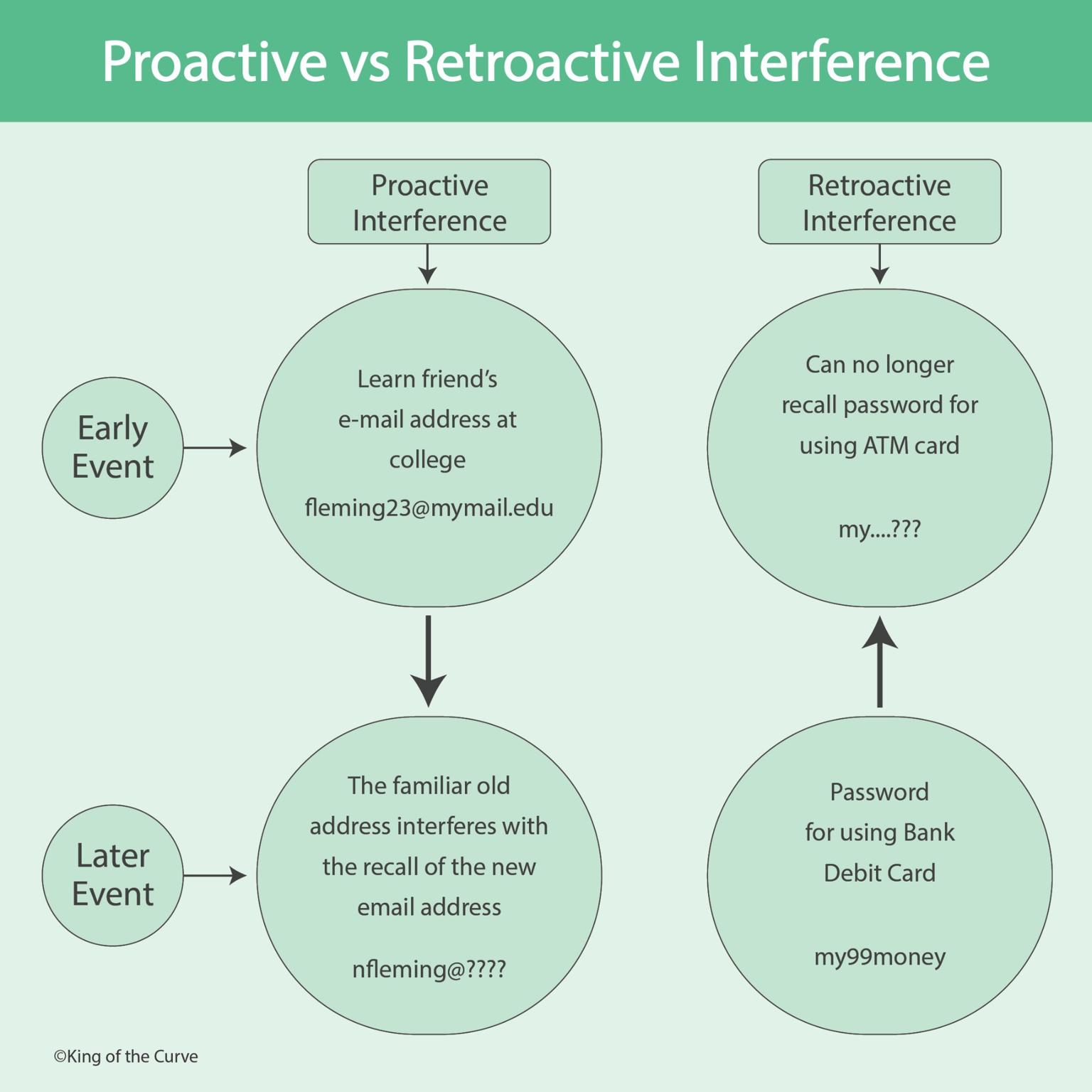
Proactive interference occurs when old information interferes with the learning or recall of new information. In simple terms, something you learned earlier makes it harder to remember something you learned later. The past disrupts the present.
📧 Proactive Interference Example
Imagine your friend originally had the email address fleming23@mymail.edu in college. Later, they change it to a new address. When you try to remember the updated email, your brain keeps recalling the old one instead. That is proactive interference because older information is blocking newer information.
🔁 Understanding Retroactive Interference
Retroactive interference happens when new information interferes with the recall of old information. In this case, something learned recently makes it harder to retrieve information you previously knew. The present disrupts the past.
🔑 Retroactive Interference Example
Suppose you create a new debit card password like my99money. After repeatedly using this new password, you can no longer remember your old ATM password. That is retroactive interference because the new memory has disrupted the older one.
🧭 The Key Difference
The main difference between proactive and retroactive interference is direction. Proactive interference moves forward in time, with old memories affecting new ones. Retroactive interference moves backward in time, with new memories affecting old ones.
📚 Why This Matters for the MCAT
On the MCAT, these concepts are often tested through scenarios rather than direct definitions. You might read about students mixing up study materials, confusing new phone numbers with old ones, or struggling to remember updated login credentials. Identifying which memory came first and which one is being blocked is essential.
🎯 How to Remember It for Test Day
A helpful shortcut is: proactive equals past blocking present, and retroactive equals recent blocking recall. Once you understand the direction of interference, you can confidently answer memory-based questions and avoid one of the most common Psych/Soc mistakes on the MCAT.

Frequently Asked Questions (FAQs)
-
Aim for 4-6 focused hours, ensuring you incorporate breaks to avoid burnout.
-
Practice mindfulness techniques, take practice exams under realistic conditions, and maintain a balanced lifestyle.
-
Set short-term goals, seek support from mentors, and reward yourself for small achievements.
-
Regular exercise improves focus, reduces stress, and enhances overall mental clarity.
-
KOTC offers personalized learning tools, gamification features, and adaptive question banks to help students stay on track without burnout.