
📊 Prevalence vs. Incidence in Epidemiology
Epidemiology relies on two fundamental measurements prevalence and incidence to describe how diseases affect populations. Although these terms are closely related, they answer different public health questions. Understanding the distinction is essential for students preparing for the MCAT, healthcare professionals, and anyone studying disease patterns.
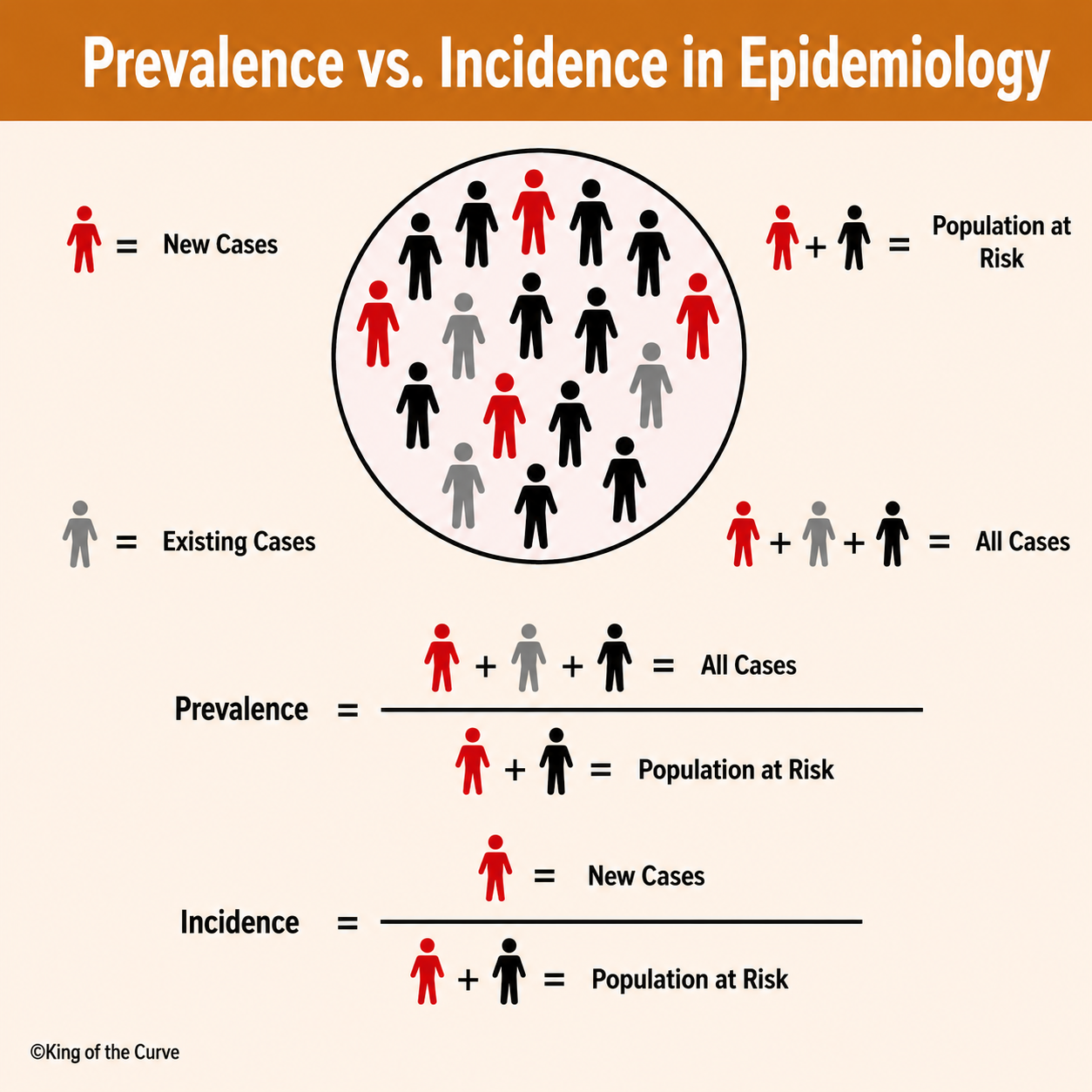
📌 What Is Prevalence?
Prevalence refers to the total number of disease cases (both new and existing) in a population at a specific point in time or over a defined period. It provides a snapshot of how widespread a disease is within a population.
Formula:
Prevalence = Total Existing Cases ÷ Population at Risk
High prevalence may result from:
Long disease duration
Improved survival
High disease frequency
🆕 What Is Incidence?
Incidence measures the number of new cases that develop in a population during a specified time period. Unlike prevalence, it focuses only on newly diagnosed cases and is used to determine the risk of developing a disease.
Formula:
Incidence = New Cases ÷ Population at Risk
A high incidence indicates that a disease is spreading rapidly or that many individuals are developing the condition.
👥 Population at Risk
The population at risk includes individuals who can potentially develop the disease. People who already have the disease are generally excluded when calculating incidence because they are no longer at risk of becoming a new case.
Selecting the correct population at risk is essential for producing accurate epidemiological statistics.
📈 Key Differences Between Prevalence and Incidence
Although both measure disease occurrence, they answer different questions:
Prevalence asks: How common is the disease?
Incidence asks: How often are new cases occurring?
Prevalence reflects disease burden, whereas incidence reflects disease risk.
🩺 Why These Measurements Matter
Healthcare professionals and public health agencies use prevalence and incidence to:
Track disease outbreaks
Monitor chronic illnesses
Evaluate prevention programs
Allocate healthcare resources
Plan vaccination campaigns
Measure treatment effectiveness
These statistics guide evidence-based healthcare decisions worldwide.
🧠 MCAT Tip
A common MCAT question involves distinguishing chronic diseases from acute outbreaks.
Chronic diseases (e.g., diabetes) often have high prevalence because patients live with the disease for many years.
Infectious outbreaks often have high incidence because many new cases appear within a short period.
Remember:
Prevalence = Existing + New Cases
Incidence = New Cases Only
📋 Quick Comparison Table
| Feature | Prevalence | Incidence |
|---|---|---|
| Definition | Total existing and new cases | New cases only |
| Measures | Disease burden | Disease risk |
| Time Considered | Specific point or period | Defined time period |
| Formula | Total cases ÷ Population at risk | New cases ÷ Population at risk |
| Includes Existing Cases | ✓ Yes | ✗ No |
| Includes New Cases | ✓ Yes | ✓ Yes |
| Common Use | Chronic disease monitoring | Disease outbreak tracking |
🎯 Final Thoughts
Prevalence and incidence are foundational concepts in epidemiology that help researchers understand both the overall burden of disease and the rate at which new cases occur. While prevalence measures how widespread a condition is, incidence measures how frequently it develops. Mastering these concepts is essential for interpreting medical research, public health data, and MCAT epidemiology questions.

Frequently Asked Questions (FAQs)
-
Aim for 4-6 focused hours, ensuring you incorporate breaks to avoid burnout.
-
Practice mindfulness techniques, take practice exams under realistic conditions, and maintain a balanced lifestyle.
-
Set short-term goals, seek support from mentors, and reward yourself for small achievements.
-
Regular exercise improves focus, reduces stress, and enhances overall mental clarity.
-
KOTC offers personalized learning tools, gamification features, and adaptive question banks to help students stay on track without burnout.