
Portal and Systemic Venous Anastomoses: A Complete Guide
The circulatory system features many interconnected pathways, but one of the most clinically significant connections occurs between the portal venous system and the systemic venous system. These connections known as portal systemic (portosystemic) anastomoses—become especially important in conditions such as portal hypertension, where increased portal pressure forces blood to reroute through alternative pathways.
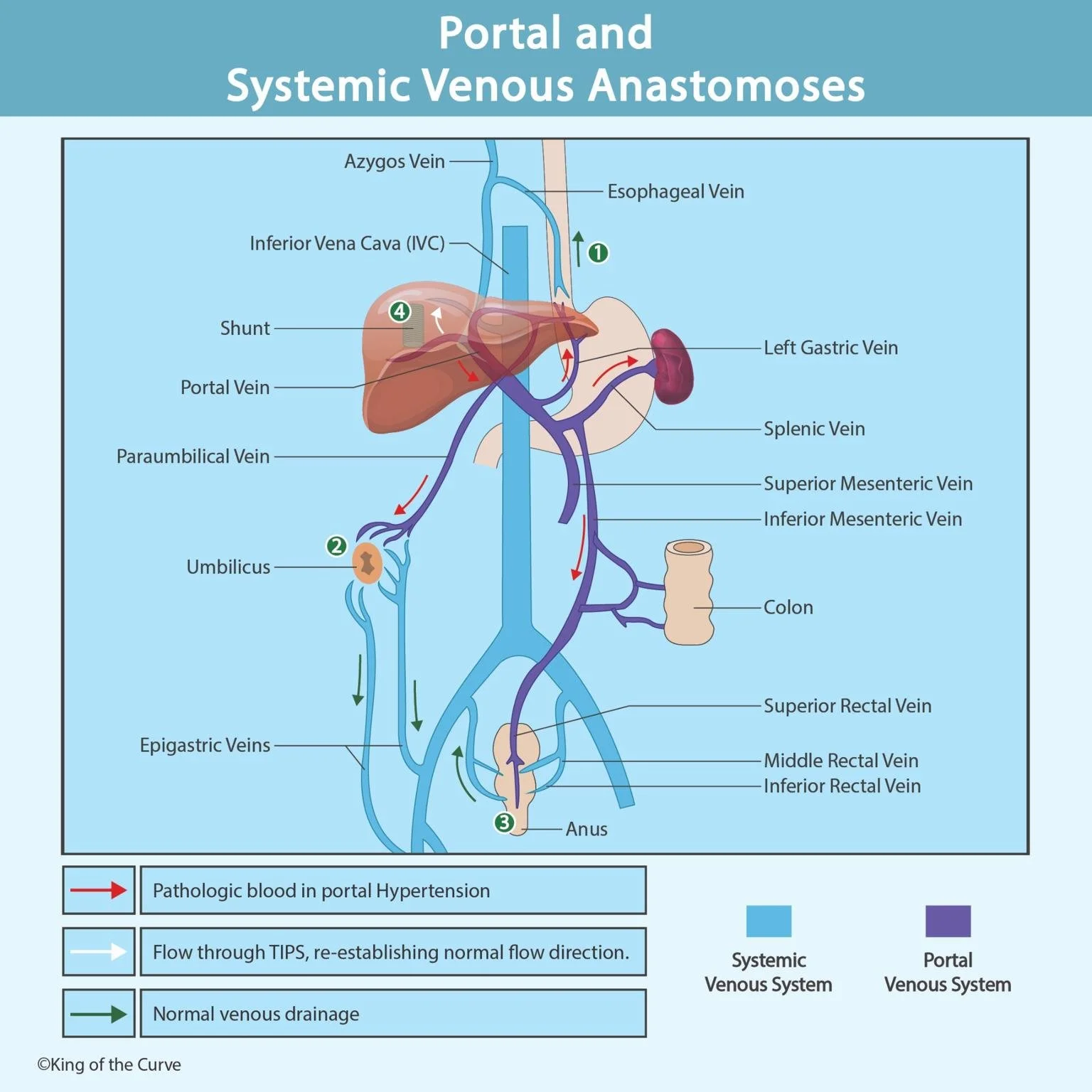
⭐ What Are Portosystemic Anastomoses?
Portosystemic anastomoses are natural connections where blood from the portal system can drain into the systemic venous circulation.
Under normal pressure, these connections carry minimal blood. But in portal hypertension—often due to liver cirrhosis, portal vein thrombosis, or hepatic fibrosis—blood is forced into these alternative pathways, causing dilation and complications.
🔬 Key Sites of Portal–Systemic Venous Anastomosis
The body has four major anastomotic sites, each linked to a classic clinical condition:
1. Esophageal Anastomosis
Portal side: Left gastric vein
Systemic side: Esophageal veins → Azygos vein
Clinical significance:
Esophageal varices, a life-threatening cause of upper GI bleeding.
2. Umbilical (Paraumbilical) Anastomosis
Portal side: Paraumbilical veins
Systemic side: Epigastric veins
Clinical significance:
Caput medusae—dilated veins radiating from the umbilicus.
3. Rectal Anastomosis
Portal side: Superior rectal vein
Systemic side: Middle & inferior rectal veins
Clinical significance:
Internal hemorrhoids (though hemorrhoids have multiple causes).
4. Retroperitoneal Anastomosis
Portal side: Veins of the colon (ascending & descending)
Systemic side: Lumbar veins
Clinical significance:
Often asymptomatic but can contribute to collateral circulation.
🩺 Clinical Insight: What Happens in Portal Hypertension?
When the liver becomes scarred (cirrhosis), blood cannot flow easily through the portal vein. Pressure rises, and blood is diverted into these portosystemic channels.
This results in:
Engorged collateral vessels
Increased risk of rupture
Life-threatening hemorrhage
A common treatment is the TIPS procedure (Transjugular Intrahepatic Portosystemic Shunt), which creates a channel in the liver to reduce portal pressure.
📊 Table: Portal–Systemic Anastomoses and Their Clinical Correlates
| Anastomosis Site | Portal Vein Connection | Systemic Vein Connection | Clinical Condition |
|---|---|---|---|
| Esophageal | Left gastric vein | Esophageal veins → Azygos vein |
High Yield Esophageal varices |
| Umbilical | Paraumbilical veins | Superficial epigastric veins | Caput medusae |
| Rectal | Superior rectal vein | Middle & inferior rectal veins | Internal hemorrhoids (portal HTN–related) |
| Retroperitoneal | Colic veins | Lumbar veins | Collateral venous circulation |
💡 Why This Matters for Students and Clinicians
Understanding these anastomoses is essential for:
Diagnosing complications of portal hypertension
Interpreting abdominal vascular imaging
Preparing for clinical board examinations
Managing patients with liver disease
Having a strong grasp of these pathways helps connect anatomy to real-world clinical presentations.
📘 Final Thoughts
Portosystemic anastomoses are vital backup routes for venous blood flow when the liver’s portal circulation becomes blocked. While these pathways protect the body, they can also create dangerous complications.
A strong understanding of these sites not only prepares you for exams but also enhances your ability to recognize and manage portal hypertension in clinical practice.

Frequently Asked Questions (FAQs)
-
Aim for 4-6 focused hours, ensuring you incorporate breaks to avoid burnout.
-
Practice mindfulness techniques, take practice exams under realistic conditions, and maintain a balanced lifestyle.
-
Set short-term goals, seek support from mentors, and reward yourself for small achievements.
-
Regular exercise improves focus, reduces stress, and enhances overall mental clarity.
-
KOTC offers personalized learning tools, gamification features, and adaptive question banks to help students stay on track without burnout.