
🩺 Pathology of Pancreas: Anatomy, Duct System, and Clinical Significance
The pancreas is a vital organ with both exocrine (digestive) and endocrine (hormonal) functions. Because of its complex ductal anatomy and close relationship with the biliary system, pancreatic disorders can lead to serious clinical consequences.
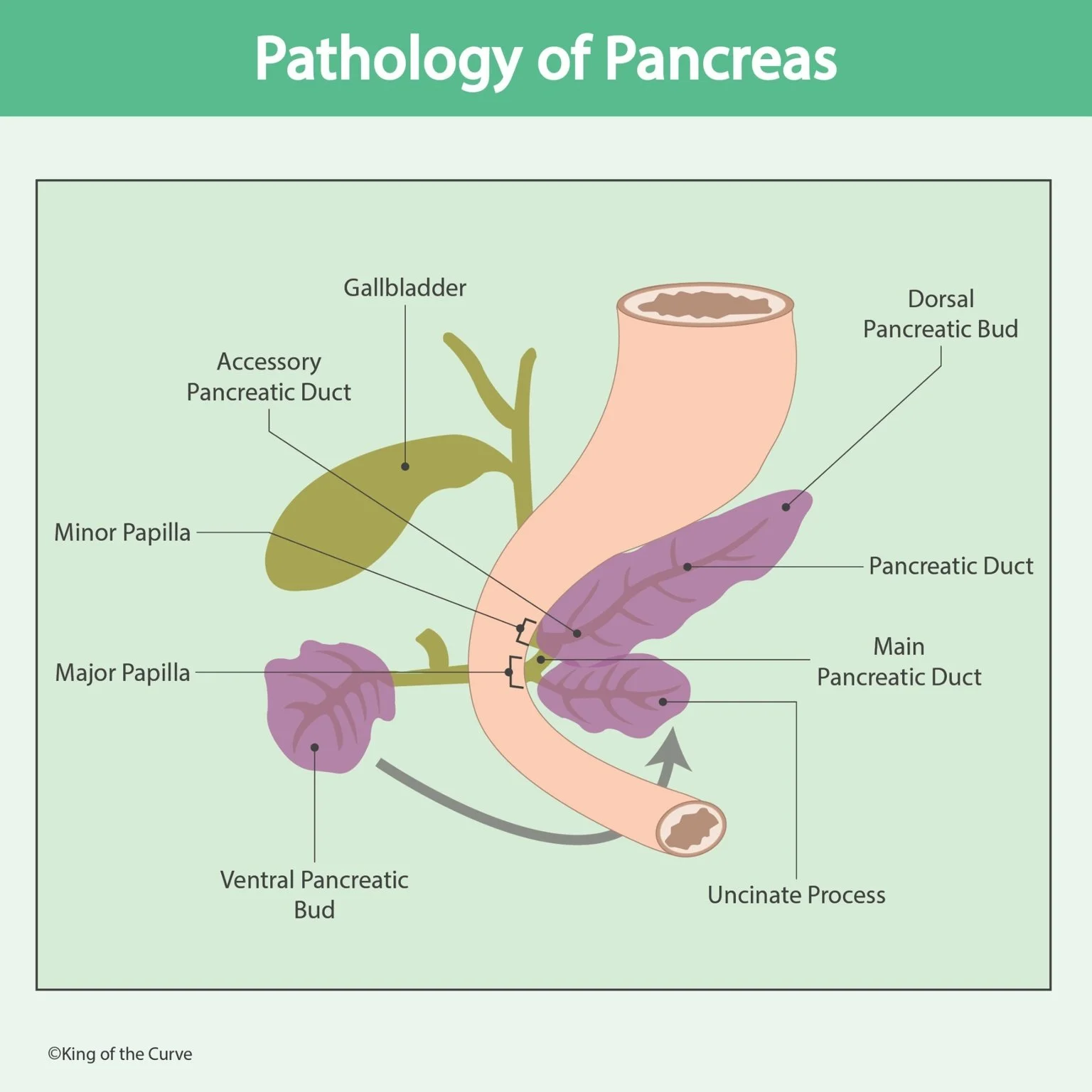
🧠 Overview of Pancreatic Anatomy
The pancreas lies retroperitoneally, behind the stomach, and connects to the duodenum. It develops from two embryological buds:
Dorsal pancreatic bud
Ventral pancreatic bud
These buds fuse during development to form the mature pancreas.
Key anatomical structures include:
Main pancreatic duct
Accessory pancreatic duct
Major papilla
Minor papilla
Uncinate process
Gallbladder connection
🧪 Pancreatic Duct System
The pancreatic ductal system allows digestive enzymes to flow into the small intestine.
🔵 Main Pancreatic Duct (Wirsung’s Duct)
Primary drainage duct
Joins the common bile duct
Opens into the duodenum at the major papilla
🟢 Accessory Pancreatic Duct (Santorini’s Duct)
Secondary drainage duct
Opens at the minor papilla
Clinically relevant in pancreas divisum
🚪 Major and Minor Papilla
🔶 Major Papilla
Entry point for bile and pancreatic enzymes
Common site of gallstone obstruction
🔷 Minor Papilla
Drains accessory duct
Important in congenital anomalies
🧬 Uncinate Process
The uncinate process is a hook-shaped extension of the pancreatic head.
Lies close to major vessels
Tumors here may compress surrounding structures
🔥 Acute Pancreatitis
Acute pancreatitis is sudden inflammation caused by premature activation of pancreatic enzymes.
📌 Common Causes:
Gallstones
Alcohol abuse
Hypertriglyceridemia
⚠ Key Feature:
Severe epigastric pain radiating to the back
♻️ Chronic Pancreatitis
Chronic inflammation causes irreversible pancreatic damage.
📌 Causes:
Chronic alcohol use
Genetic mutations
⚠ Complications:
Exocrine pancreatic insufficiency
Diabetes mellitus
🚧 Pancreatic Duct Obstruction
Blockage may occur due to:
Gallstones at the major papilla
Pancreatic head tumors
Post-inflammatory strictures
Obstruction leads to enzyme backup and inflammation.
🎗 Pancreatic Cancer
Pancreatic adenocarcinoma most commonly arises in the head of the pancreas.
⚠ Clinical Signs:
Painless jaundice
Weight loss
Enlarged gallbladder (Courvoisier sign)
Tumors may obstruct both bile and pancreatic ducts.
🧩 Congenital Anomalies
🔎 Pancreas Divisum
Failure of duct fusion
Drainage mainly through minor papilla
May predispose to recurrent pancreatitis
📚 Clinical Importance
Understanding pancreatic anatomy helps explain:
Why gallstones trigger pancreatitis
How duct obstruction causes enzyme activation
Why tumors in the head cause jaundice
Surgical relevance of the uncinate process
🏁 Conclusion
Pancreatic pathology is closely linked to ductal anatomy and embryological development. Recognizing structural relationships allows better diagnosis, management, and prevention of complications.

Frequently Asked Questions (FAQs)
-
Aim for 4-6 focused hours, ensuring you incorporate breaks to avoid burnout.
-
Practice mindfulness techniques, take practice exams under realistic conditions, and maintain a balanced lifestyle.
-
Set short-term goals, seek support from mentors, and reward yourself for small achievements.
-
Regular exercise improves focus, reduces stress, and enhances overall mental clarity.
-
KOTC offers personalized learning tools, gamification features, and adaptive question banks to help students stay on track without burnout.