
🧬 Pancreas Derivative: Embryologic Development of the Pancreas
The pancreas develops from two separate embryologic outgrowths of the foregut — the dorsal pancreatic bud and the ventral pancreatic bud. Understanding their rotation, fusion, and derivatives is essential for exams and for recognizing congenital pancreatic anomalies.
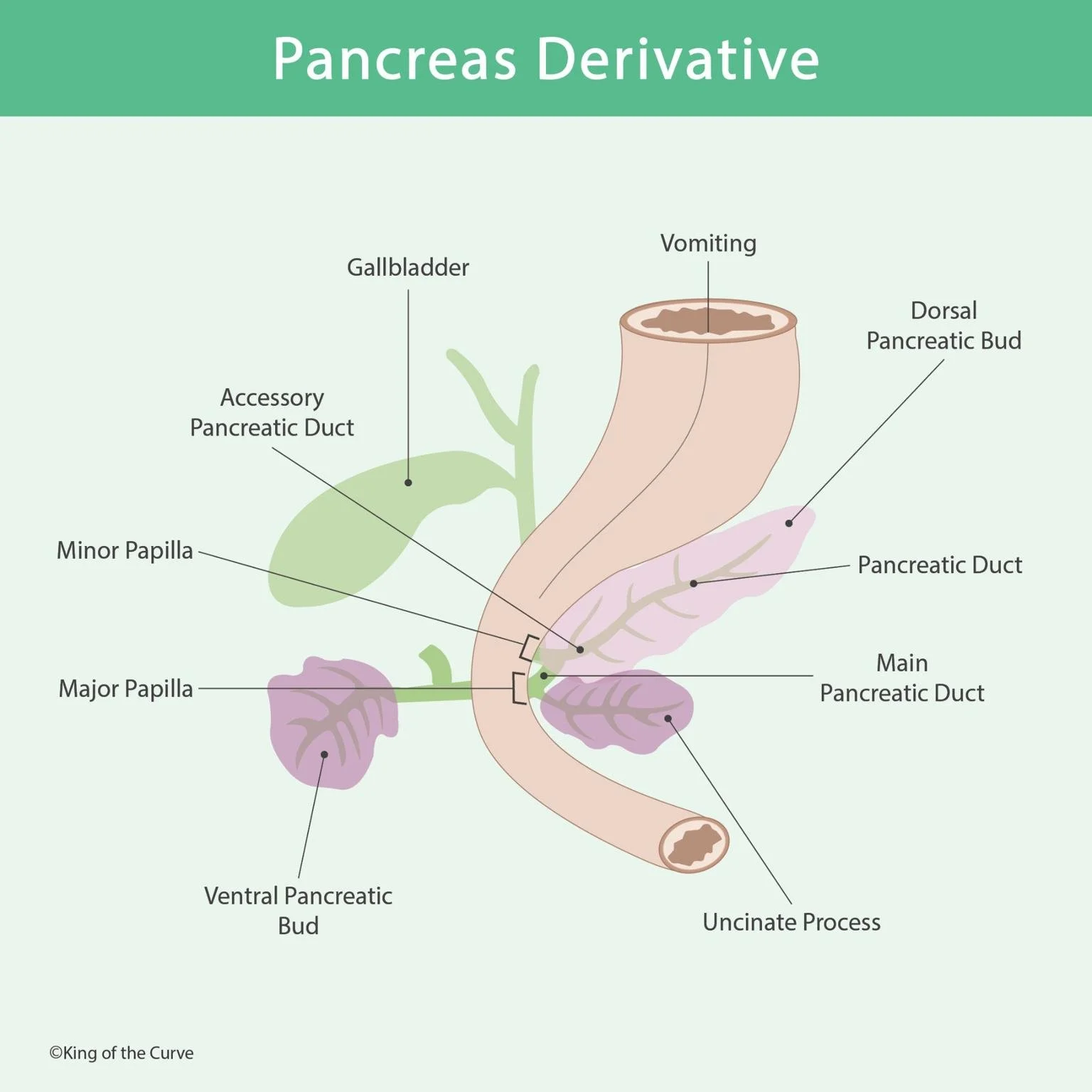
🧠 Overview of Pancreatic Development
During the 4th week of embryonic development:
The dorsal pancreatic bud arises from the dorsal foregut.
The ventral pancreatic bud develops near the bile duct.
As the duodenum rotates, the ventral bud migrates posteriorly.
The two buds eventually fuse, forming the mature pancreas.
🔄 Rotation and Fusion
The rotation of the duodenum causes:
The ventral bud to move posteriorly and inferiorly
Fusion with the dorsal bud
Integration of their duct systems
This fusion explains the anatomical arrangement of the pancreatic ducts in adults.
🧩 Derivatives of Each Pancreatic Bud
🟣 Ventral Pancreatic Bud Derivatives
The ventral bud forms:
Uncinate process
Inferior part of the pancreatic head
Main pancreatic duct (Wirsung)
Because it rotates with the bile duct, it joins the dorsal duct system.
🔵 Dorsal Pancreatic Bud Derivatives
The dorsal bud forms:
Superior part of the pancreatic head
Body of the pancreas
Tail of the pancreas
Accessory pancreatic duct (Santorini)
The accessory duct may drain into the minor papilla.
🚪 Major and Minor Papilla
Major papilla
→ Drains the main pancreatic duct and common bile duct
→ Opens into the second part of the duodenumMinor papilla
→ Drains the accessory pancreatic duct
→ May be clinically relevant in pancreas divisum
⚠️ Clinical Correlations
🧩 Pancreas Divisum
Failure of ductal fusion leads to:
Majority of pancreatic drainage through the minor papilla
Possible recurrent pancreatitis
🔄 Annular Pancreas
Abnormal migration of the ventral bud causes:
Pancreatic tissue encircling the duodenum
Duodenal obstruction
Vomiting in neonates
📚 High-Yield Exam Summary
| Structure | Derived From |
|---|---|
| Uncinate process | Ventral bud |
| Inferior head of pancreas | Ventral bud |
| Superior head of pancreas | Dorsal bud |
| Body of pancreas | Dorsal bud |
| Tail of pancreas | Dorsal bud |
| Main pancreatic duct | Ventral bud (with dorsal contribution) |
| Accessory pancreatic duct | Dorsal bud |
📝 Key Takeaway
The pancreas forms from two buds that rotate and fuse.
Ventral bud → uncinate + inferior head + main duct
Dorsal bud → superior head + body + tail + accessory duct
Mastering this concept makes congenital pancreatic disorders much easier to understand.

Frequently Asked Questions (FAQs)
-
Aim for 4-6 focused hours, ensuring you incorporate breaks to avoid burnout.
-
Practice mindfulness techniques, take practice exams under realistic conditions, and maintain a balanced lifestyle.
-
Set short-term goals, seek support from mentors, and reward yourself for small achievements.
-
Regular exercise improves focus, reduces stress, and enhances overall mental clarity.
-
KOTC offers personalized learning tools, gamification features, and adaptive question banks to help students stay on track without burnout.