
💊 Nitrates and Phosphodiesterase-5 (PDE5) Inhibitors
Nitrates and phosphodiesterase-5 (PDE5) inhibitors are two important drug classes that act on the nitric oxide (NO)-cyclic guanosine monophosphate (cGMP) pathway. Both medications increase cGMP levels to relax vascular smooth muscle and improve blood flow, but they achieve this through different mechanisms. Understanding this pathway is essential for students of pharmacology, physiology, and medicine because it explains both the therapeutic benefits and the dangerous interaction between these drugs.
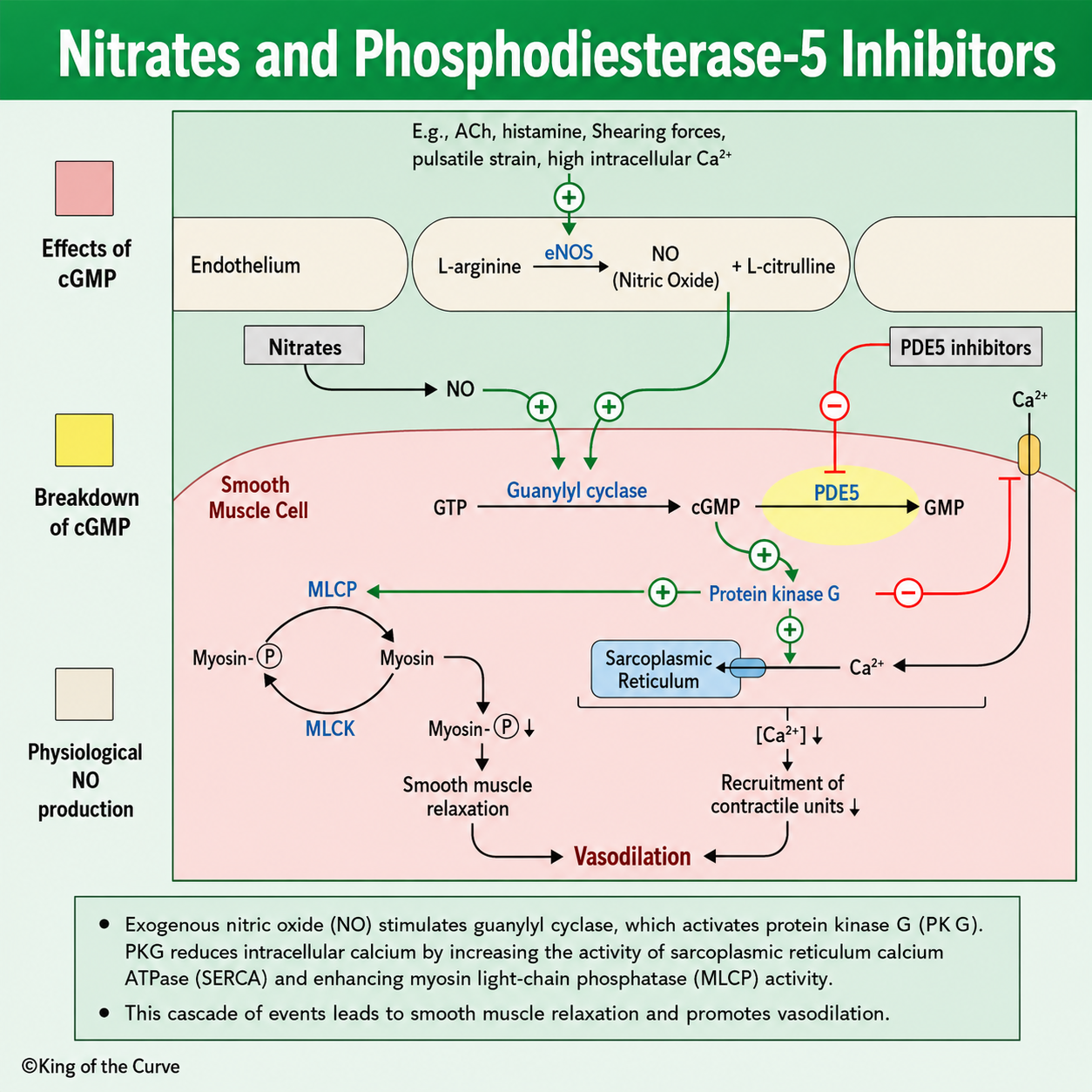
🧬 What Is the Nitric Oxide (NO)-cGMP Pathway?
The nitric oxide signaling pathway is responsible for regulating vascular tone by promoting smooth muscle relaxation.
Nitric oxide is synthesized by endothelial cells lining blood vessels and diffuses into adjacent smooth muscle cells. There, it stimulates intracellular signaling that lowers calcium concentrations, resulting in vasodilation.
This pathway helps regulate:
Blood pressure
Tissue perfusion
Coronary blood flow
Penile erection
Pulmonary vascular resistance
⚙️ Physiological Production of Nitric Oxide
Nitric oxide is produced from L-arginine by the enzyme endothelial nitric oxide synthase (eNOS).
Several physiological stimuli activate eNOS, including:
Acetylcholine (ACh)
Histamine
Shear stress from blood flow
Pulsatile stretch
Increased intracellular calcium
The reaction is:
L-Arginine → Nitric Oxide (NO) + L-Citrulline
The newly formed NO rapidly diffuses into nearby vascular smooth muscle cells.
🔬 How Nitric Oxide Produces Vasodilation
Inside smooth muscle cells, nitric oxide activates soluble guanylyl cyclase, which converts guanosine triphosphate (GTP) into cyclic guanosine monophosphate (cGMP).
Higher cGMP levels activate protein kinase G (PKG).
PKG promotes relaxation by:
Increasing SERCA activity
Lowering intracellular calcium
Activating myosin light-chain phosphatase (MLCP)
Reducing myosin phosphorylation
Decreasing smooth muscle contraction
The final result is vasodilation.
💉 How Nitrates Work
Nitrates function as nitric oxide donors.
Common examples include:
Nitroglycerin
Isosorbide dinitrate
Isosorbide mononitrate
These drugs directly increase nitric oxide availability, leading to greater activation of guanylyl cyclase and increased production of cGMP.
The resulting smooth muscle relaxation decreases cardiac workload and improves coronary blood flow.
❤️ Clinical Uses of Nitrates
Nitrates are commonly prescribed for:
Stable angina
Acute angina attacks
Acute coronary syndrome
Heart failure
Selected hypertensive emergencies
Their major therapeutic effect is reducing myocardial oxygen demand by decreasing preload.
🧪 What Is PDE5?
Phosphodiesterase-5 (PDE5) is the enzyme responsible for degrading cGMP.
It converts:
cGMP → GMP
As cGMP levels decline, PKG activity decreases, intracellular calcium rises, and smooth muscle contracts.
🚀 How PDE5 Inhibitors Work
PDE5 inhibitors block the enzyme responsible for cGMP breakdown.
Examples include:
Sildenafil
Tadalafil
Vardenafil
Avanafil
Instead of producing nitric oxide, these drugs prolong the action of naturally produced or externally administered NO by preventing cGMP degradation.
This sustains smooth muscle relaxation and improves blood flow.
🩺 Clinical Uses of PDE5 Inhibitors
PDE5 inhibitors are widely used for:
Erectile dysfunction
Pulmonary arterial hypertension
Benign prostatic hyperplasia (tadalafil)
These conditions benefit from prolonged smooth muscle relaxation.
⚠️ Why Nitrates and PDE5 Inhibitors Should Never Be Combined
Both medications increase cGMP levels, but through different mechanisms.
Nitrates increase nitric oxide production, while PDE5 inhibitors prevent cGMP breakdown.
When combined, cGMP accumulates excessively, leading to profound vasodilation and potentially life-threatening hypotension.
Possible complications include:
Severe hypotension
Syncope
Myocardial ischemia
Cardiogenic shock
For this reason, nitrates are contraindicated in patients taking PDE5 inhibitors.
📊 Nitrates vs. PDE5 Inhibitors
| ⚙️ Feature | 💉 Nitrates | 💊 PDE5 Inhibitors |
|---|---|---|
| Primary Mechanism | Donate nitric oxide (NO) | Inhibit the PDE5 enzyme |
| Effect on cGMP | Increase cGMP production | Prevent cGMP breakdown |
| Main Target | Activate guanylyl cyclase | Phosphodiesterase-5 (PDE5) |
| Primary Clinical Uses | Angina and heart failure | Erectile dysfunction, pulmonary hypertension, and benign prostatic hyperplasia (BPH) |
| Effect on Smooth Muscle | Relaxation and vasodilation | Sustained relaxation and vasodilation |
| Major Adverse Interaction | Dangerous when combined with PDE5 inhibitors | Dangerous when combined with nitrates |
✅ Key Takeaways
Nitric oxide is synthesized from L-arginine by eNOS.
NO activates guanylyl cyclase, increasing cGMP production.
cGMP activates protein kinase G (PKG), which lowers intracellular calcium and relaxes vascular smooth muscle.
Nitrates work by donating nitric oxide.
PDE5 inhibitors work by preventing cGMP degradation.
Combining nitrates with PDE5 inhibitors can cause severe hypotension and should always be avoided.

Frequently Asked Questions (FAQs)
-
Aim for 4-6 focused hours, ensuring you incorporate breaks to avoid burnout.
-
Practice mindfulness techniques, take practice exams under realistic conditions, and maintain a balanced lifestyle.
-
Set short-term goals, seek support from mentors, and reward yourself for small achievements.
-
Regular exercise improves focus, reduces stress, and enhances overall mental clarity.
-
KOTC offers personalized learning tools, gamification features, and adaptive question banks to help students stay on track without burnout.