
🧬 Metabolic Pathways of Acetyl-CoA: TCA Cycle and Beyond
Acetyl-CoA is one of the most important metabolic intermediates in cellular biochemistry. It serves as the central link between carbohydrate, fat, and protein metabolism, directing carbon atoms into energy production, fatty acid synthesis, ketone body formation, and numerous biosynthetic pathways. Depending on cellular needs, acetyl-CoA can enter the tricarboxylic acid (TCA) cycle, contribute to lipid synthesis, or serve as a precursor for specialized metabolites.
🔬 What Is Acetyl-CoA?
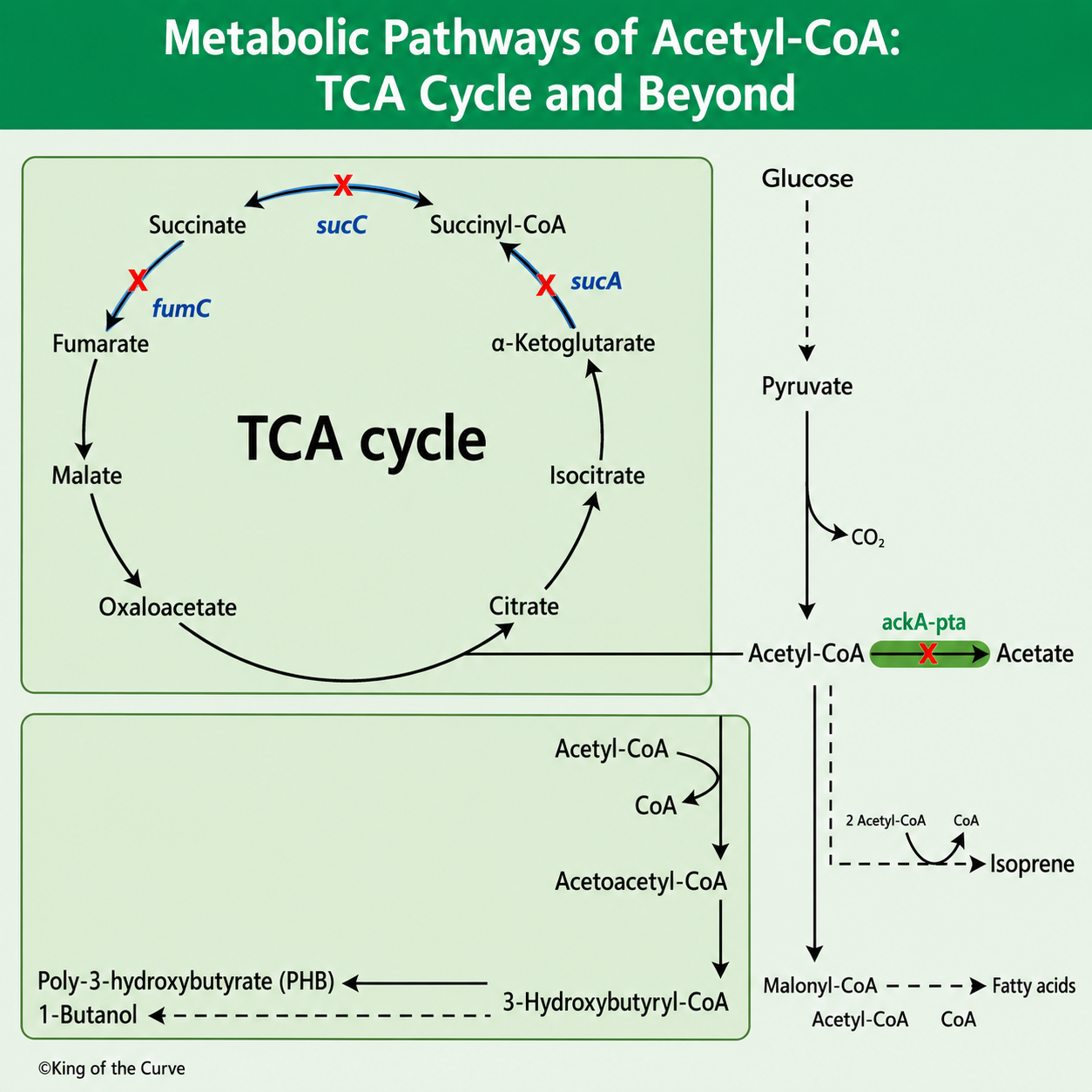
Acetyl-CoA (acetyl coenzyme A) is a two-carbon molecule formed primarily from the oxidative decarboxylation of pyruvate. It acts as a metabolic crossroads where nutrients converge before entering multiple biochemical pathways.
Major sources of acetyl-CoA include:
🍞 Glucose metabolism (via glycolysis and pyruvate oxidation)
🥩 Fatty acid β-oxidation
🍗 Amino acid catabolism
🍷 Ethanol metabolism
⚡ Formation of Acetyl-CoA
The pathway begins with glucose metabolism.
Step 1: Glycolysis
Glucose is converted into pyruvate in the cytoplasm.
Step 2: Pyruvate Oxidation
Inside mitochondria, pyruvate is converted into acetyl-CoA by the pyruvate dehydrogenase complex, producing:
Acetyl-CoA
Carbon dioxide (CO₂)
NADH
This irreversible reaction commits carbon atoms to oxidative metabolism or biosynthetic pathways.
🔄 Entry into the TCA Cycle
One of the primary functions of acetyl-CoA is fueling the tricarboxylic acid (TCA) cycle, also known as the Krebs or citric acid cycle.
Acetyl-CoA combines with oxaloacetate to form citrate, initiating a series of reactions that regenerate oxaloacetate while producing energy-rich molecules.
Key intermediates include:
Citrate
Isocitrate
α-Ketoglutarate
Succinyl-CoA
Succinate
Fumarate
Malate
Oxaloacetate
Each turn of the cycle generates:
ATP (or GTP)
NADH
FADH₂
CO₂
These reduced coenzymes subsequently drive ATP production through oxidative phosphorylation.
🧪 Biosynthetic Pathways of Acetyl-CoA
Not all acetyl-CoA enters the TCA cycle. Depending on metabolic demands, it may participate in several anabolic pathways.
🧈 Fatty Acid Synthesis
When energy is abundant, acetyl-CoA is converted into malonyl-CoA, the committed intermediate in fatty acid synthesis.
Fatty acids are subsequently used for:
Energy storage
Cell membrane formation
Lipid signaling molecules
🧬 Poly-3-Hydroxybutyrate (PHB) Production
In many bacteria, acetyl-CoA serves as the precursor for poly-3-hydroxybutyrate (PHB).
PHB functions as:
Carbon storage
Energy reserve
Bioplastic precursor
The pathway involves:
Acetyl-CoA → Acetoacetyl-CoA → 3-Hydroxybutyryl-CoA → PHB
🧪 1-Butanol Formation
Some microorganisms redirect intermediates such as 3-hydroxybutyryl-CoA toward 1-butanol synthesis, an industrial biofuel.
Microbial metabolic engineering frequently enhances this pathway for renewable fuel production.
🌿 Isoprene Biosynthesis
Acetyl-CoA also contributes to isoprenoid biosynthesis, producing molecules involved in:
Sterol synthesis
Carotenoids
Quinones
Plant secondary metabolites
Isoprenoids are essential for membrane integrity, electron transport, and cellular signaling.
🧈 Acetate Production
In bacteria, acetyl-CoA may be converted into acetate through the AckA-Pta pathway.
This pathway:
Regenerates ATP
Maintains carbon balance
Supports anaerobic metabolism
⚙️ Regulation of Acetyl-CoA Metabolism
The direction of acetyl-CoA metabolism depends on nutrient availability and cellular energy status.
High ATP levels favor:
Fatty acid synthesis
Storage pathways
Biosynthesis
Low ATP levels favor:
TCA cycle activity
ATP production
Oxidative phosphorylation
Multiple enzymes regulate these pathways to maintain metabolic homeostasis.
🧠 Clinical Importance
Alterations in acetyl-CoA metabolism contribute to numerous diseases.
Examples include:
Diabetes mellitus
Obesity
Fatty liver disease
Mitochondrial disorders
Cancer metabolism
Acetyl-CoA is also an important regulator of gene expression through histone acetylation, linking metabolism with epigenetic control.
📚 Key Takeaways
Acetyl-CoA is the central metabolic intermediate connecting carbohydrate, lipid, and protein metabolism.
It is primarily produced from pyruvate after glycolysis.
The TCA cycle is its major energy-producing pathway.
Acetyl-CoA also supports fatty acid synthesis, PHB production, acetate formation, isoprenoid synthesis, and microbial biofuel production.
Cellular energy demands determine whether acetyl-CoA is used for ATP generation or biosynthesis.

Frequently Asked Questions (FAQs)
-
Aim for 4-6 focused hours, ensuring you incorporate breaks to avoid burnout.
-
Practice mindfulness techniques, take practice exams under realistic conditions, and maintain a balanced lifestyle.
-
Set short-term goals, seek support from mentors, and reward yourself for small achievements.
-
Regular exercise improves focus, reduces stress, and enhances overall mental clarity.
-
KOTC offers personalized learning tools, gamification features, and adaptive question banks to help students stay on track without burnout.