
🩸 Mechanisms of Hemostasis and Associated Bleeding Disorders
Hemostasis is the physiological process that prevents excessive bleeding following vascular injury while maintaining normal blood flow throughout the circulatory system. It involves a carefully regulated balance between procoagulant mechanisms that promote clot formation and anticoagulant pathways that prevent uncontrolled thrombosis. When these systems become disrupted, bleeding disorders or excessive clotting can occur. Understanding the mechanisms of hemostasis is essential for medical students, pre-med learners, and healthcare professionals because it explains the pathophysiology of many diseases and guides the use of anticoagulant therapies.
⚙️ What Is Hemostasis?
Hemostasis refers to the coordinated series of events that stop bleeding after a blood vessel is damaged. The process involves platelet activation, coagulation cascade signaling, and fibrin clot formation. These steps act together to stabilize the injury site and restore vascular integrity. At the same time, regulatory mechanisms ensure that clot formation remains localized and does not spread throughout the circulation.
🧪 The Coagulation Cascade
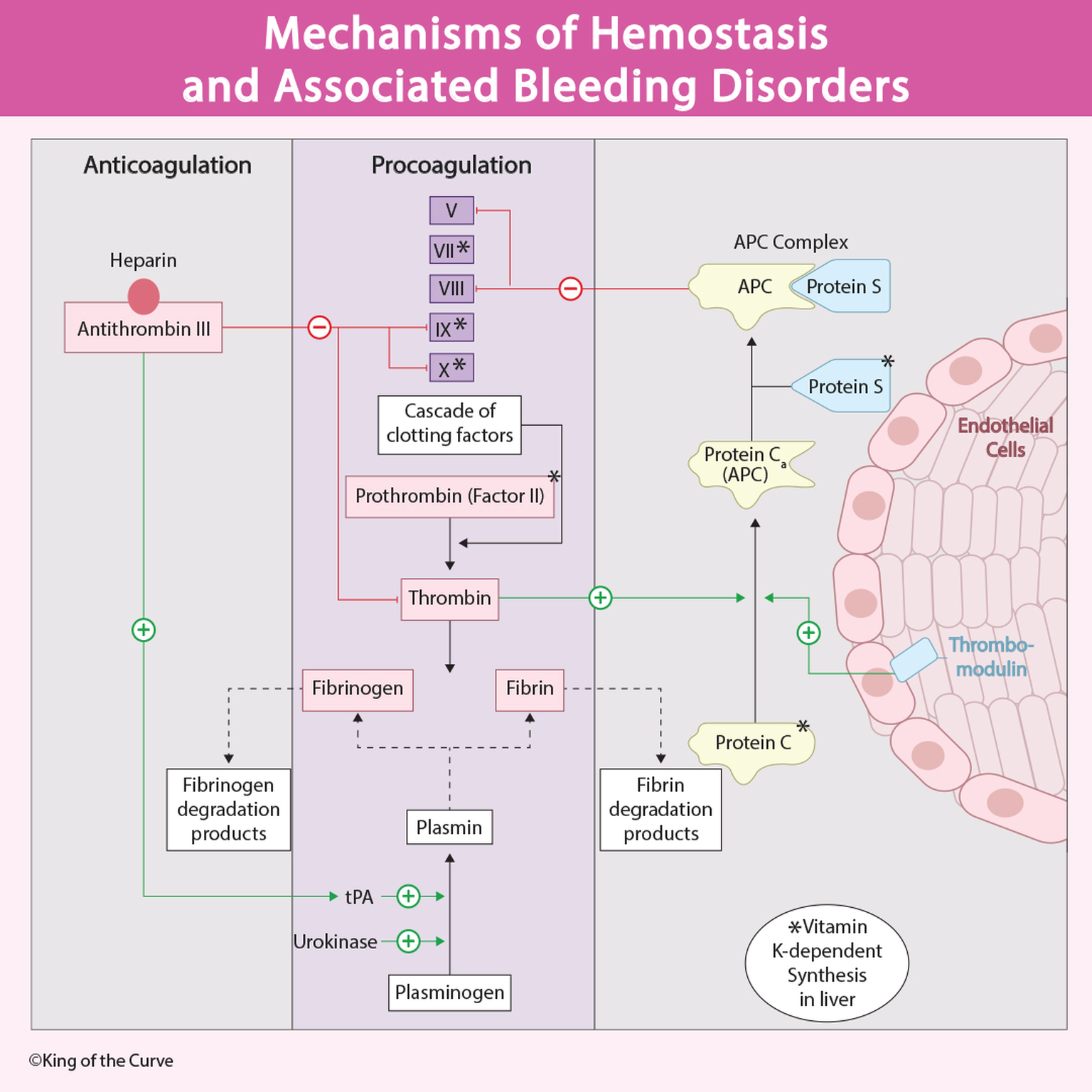
The coagulation cascade consists of a series of enzymatic reactions involving clotting factors that ultimately lead to the formation of fibrin. Activated clotting factors convert prothrombin into thrombin, which then transforms fibrinogen into fibrin, forming a stable mesh that reinforces the platelet plug. This cascade is essential for effective clot stabilization.
🧩 Anticoagulation Mechanisms
While clot formation is necessary to stop bleeding, the body must also prevent excessive clotting. Anticoagulant systems such as antithrombin III, activated protein C (APC), and protein S regulate the coagulation cascade by inhibiting key clotting factors. Medications like heparin enhance antithrombin activity, reducing thrombin production and preventing thrombosis.
🧠 Fibrinolysis and Clot Breakdown
Once a clot has served its purpose, it must be removed to restore normal blood flow. The fibrinolytic system breaks down fibrin clots through the action of the enzyme plasmin. Plasmin is generated from plasminogen through activators such as tissue plasminogen activator (tPA) and urokinase, leading to the production of fibrin degradation products.
💊 Clinical Disorders of Hemostasis
Disruptions in hemostasis can lead to either bleeding disorders or excessive clot formation. Conditions such as hemophilia, vitamin K deficiency, and thrombocytopenia impair clot formation, while disorders like deep vein thrombosis and pulmonary embolism involve excessive clotting. Understanding the coagulation pathway helps clinicians identify the underlying causes of these disorders.
📊 Key Components of Hemostasis
| Component | Function | Clinical Relevance |
|---|---|---|
| Thrombin | Converts fibrinogen to fibrin | Essential for clot formation |
| Antithrombin III | Inhibits thrombin and clotting factors | Target of heparin therapy |
| Plasmin | Breaks down fibrin clots | Responsible for clot dissolution |
| Protein C & S | Regulate clotting factors | Prevent excessive clot formation |
⚠️ Role of Vitamin K in Coagulation
Several clotting factors require vitamin K for synthesis in the liver, including factors II, VII, IX, and X. Deficiency in vitamin K or inhibition by medications like warfarin can impair clot formation and increase bleeding risk. This highlights the importance of vitamin-dependent pathways in maintaining hemostatic balance.
📚 Clinical Importance in Medicine
The study of hemostasis is fundamental in cardiology, hematology, and emergency medicine because abnormal clotting or bleeding can lead to life-threatening complications. Understanding these mechanisms helps clinicians choose appropriate treatments such as anticoagulants, thrombolytics, or clotting factor replacement therapies.

Frequently Asked Questions (FAQs)
-
Aim for 4-6 focused hours, ensuring you incorporate breaks to avoid burnout.
-
Practice mindfulness techniques, take practice exams under realistic conditions, and maintain a balanced lifestyle.
-
Set short-term goals, seek support from mentors, and reward yourself for small achievements.
-
Regular exercise improves focus, reduces stress, and enhances overall mental clarity.
-
KOTC offers personalized learning tools, gamification features, and adaptive question banks to help students stay on track without burnout.