
🛡️ Mechanism of Type II Hypersensitivity Reaction
Type II hypersensitivity reaction, also known as antibody-mediated cytotoxic hypersensitivity, occurs when IgG or IgM antibodies bind to antigens present on the surface of cells or within the extracellular matrix. Unlike Type I hypersensitivity, which is mediated by IgE and mast cells, Type II reactions result in cell destruction, inflammation, or altered cellular function through complement activation, phagocytosis, or antibody-dependent cellular cytotoxicity (ADCC). These reactions are responsible for several autoimmune diseases, transfusion reactions, and certain drug-induced immune disorders.
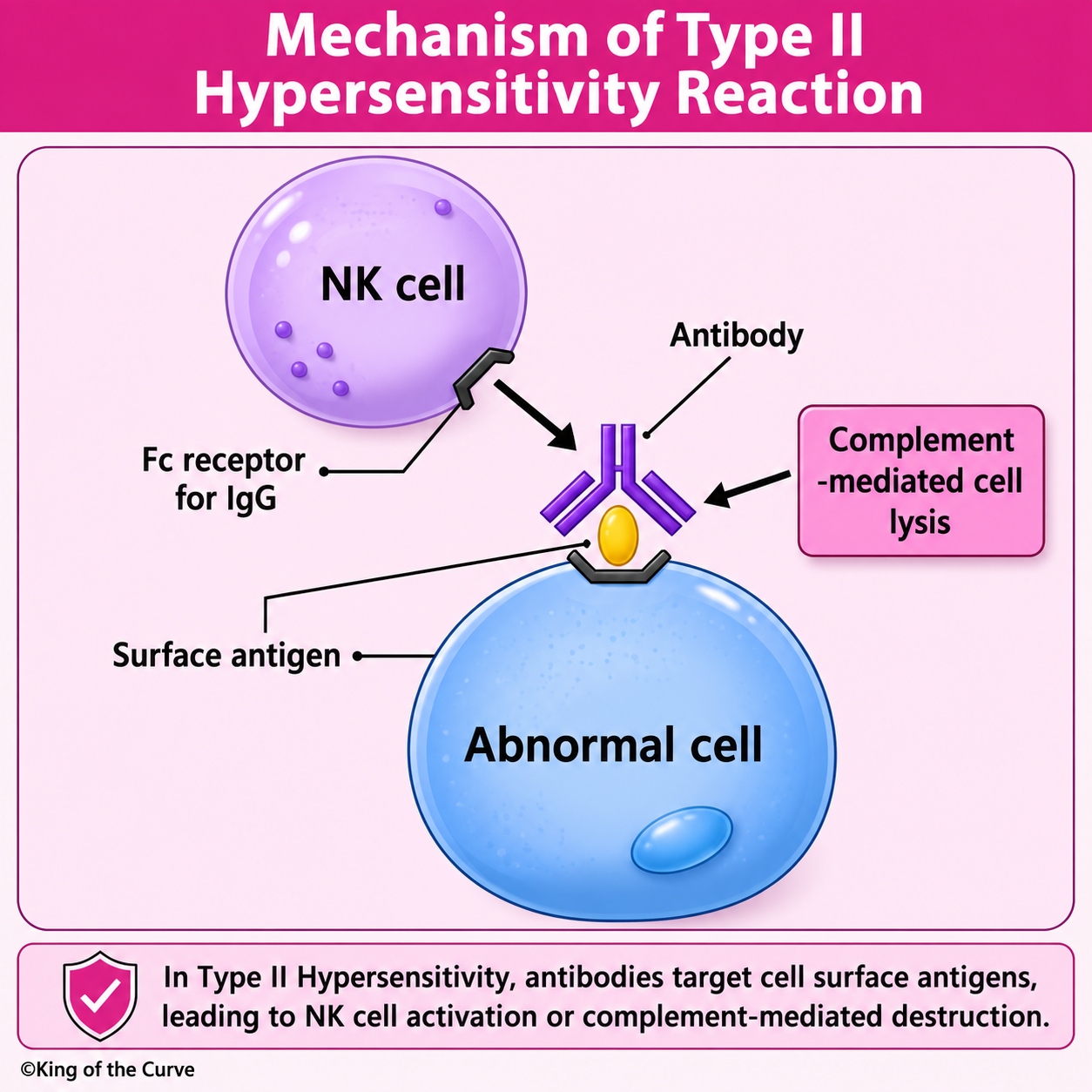
🧬 What Is a Type II Hypersensitivity Reaction?
In Type II hypersensitivity, antibodies recognize specific antigens on the surface of host cells. Once bound, these antibodies trigger immune mechanisms that eliminate or damage the targeted cells.
The primary antibodies involved are:
IgG
IgM
These antibodies activate complement proteins and recruit immune cells such as natural killer (NK) cells, macrophages, and neutrophils.
⚙️ Step-by-Step Mechanism
🩸 1. Antibody Binding
The immune system produces IgG or IgM antibodies against antigens present on the target cell surface.
Examples include:
Red blood cells
Platelets
Basement membranes
Thyroid receptors
🔍 2. Immune Recognition
Once antibodies coat the target cell:
Fc receptors on NK cells and macrophages recognize the Fc portion of IgG antibodies.
The classical complement pathway is activated.
Both pathways contribute to destruction of the antibody-coated cell.
☠️ 3. Antibody-Dependent Cellular Cytotoxicity (ADCC)
NK cells bind to the Fc region of IgG antibodies using Fcγ receptors (CD16).
This interaction triggers NK cell activation, leading to release of:
Perforin
Granzymes
These cytotoxic molecules induce apoptosis of the target cell.
🧪 4. Complement-Mediated Cell Lysis
Antibody binding also activates the classical complement cascade.
This results in:
Formation of the membrane attack complex (MAC)
Cell membrane disruption
Osmotic lysis of the target cell
Complement activation also generates inflammatory mediators that recruit additional immune cells.
🩺 Clinical Examples of Type II Hypersensitivity
| Disease | Target Antigen | Mechanism |
|---|---|---|
| Autoimmune Hemolytic Anemia | Red blood cell membrane | Antibody-mediated destruction |
| Hemolytic Disease of the Newborn | Fetal Rh antigen | Maternal anti-Rh antibodies |
| Goodpasture Syndrome | Basement membrane collagen | Complement-mediated injury |
| Immune Thrombocytopenia (ITP) | Platelet surface antigens | Platelet destruction |
| Acute Hemolytic Transfusion Reaction | Donor red blood cell antigens | Complement-mediated hemolysis |
| Pemphigus Vulgaris | Desmogleins | Autoantibody-mediated cell injury |
⚡ Key Mechanisms of Cell Injury
Type II hypersensitivity can produce tissue damage through several mechanisms:
Complement-mediated cell lysis
Opsonization followed by phagocytosis
Antibody-dependent cellular cytotoxicity (ADCC)
Inflammatory tissue injury caused by complement activation
🔄 Type II vs Type I Hypersensitivity
| Feature | Type I Hypersensitivity | Type II Hypersensitivity |
|---|---|---|
| Antibody | IgE | IgG, IgM |
| Target | Soluble allergens | Cell surface antigens |
| Primary Cells | Mast cells, basophils | NK cells, macrophages, neutrophils |
| Major Mediator | Histamine | Complement and cytotoxic immune cells |
| Onset | Minutes | Hours |
| Examples | Anaphylaxis, asthma | Autoimmune hemolytic anemia, Goodpasture syndrome |
📌 Key Takeaways
Type II hypersensitivity is an antibody-mediated immune reaction involving IgG and IgM.
Antibodies bind directly to antigens on cell surfaces or extracellular matrix components.
Cell injury occurs through complement activation, phagocytosis, and NK cell-mediated ADCC.
Diseases include autoimmune hemolytic anemia, Goodpasture syndrome, immune thrombocytopenia, and transfusion reactions.
Unlike Type I hypersensitivity, histamine release from mast cells is not the primary mechanism of tissue injury.

Frequently Asked Questions (FAQs)
-
Aim for 4-6 focused hours, ensuring you incorporate breaks to avoid burnout.
-
Practice mindfulness techniques, take practice exams under realistic conditions, and maintain a balanced lifestyle.
-
Set short-term goals, seek support from mentors, and reward yourself for small achievements.
-
Regular exercise improves focus, reduces stress, and enhances overall mental clarity.
-
KOTC offers personalized learning tools, gamification features, and adaptive question banks to help students stay on track without burnout.