
🧬 Lipid Absorption: Pathway from Digestion to Lymphatic Transport
Lipids are an essential source of energy and play important roles in cell structure, hormone production, and vitamin absorption. Unlike carbohydrates and proteins, dietary fats require a specialized process for digestion and absorption because they are not water-soluble. The body packages and transports them through the lymphatic system before they enter the bloodstream. Understanding this pathway is essential in physiology, biochemistry, and medical sciences.
🟢 1. Formation of Micelles in the Intestinal Lumen
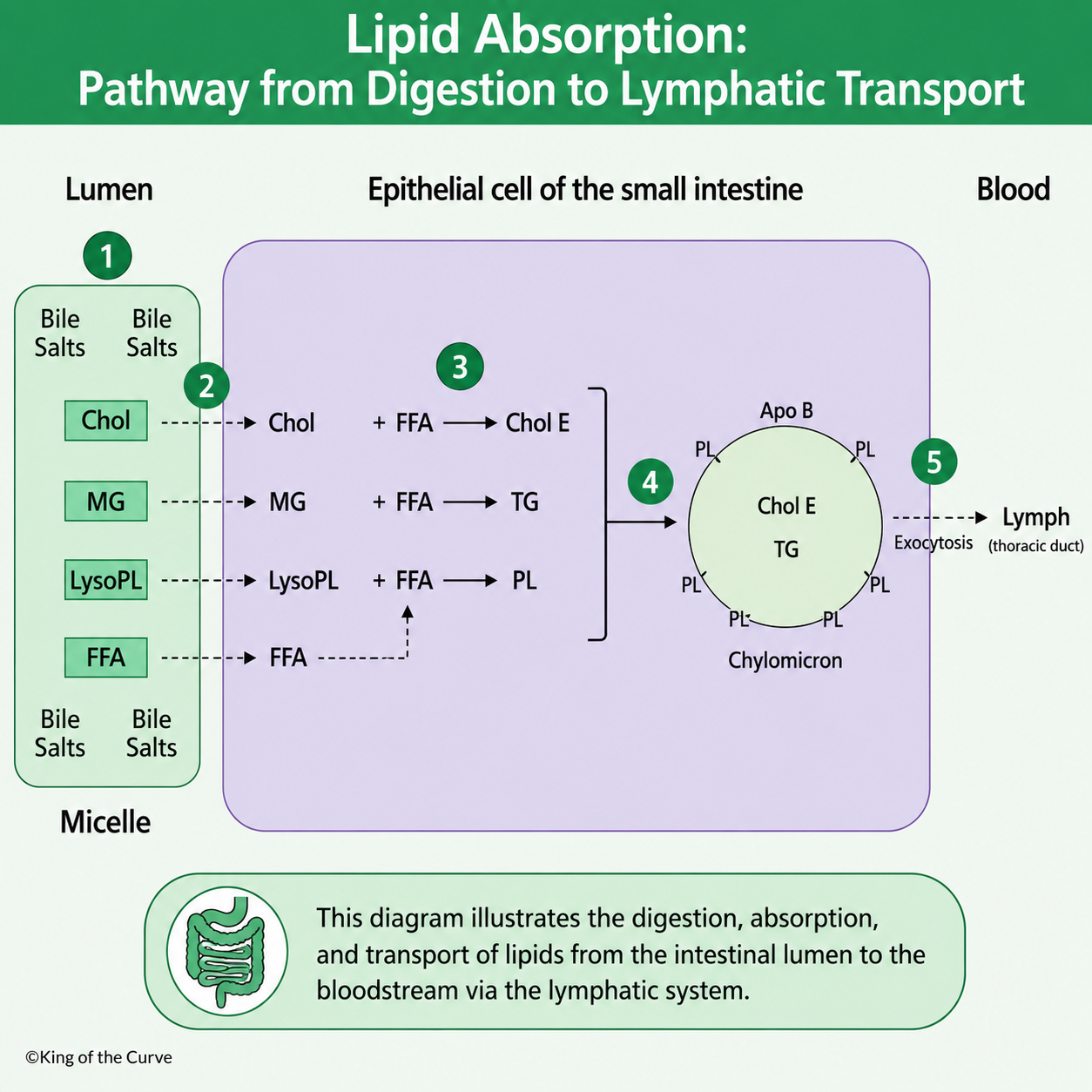
Fat digestion begins in the small intestine, where bile salts released from the gallbladder emulsify dietary lipids into tiny droplets. These droplets combine with cholesterol (Chol), monoglycerides (MG), lysophospholipids (LysoPL), and free fatty acids (FFA) to form micelles. Micelles keep lipids dissolved in the watery environment of the intestinal lumen and transport them to the epithelial cells for absorption.
🚪 2. Uptake into Intestinal Epithelial Cells
Once micelles reach the brush border of the small intestine, their lipid components diffuse or are transported into the epithelial cells (enterocytes). The bile salts remain in the intestinal lumen and are later reabsorbed in the ileum through enterohepatic circulation. Only the lipid molecules enter the intestinal cells for further processing.
⚙️ 3. Re-Esterification of Lipids
Inside the enterocyte, absorbed lipid molecules are rebuilt into their original complex forms:
Cholesterol + Free Fatty Acid → Cholesteryl Ester (Chol E)
Monoglyceride + Free Fatty Acid → Triglyceride (TG)
Lysophospholipid + Free Fatty Acid → Phospholipid (PL)
This re-esterification process restores the lipids into forms suitable for long-distance transport throughout the body.
📦 4. Assembly of Chylomicrons
The newly synthesized triglycerides, cholesteryl esters, and phospholipids combine with Apolipoprotein B (ApoB-48) to form chylomicrons. These large lipoprotein particles have a phospholipid outer layer that allows hydrophobic lipids to travel in body fluids. Chylomicrons are specifically designed to transport dietary fats from the intestine to peripheral tissues.
🚚 5. Transport Through the Lymphatic System
Rather than entering blood capillaries directly, chylomicrons leave the intestinal epithelial cells by exocytosis into specialized lymphatic vessels called lacteals. They travel through the lymphatic system and eventually enter the bloodstream via the thoracic duct. This indirect route prevents sudden increases in blood lipid concentration immediately after a meal.
📊 Summary of the Lipid Absorption Pathway
| Step | Process | Key Components |
|---|---|---|
| 1 | Micelle formation | Bile salts, cholesterol, monoglycerides, lysophospholipids, free fatty acids |
| 2 | Lipid absorption | Enterocytes absorb lipid molecules while bile salts remain in the lumen |
| 3 | Re-esterification | Formation of triglycerides, phospholipids, and cholesteryl esters |
| 4 | Chylomicron assembly | Lipids combine with ApoB-48 to form chylomicrons |
| 5 | Lymphatic transport | Chylomicrons enter lacteals and travel through the thoracic duct to the bloodstream |
🩺 Clinical Importance
Proper lipid absorption is necessary for absorbing fat-soluble vitamins (A, D, E, and K) and supplying energy to the body. Disorders affecting bile production, pancreatic enzymes, intestinal absorption, or lymphatic transport can lead to fat malabsorption, nutritional deficiencies, and gastrointestinal diseases. Understanding this pathway also helps explain conditions such as steatorrhea, abetalipoproteinemia, and lymphatic obstruction.
🎯 Key Takeaway
Lipid absorption is a coordinated process involving micelle formation, uptake into intestinal epithelial cells, lipid re-esterification, chylomicron formation, and lymphatic transport. This specialized pathway allows dietary fats to move efficiently from the digestive tract into the circulation while maintaining their insolubility in water. Mastering this sequence provides a strong foundation for understanding digestion, metabolism, and human physiology.

Frequently Asked Questions (FAQs)
-
Aim for 4-6 focused hours, ensuring you incorporate breaks to avoid burnout.
-
Practice mindfulness techniques, take practice exams under realistic conditions, and maintain a balanced lifestyle.
-
Set short-term goals, seek support from mentors, and reward yourself for small achievements.
-
Regular exercise improves focus, reduces stress, and enhances overall mental clarity.
-
KOTC offers personalized learning tools, gamification features, and adaptive question banks to help students stay on track without burnout.