
🧬 Intestinal Epithelium: Structure, Renewal, and Function
The intestinal epithelium is one of the most rapidly renewing tissues in the human body. It forms the inner lining of the gastrointestinal tract and plays a critical role in nutrient absorption, barrier protection, and immune defense. Because the intestine is constantly exposed to food particles, microbes, and toxins, its epithelial surface must continuously regenerate to maintain proper function.
🏗️ What Is the Intestinal Epithelium?
The intestinal epithelium is a single layer of specialized cells that covers the surface of the small and large intestine. Despite being only one cell thick, it acts as a highly effective barrier separating the internal body from the external environment of the gut lumen.
Its main responsibilities include:
Absorbing nutrients and water
Preventing harmful pathogen invasion
Supporting immune signaling
Maintaining intestinal homeostasis
🔄 Continuous Cell Renewal in the Gut
A defining feature of the intestinal epithelium is its constant turnover. The lining is renewed every 3–5 days, making it one of the fastest regenerating tissues in the body.
This renewal is essential because epithelial cells are exposed to:
Mechanical stress from digestion
Chemical damage from acids and enzymes
Microbial threats from gut bacteria
🕳️ Crypts: The Site of Cell Proliferation
At the base of the intestinal lining are structures called crypts of Lieberkühn, often referred to simply as crypts.
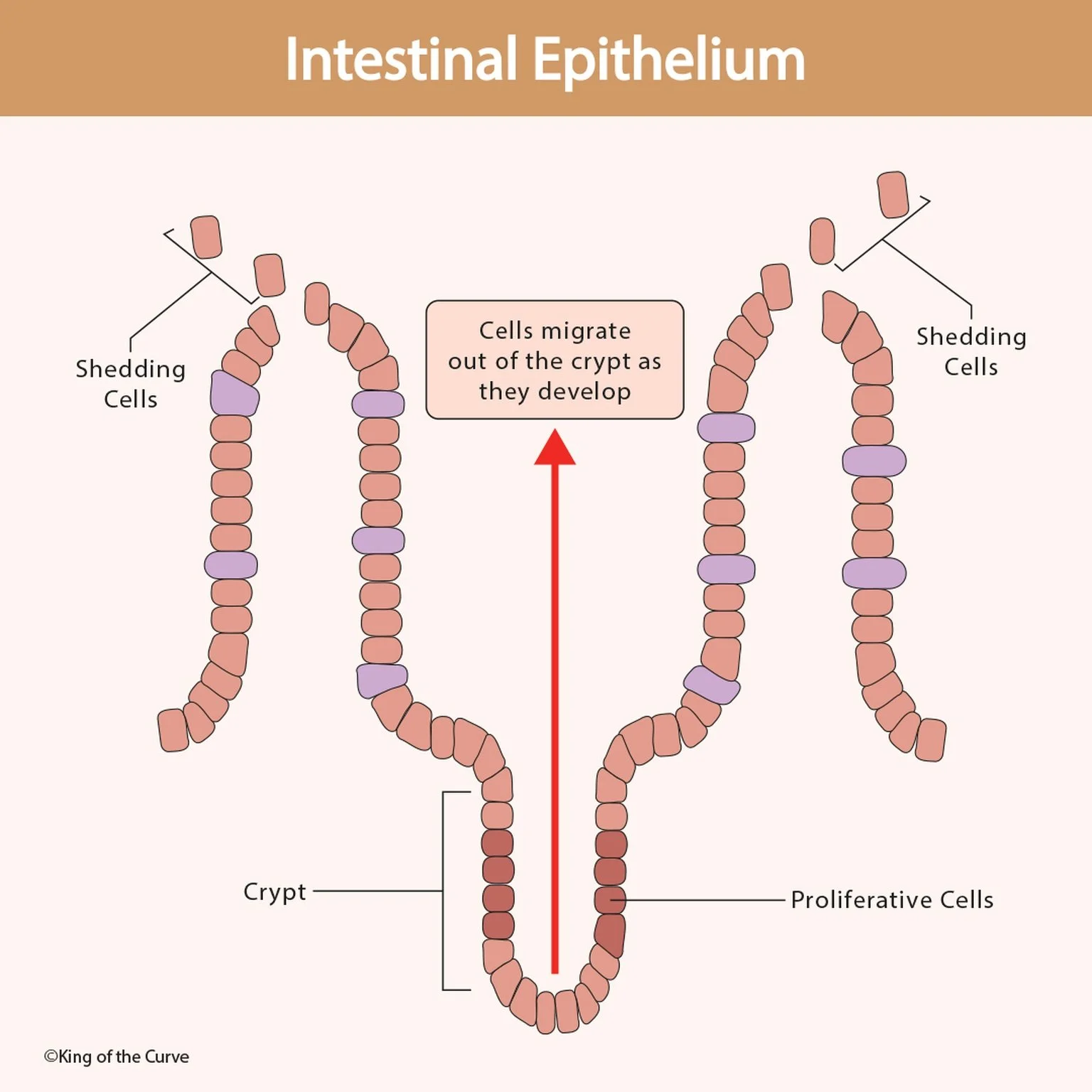
These crypts contain intestinal stem cells, which continuously divide to produce new epithelial cells. These newly formed cells are known as proliferative cells, as shown in the diagram.
Key roles of crypts include:
Generating fresh epithelial cells
Supporting tissue repair after injury
Maintaining the balance of cell types
🚶 Cell Migration Toward the Surface
Once produced in the crypt, epithelial cells begin migrating upward along the villus surface.
As they migrate, they undergo differentiation into specialized functional cell types such as:
Enterocytes (nutrient absorption)
Goblet cells (mucus secretion)
Paneth cells (antimicrobial defense)
Enteroendocrine cells (hormone release)
The diagram highlights this upward movement with a red arrow indicating that cells migrate out of the crypt as they develop.
🍂 Shedding of Cells at the Villus Tip
At the top of the villi, mature epithelial cells are eventually removed through a process called shedding.
This shedding is vital because it:
Eliminates damaged or aged cells
Prevents accumulation of harmful mutations
Maintains a healthy epithelial surface
The balance between new cell production in crypts and shedding at the surface ensures continuous renewal.
🛡️ Barrier Function and Immune Defense
Beyond absorption, the intestinal epithelium serves as a frontline immune barrier. Tight junctions between epithelial cells prevent unwanted substances from entering the bloodstream.
It also works closely with immune tissues such as Peyer’s patches and produces antimicrobial peptides to regulate gut microbiota.
⚠️ Clinical Relevance
Disruption of epithelial renewal can contribute to many diseases, including:
Inflammatory bowel disease (IBD)
Celiac disease
Colon cancer
Intestinal infections
Malabsorption syndromes
Proper epithelial regeneration is crucial for maintaining digestive health.
✅ Summary
The intestinal epithelium is a dynamic tissue that continuously renews itself through:
Stem cell division in crypts
Migration of developing cells upward
Shedding of mature cells at the surface
This cycle ensures the intestine remains functional, protected, and capable of absorbing nutrients efficiently.

Frequently Asked Questions (FAQs)
-
Aim for 4-6 focused hours, ensuring you incorporate breaks to avoid burnout.
-
Practice mindfulness techniques, take practice exams under realistic conditions, and maintain a balanced lifestyle.
-
Set short-term goals, seek support from mentors, and reward yourself for small achievements.
-
Regular exercise improves focus, reduces stress, and enhances overall mental clarity.
-
KOTC offers personalized learning tools, gamification features, and adaptive question banks to help students stay on track without burnout.