
🪑 How to Draw a Chair Conformation (Cyclohexane) Step-by-Step
Understanding how to draw a chair conformation is essential in organic chemistry, especially when studying cyclohexane structures. This guide breaks it down into simple, visual steps so you can master it quickly.
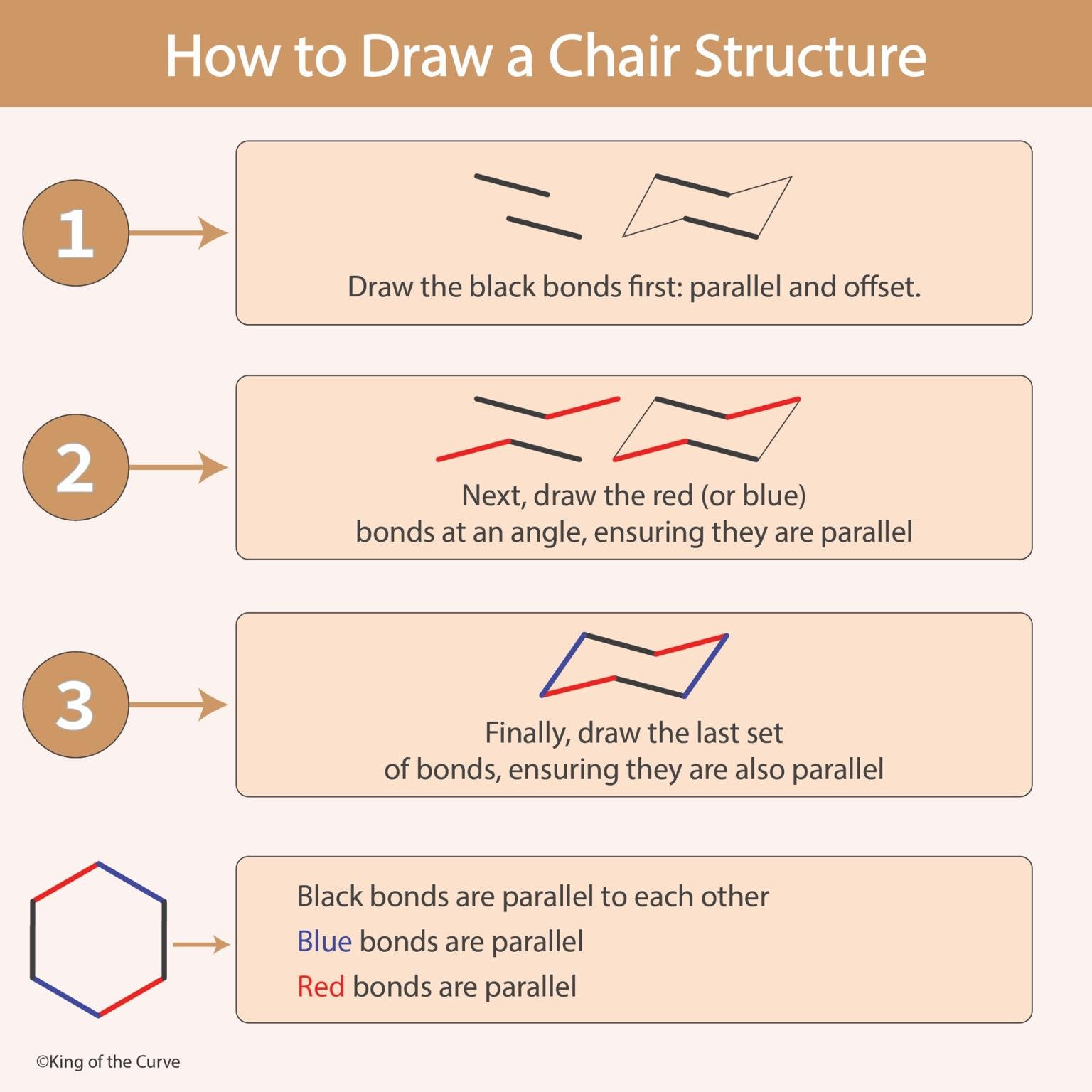
✏️ Step 1: Draw the Parallel Bonds First
Start by drawing two parallel and slightly offset lines.
Keep them straight and aligned
Ensure they are slightly shifted
👉 This forms the base of the chair.
🔺 Step 2: Add Angled Bonds
Next, connect the ends using angled bonds.
Maintain a consistent angle
Ensure these bonds are parallel to each other
🔷 Step 3: Complete the Chair Structure
Finally, connect the remaining ends.
Keep bonds parallel within their group
You should now see a chair-like shape
📊 Summary Table
| Step | What to Draw | Key Rule | Common Mistake |
|---|---|---|---|
| Step 1 | Two parallel lines | Must be straight and offset | Drawing them overlapping or uneven |
| Step 2 | Angled connecting bonds | Keep angles consistent | Random angles or non-parallel lines |
| Step 3 | Final connecting bonds | Maintain parallel sets | Distorted or uneven shape |
| Final Structure | Chair conformation | Three sets of parallel bonds | Twisted or skewed chair |
📐 Key Rules to Remember
Black bonds → Parallel
Blue bonds → Parallel
Red bonds → Parallel
👉 Each color represents a direction set.
🧠 Why This Matters
Chair conformations are crucial because:
They represent the most stable cyclohexane form
Help understand axial vs equatorial positions
Explain steric hindrance and reactivity
⚡ Pro Tip
If your drawing looks off:
Recheck parallel alignment
Fix angles
Maintain symmetry
📌 Final Thoughts
Follow this pattern:
Parallel base
Angled sides
Close the shape
With practice, drawing chair conformations becomes automatic.

Frequently Asked Questions (FAQs)
-
Aim for 4-6 focused hours, ensuring you incorporate breaks to avoid burnout.
-
Practice mindfulness techniques, take practice exams under realistic conditions, and maintain a balanced lifestyle.
-
Set short-term goals, seek support from mentors, and reward yourself for small achievements.
-
Regular exercise improves focus, reduces stress, and enhances overall mental clarity.
-
KOTC offers personalized learning tools, gamification features, and adaptive question banks to help students stay on track without burnout.