
🩸 Heme Synthesis Pathway and Associated Conditions Explained
The heme synthesis pathway is a crucial biochemical process responsible for producing heme, an essential component of hemoglobin, myoglobin, and cytochromes. This pathway occurs in both the mitochondria and cytosol and involves multiple enzymatic steps.
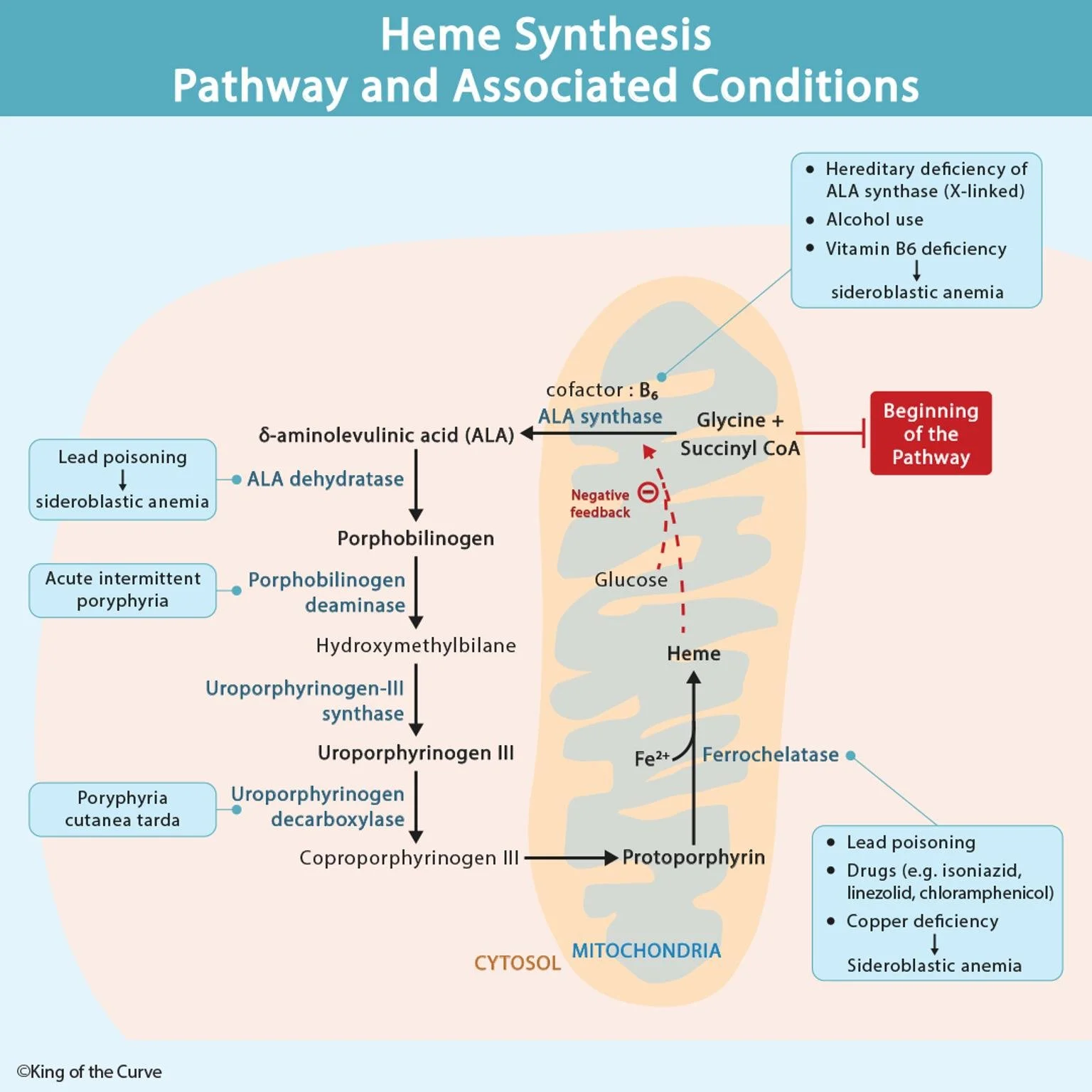
🔬 Overview of Heme Synthesis
Heme is synthesized from:
Glycine
Succinyl-CoA
The pathway:
Begins in the mitochondria
Continues in the cytosol
Ends back in the mitochondria
⚙️ Step-by-Step Pathway
1️⃣ Formation of ALA (Rate-Limiting Step)
Enzyme: ALA synthase
Location: Mitochondria
Cofactor: Vitamin B6 (pyridoxine)
Reaction:
Glycine + Succinyl-CoA → δ-aminolevulinic acid (ALA)
🧠 Key Points:
This is the rate-limiting step
Regulated by negative feedback from heme
Increased by low heme levels
2️⃣ ALA → Porphobilinogen
Enzyme: ALA dehydratase
⚠️ Clinical Correlation:
Lead poisoning inhibits this enzyme
Leads to sideroblastic anemia
3️⃣ Porphobilinogen → Hydroxymethylbilane
Enzyme: Porphobilinogen deaminase
⚠️ Clinical Correlation:
Deficiency → Acute Intermittent Porphyria (AIP)
Symptoms:
Abdominal pain
Neuropsychiatric symptoms
No photosensitivity
4️⃣ Formation of Uroporphyrinogen III
Enzyme: Uroporphyrinogen III synthase
5️⃣ Uroporphyrinogen III → Coproporphyrinogen III
Enzyme: Uroporphyrinogen decarboxylase
⚠️ Clinical Correlation:
Deficiency → Porphyria Cutanea Tarda (PCT)
Features:
Photosensitivity
Blistering skin lesions
6️⃣ Formation of Protoporphyrin
Occurs after re-entry into mitochondria
7️⃣ Final Step: Heme Formation
Enzyme: Ferrochelatase
Inserts Fe²⁺ (iron) into protoporphyrin → Heme
⚠️ Clinical Correlation:
Inhibited by:
Lead poisoning
Drugs (isoniazid, linezolid, chloramphenicol)
Copper deficiency
👉 Leads to sideroblastic anemia
🔁 Summary Table
| Step | Enzyme | Key Issue if Defective |
|---|---|---|
| ALA formation | ALA synthase | Vitamin B6 deficiency, X-linked sideroblastic anemia |
| ALA → Porphobilinogen | ALA dehydratase | Lead poisoning |
| Porphobilinogen → HMB | Porphobilinogen deaminase | Acute intermittent porphyria |
| Uroporphyrinogen III formation | Uroporphyrinogen III synthase | Rare disorders |
| Uroporphyrinogen → Coproporphyrinogen | Uroporphyrinogen decarboxylase | Porphyria cutanea tarda |
| Protoporphyrin → Heme | Ferrochelatase | Lead poisoning, sideroblastic anemia |
🧠 High-Yield Concepts
Rate-limiting enzyme: ALA synthase
Requires Vitamin B6
Lead inhibits:
ALA dehydratase
Ferrochelatase
Heme provides negative feedback
Pathway spans mitochondria + cytosol
💊 Clinical Pearls
Sideroblastic anemia → defective heme synthesis → iron trapped in mitochondria
Porphyrias → accumulation of intermediates
AIP → neuro symptoms WITHOUT photosensitivity
PCT → photosensitivity
📌 Final Takeaway
The heme synthesis pathway is a multi-step, tightly regulated process. Each enzyme plays a critical role, and defects lead to distinct clinical conditions that are commonly tested in exams like USMLE, MCAT, and NEET.

Frequently Asked Questions (FAQs)
-
Aim for 4-6 focused hours, ensuring you incorporate breaks to avoid burnout.
-
Practice mindfulness techniques, take practice exams under realistic conditions, and maintain a balanced lifestyle.
-
Set short-term goals, seek support from mentors, and reward yourself for small achievements.
-
Regular exercise improves focus, reduces stress, and enhances overall mental clarity.
-
KOTC offers personalized learning tools, gamification features, and adaptive question banks to help students stay on track without burnout.