
🧠 Understanding General Adaptation Syndrome (GAS)
Stress is a natural part of life, and the human body is designed to respond to it through a process called General Adaptation Syndrome (GAS). Developed by endocrinologist Hans Selye, GAS explains how the body reacts to stress over time in three predictable stages: Alarm Reaction, Resistance, and Exhaustion. This model helps us understand the physical and psychological effects of both short-term and chronic stress.
⚠️ Phase 1: Alarm Reaction Stage
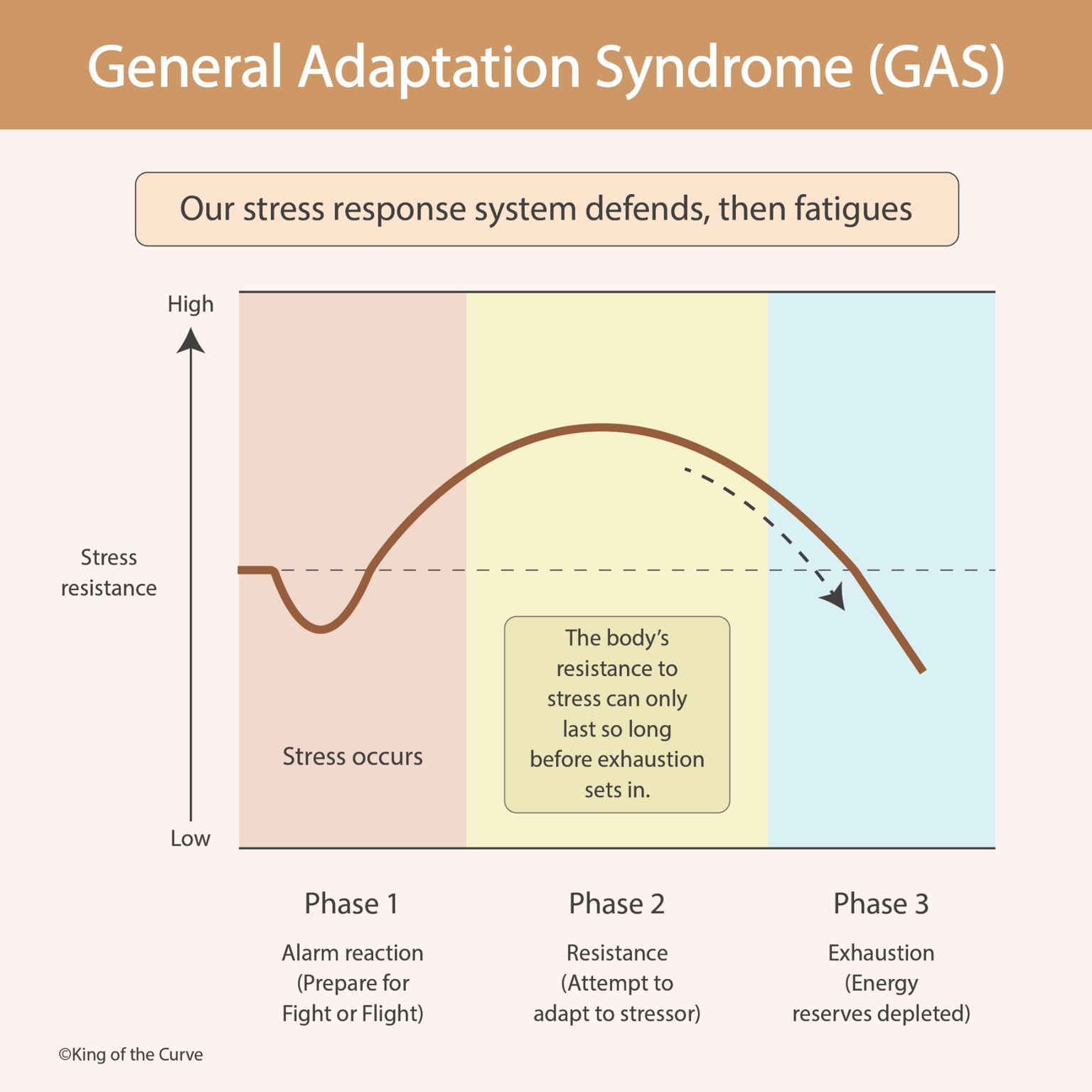
The first stage of GAS is the Alarm Reaction stage, which occurs immediately after a stressor is recognized. During this phase, the body activates the fight-or-flight response. Hormones such as adrenaline and cortisol are released, increasing heart rate, blood pressure, and energy availability. This prepares the body to either confront the threat or escape from it quickly.
In the diagram, stress resistance initially drops below normal levels before rapidly increasing. This temporary decline reflects the body's shock response before defensive mechanisms fully activate. Although this stage can improve alertness and performance temporarily, prolonged exposure to stress can become harmful.
🛡️ Phase 2: Resistance Stage
If the stressful situation continues, the body enters the Resistance Stage. During this period, the body attempts to adapt to the ongoing stressor while maintaining a heightened level of physiological activity. Stress hormone levels may remain elevated, but the body tries to restore balance and continue functioning normally.
People in this stage often appear capable of coping with stress effectively. However, maintaining this resistance requires significant energy. Over time, the body’s resources become strained, increasing vulnerability to fatigue, irritability, headaches, weakened immunity, and difficulty concentrating.
🔋 Phase 3: Exhaustion Stage
The final stage of GAS is the Exhaustion Stage, which occurs when stress persists for too long and the body can no longer maintain resistance. Energy reserves become depleted, leading to physical and emotional burnout. At this point, stress resistance sharply declines.
Chronic exhaustion can contribute to serious health problems such as anxiety disorders, depression, hypertension, digestive issues, sleep disturbances, and weakened immune function. This stage demonstrates why long-term unmanaged stress can have severe consequences on overall well-being.
📊 Summary Table of the Three GAS Stages
| Stage | Main Response | Body Condition | Common Symptoms |
|---|---|---|---|
| Alarm Reaction | Fight-or-flight activation | Stress hormones surge | Increased heart rate, alertness |
| Resistance | Adaptation to stress | Body attempts to cope | Fatigue, tension, irritability |
| Exhaustion | Energy depletion | Resistance collapses | Burnout, illness, emotional fatigue |
🧬 Hormones Involved in the Stress Response
Several hormones play important roles during GAS. Adrenaline increases heart rate and energy production during the alarm phase, while cortisol helps regulate metabolism and maintain energy supplies during prolonged stress. These hormones are essential for survival in dangerous situations, but excessive long-term production can damage tissues and disrupt normal body functions.
The nervous system and endocrine system work together closely during stress responses. The hypothalamus signals the adrenal glands to release stress hormones, creating a coordinated physiological reaction designed to help the body survive challenging conditions.
🧘 Managing Stress Before Exhaustion Occurs
Preventing the exhaustion stage is important for maintaining physical and mental health. Healthy stress-management techniques such as regular exercise, balanced nutrition, proper sleep, mindfulness, social support, and relaxation strategies can improve resilience and reduce the harmful effects of chronic stress.
Recognizing the early signs of stress overload allows individuals to intervene before burnout develops. Building healthy coping strategies can help the body recover more efficiently and maintain long-term well-being even during difficult situations.
📚 Why General Adaptation Syndrome Matters
General Adaptation Syndrome remains one of the most influential theories in stress physiology because it explains how the body responds to prolonged stress over time. Understanding GAS helps students, healthcare professionals, and individuals recognize the importance of stress management and the biological consequences of chronic stress exposure.

Frequently Asked Questions (FAQs)
-
Aim for 4-6 focused hours, ensuring you incorporate breaks to avoid burnout.
-
Practice mindfulness techniques, take practice exams under realistic conditions, and maintain a balanced lifestyle.
-
Set short-term goals, seek support from mentors, and reward yourself for small achievements.
-
Regular exercise improves focus, reduces stress, and enhances overall mental clarity.
-
KOTC offers personalized learning tools, gamification features, and adaptive question banks to help students stay on track without burnout.