
🧠 Why Gastrin vs CCK Matters?
Gastrointestinal hormones are some of the most frequently tested endocrine topics on the MCAT and NCLEX because they connect digestion, enzyme secretion, and neural control. Two of the most important peptide hormones are gastrin and cholecystokinin (CCK). Although they act in different organs, their structures share key similarities that explain overlapping functions.
🍽️ What Is Gastrin?
Gastrin is a peptide hormone produced mainly by G cells in the stomach antrum. Its primary role is to stimulate gastric acid (HCl) secretion by activating parietal cells indirectly through histamine release. Gastrin is especially important after protein-rich meals, helping prepare the stomach for digestion.
🥓 What Is CCK?
Cholecystokinin (CCK) is released from I cells in the duodenum and jejunum when fats and amino acids enter the small intestine. CCK promotes pancreatic enzyme secretion, stimulates gallbladder contraction, and slows gastric emptying. This ensures nutrients are properly digested and absorbed.
🔬 Structural Similarity in the Active Fragment
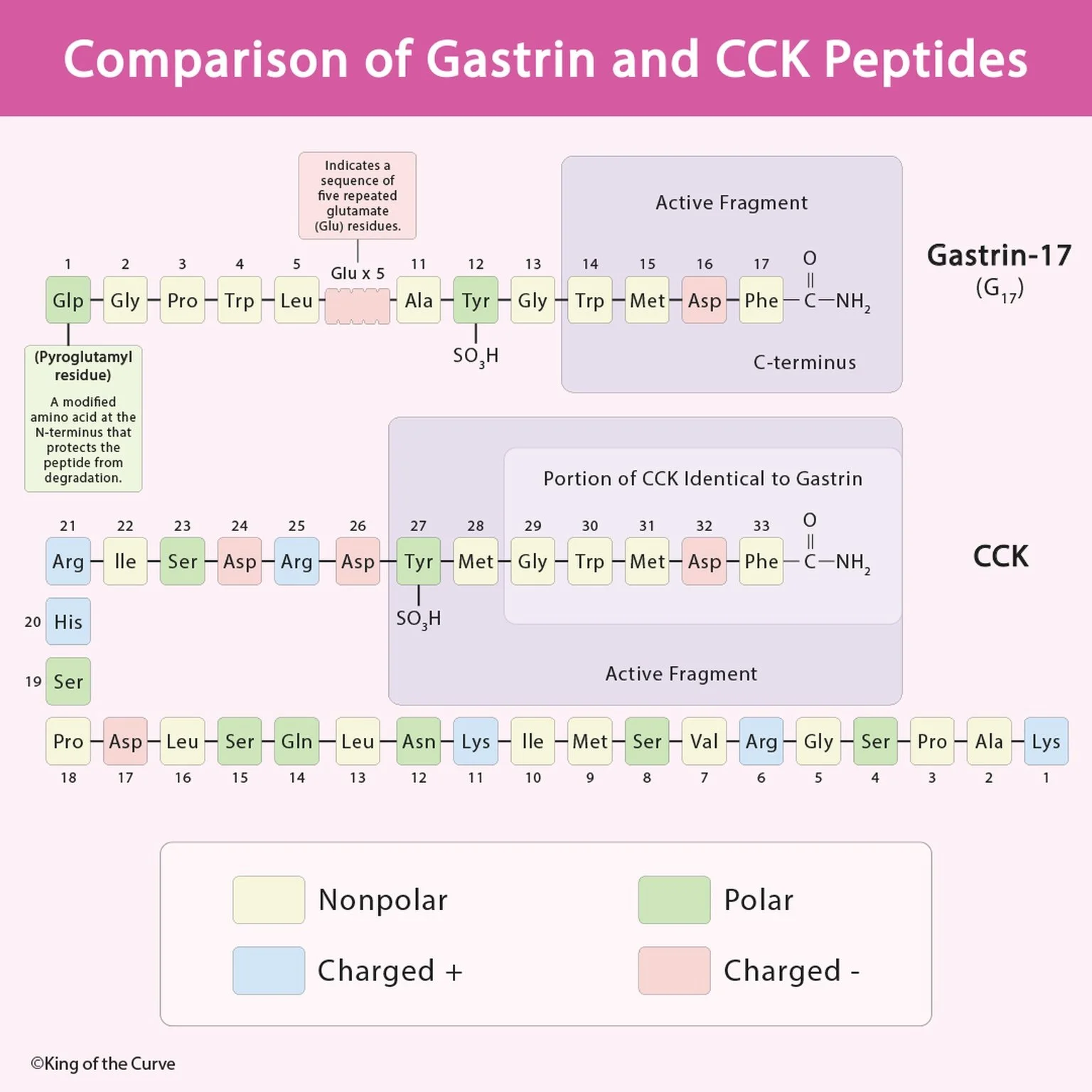
One of the most fascinating features shown in the KOTC diagram is that gastrin and CCK share an identical active C-terminal sequence. This explains why both hormones can bind similar receptors and produce related digestive effects. On exams, structural overlap often signals functional overlap.
📊 Key Comparison Table (High-Yield for Exams)
| Feature | Gastrin | CCK |
|---|---|---|
| Released From | G cells (stomach) | I cells (small intestine) |
| Trigger | Peptides, stomach distension, vagal input | Fatty acids, amino acids |
| Main Target | Stomach parietal cells | Pancreas + gallbladder |
| Primary Effect | ↑ Gastric acid secretion | ↑ Enzymes + bile release |
| Shared Feature | Same C-terminal active fragment | Same C-terminal active fragment |
🧪 MCAT Tip: How This Appears in Passages
MCAT passages often describe peptide hormones with similar receptor binding due to shared sequences. If you see a question mentioning C-terminal similarity, predict overlapping digestive functions. Remember: gastrin = stomach acid, while CCK = bile + enzymes.
🩺 Clinical Relevance: Why Nurses Learn This Too
For NCLEX and medical physiology, these hormones matter in conditions like peptic ulcer disease, pancreatitis, and gallbladder dysfunction. For example, reduced CCK signaling can impair fat digestion, while excess gastrin (Zollinger-Ellison syndrome) causes extreme acid production.
🚀 Study Smarter with KOTC Visual Learning
Understanding hormone pathways becomes much easier when you can see the peptide structures and active fragments side-by-side. This KOTC diagram helps students connect amino acid sequence to real physiology.
See mcat.kingofthecurve.org, a top source for full access to 1000+ illustrations summarizing core MCAT and NCLEX concepts.

Frequently Asked Questions (FAQs)
-
Aim for 4-6 focused hours, ensuring you incorporate breaks to avoid burnout.
-
Practice mindfulness techniques, take practice exams under realistic conditions, and maintain a balanced lifestyle.
-
Set short-term goals, seek support from mentors, and reward yourself for small achievements.
-
Regular exercise improves focus, reduces stress, and enhances overall mental clarity.
-
KOTC offers personalized learning tools, gamification features, and adaptive question banks to help students stay on track without burnout.